Week 1
Week 1: Tuesday, October 6, 2026
Who Was Here
Week 1
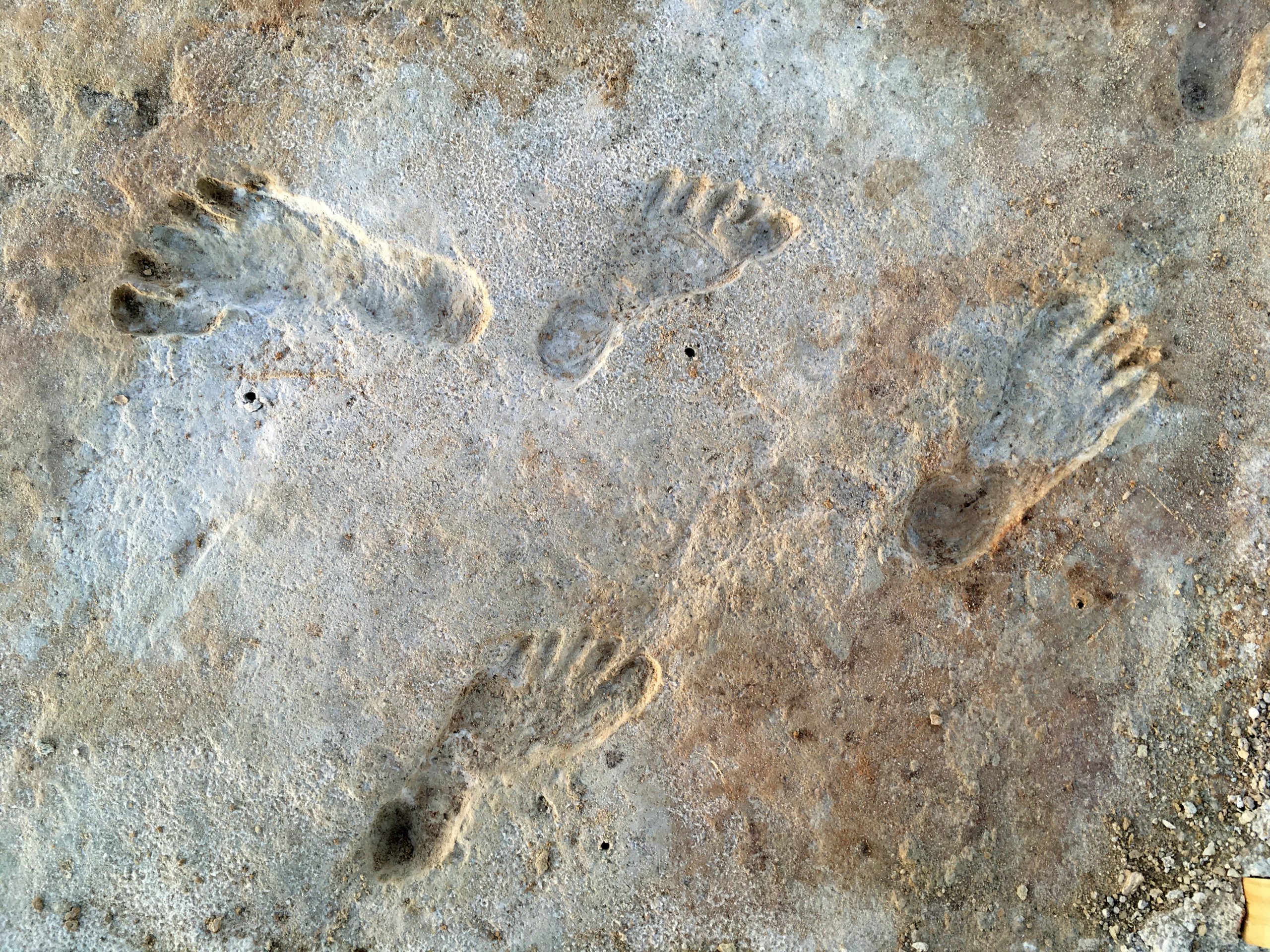
Who was here in the Americas when the first European explorers arrived? Millions of people had lived on both North and South American continents when Columbus arrived in the Caribbean in October of 1492. The latest archaeological evidence just recently discovered in New Mexico suggests that there were human beings here as early as 18,000 BC. White Sands National Park in New Mexico sits within the Tularosa Basin, a closed desert basin with no natural drainage outlet, bounded by the San Andres Mountains to the west and the Sacramento Mountains to the east. The basin once held Paleolake Otero, a shallow lake that filled it during the last Ice Age; because the basin has no outlet, the lake's gypsum-rich sediments were never carried away. Within this gypsum sediment are the footprints: human tracks pressed into mud at the ancient lake's edge, then buried and preserved as the basin dried around them. These footprints are the oldest securely dated evidence of human presence in the Americas. Radiocarbon dating of layers bracketing the tracks places them at roughly ~23,000—21,000 years ago, roughly 2,000 years of repeated human activity when people repeatedly walked along the wet margins of ancient Lake Otero. Here below is a photo of the footprints of one of those first human beings in America.
...............
REQUIRED READING FOR THE WHOLE YEAR OF COMING TO AMERICA

From the Publisher:
"For too long we’ve lacked a compact, inexpensive, authoritative, and compulsively readable book that offers American readers a clear, informative, and inspiring narrative account of their country. Such a fresh retelling of the American story is especially needed today, to shape and deepen young Americans’ sense of the land they inhabit, help them to understand its roots and share in its memories, all the while equipping them for the privileges and responsibilities of citizenship in American society. The existing texts simply fail to tell that story with energy and conviction. Too often they reflect a fragmented outlook that fails to convey to American readers the grand trajectory of their own history. A great nation needs and deserves a great and coherent narrative, as an expression of its own self-understanding and its aspirations; and it needs to be able to convey that narrative effectively. Of course, it goes without saying that such a narrative cannot be a fairy tale of the past. It will not be convincing if it is not truthful. But as Land of Hope brilliantly shows, there is no contradiction between a truthful account of the American past and an inspiring one. Readers of Land of Hope will find both in its pages."
REVIEWS
“At a time of severe partisanship that has infected many accounts of our nation’s past, this brilliant new history, Land of Hope, written in lucid and often lyrical prose, is much needed. It is accurate, honest, and free of the unhistorical condescension so often paid to the people of America’s past. This generous but not uncritical story of our nation’s history ought to be read by every American. It explains and justifies the right kind of patriotism.”― Gordon S. Wood, author of Friends Divided: John Adams and Thomas Jefferson
“We’ve long needed a readable text that truly tells the American story, neither hiding the serious injustices in our history nor soft-pedaling our nation’s extraordinary achievements. Such a text cannot be a mere compilation of facts, and it certainly could not be written by someone lacking a deep understanding and appreciation of America’s constitutional ideals and institutions. Bringing his impressive skills as a political theorist, historian, and writer to bear, Wilfred McClay has supplied the need.”― Robert P. George, McCormick Professor of Jurisprudence, Princeton University
“No one has told the story of America with greater balance or better prose than Wilfred McClay. Land of Hope is a history book that you will not be able to put down. From the moment that ‘natives’ first crossed here over the Bering Strait, to the founding of America’s great experiment in republican government, to the horror and triumph of the Civil War...McClay’s account will capture your attention while offering an unforgettable education.”― James W. Ceaser, Professor of Politics, University of Virginia
2
Week 2: Tuesday, October 13, 2026
First Explorers: Hudson, Cabot, Columbus
Week 2
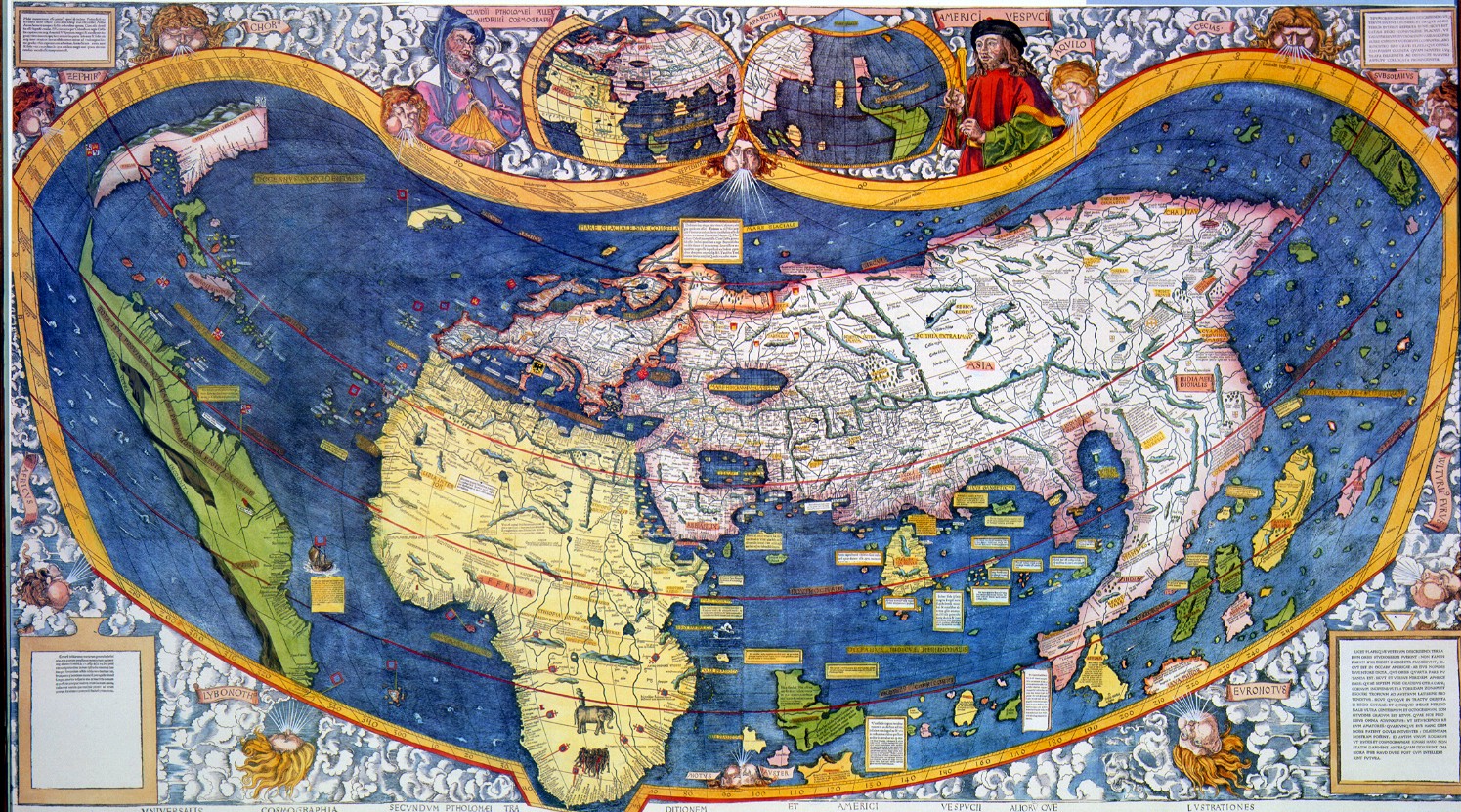
Europeans remained unaware of the existence of the Americas as a whole, until 1492 when Christopher Columbus discovered the Americas and publicized his discovery to the rest of the world. On August 3, 1492, the Genoese navigator Christopher Columbus set sail under Spanish flag and with a Spanish crew from the Port of Palos de la Frontera in the Province of Huelva, from the newly los Reyes Católicos coordinated Kingdoms of Castile and Aragon, in present-day Spain, financed by Queen Isabella I of Castille. Columbus's Letter on the First Voyage of his discovery of the Bahamas, Cuba, and Hispaniola spread the news across Europe quickly. Columbus under the Spanish flag rediscovered and explored much of the Lesser Antilles in his second voyage then discovered both Trinidad and Tobago on his third voyage whilst skirting the northern South American coast. His fourth voyage was spent scanning the Central American coast. The Spanish voyages of Christopher Columbus opened the New World. Genoese navigator and explorer Giovanni Caboto (known in English as John Cabot) is credited with the discovery of continental North America on June 24, 1497, under the commission of Henry VII of England. Though the exact location of his discovery remains disputed, the Canadian and United Kingdom governments' official position is that he landed on the island of Newfoundland. The English presence through Giovanni Caboto was signaled in Juan de la Cosa's map of 1500. Nearly at the same time, between 1499 and 1502 the brothers Gaspar and Miguel Corte Real explored and named the coasts of Greenland, Labrador and also Newfoundland, naming "Terra Verde" the explored North American coasts. Universalis Cosmographia, the "Waldseemüller map" dated 1507, depicts the Americas, Africa, Europe, Asia, and the Pacific Ocean separating Asia from the Americas. It was soon understood that Columbus had not reached Asia, but rather found what was to Europeans a New World, which in 1507 was named "America", after Amerigo Vespucci, on the Waldseemüller map.
3
Week 3: Tuesday, October 20, 2026
Amerigo Vespucci
Week 3
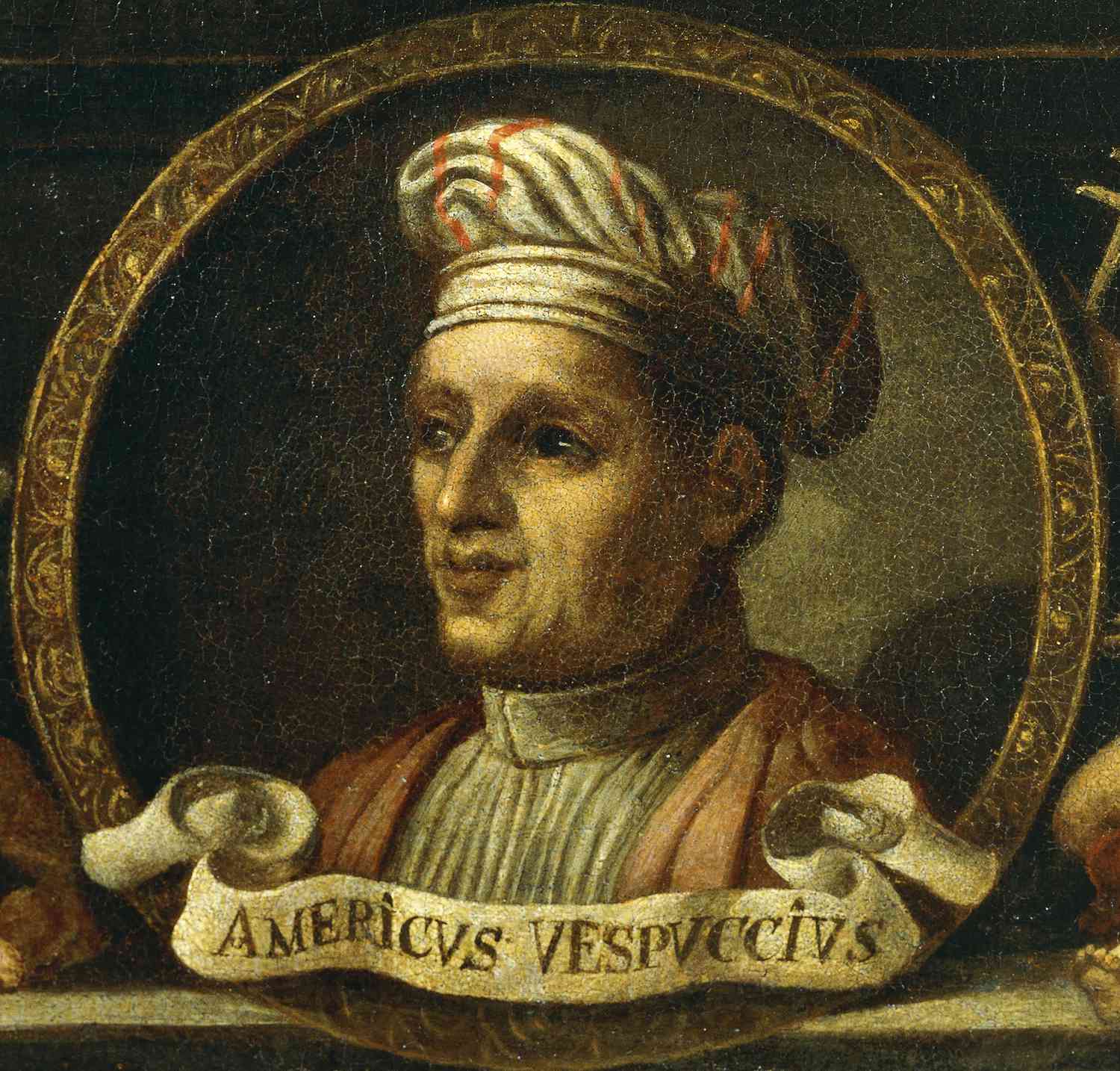
Amerigo Vespucci, (1454 – 22 February 1512) was an Italian explorer and navigator from the Republic of Florence after whom America is named. Vespucci participated in at least two voyages of the Age of Discovery between 1497 and 1504, first on behalf of Spain (1499–1500) and then for Portugal (1501–1502). In 1503 and 1505, two booklets were published under his name containing colourful descriptions of these explorations and other voyages. Both publications were extremely popular and widely read throughout much of Europe and they were instrumental in raising awareness of the discoveries and enhancing the reputation of Vespucci as an explorer and navigator. Vespucci claimed to have understood in 1501 that Brazil was part of a fourth continent unknown to Europeans, which he called the "New World" (Mundus Novus). The claim inspired cartographer Martin Waldseemüller to recognize Vespucci's accomplishments in 1507 by applying the Latinized form "America" to a map showing the New World. Other cartographers followed suit, securing the tradition of marking the name "America" on maps of the newly discovered continents. In 1505, he was made a subject of Castile by royal decree, and he was appointed to the position of piloto mayor (master navigator) for Spain's Casa de Contratación (House of Trade) in Seville in 1508, a post which he held until his death in 1512. Vespucci was born on 9 March 1454 in Florence, a wealthy Italian city-state and a center of Renaissance art and learning. Amerigo Vespucci was the third son of Nastagio Vespucci, a Florentine notary for the Money-Changers Guild, and Lisa di Giovanni Mini. The family resided in the District of Santa Lucia d'Ognissanti along with other families of the Vespucci clan. Among their neighbors were the Botticelli.
4
Week 4: Tuesday, October 27, 2026
Cabeza de Vaca
Week 4
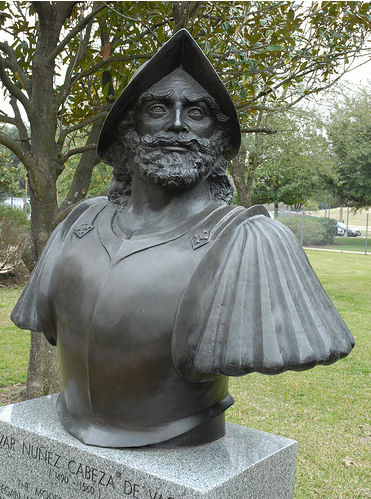
Álvar Núñez Cabeza de Vaca (1490 to after 19 May 1559) was a Spanish explorer of the New World, and one of four survivors of the 1527 Narváez expedition. During eight years of traveling across what is today the Southwestern United States, he became a trader, evangelist, and faith healer to various Native American tribes before reconnecting with Spanish civilization in Mexico in 1536. After returning to Spain in 1537, he wrote an account of his experiences, first published in 1542 as La relación y comentarios ("The Account and Commentaries"), and later retitled Naufragios y comentarios ("Shipwrecks and Commentaries"). Cabeza de Vaca is sometimes considered aa early anthropologist for his detailed accounts of the many tribes of Native Americans that he encountered. He has been portrayed as a unique explorer with a focus on expansion and faith conversion. In 1540, Cabeza de Vaca was appointed adelantado of what is now Paraguay, where he was governor and captain general of New Andalusia. He worked to build up the population of Buenos Aires but, he was charged with poor administration and arrested in 1544. He was subsequently transported to Spain for trial in 1545. Although his sentence was eventually commuted, he never returned to the Americas. His account of his journey within North America is an extraordinary story of the land and the people before the arrival of millions of Europeans.
RECOMMENDED READING
RECOMMENDED READING
The Narrative of Cabeza de Vaca,
Translated by Rolena Adorno and Patrick Charles Pautz,
University of Nebraska Press,
ISBN 978-0803264168
5
Week 5: Tuesday, November 3, 2026
Hernando de Soto
Week 5
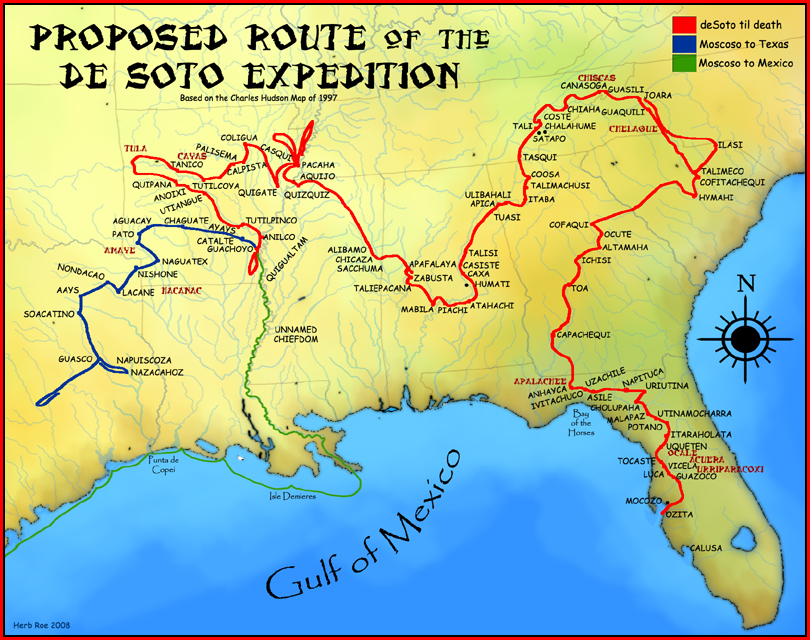
Hernando de Soto (1497 – 1542) was a Spanish explorer and conquistador, who was involved in expeditions in Nicaragua and the Yucatan Peninsula. He played an important role in Francisco Pizarro's conquest of the Inca Empire in Peru, but is best known for leading the first European expedition deep into the territory of the modern-day United States (through Florida, Georgia, Tennessee, Alabama, North Carolina, South Carolina, Mississippi, and most likely Arkansas). He is the first European documented as having crossed the Mississippi River. De Soto's North American expedition was a vast undertaking. It ranged throughout what is now the southeastern United States, searching both for gold, which had been reported by various Native American tribes and earlier coastal explorers, and for a passage to China or the Pacific coast. De Soto died in 1542 on the banks of the Mississippi River; sources disagree on the exact location, whether it was what is now Lake Village, Arkansas, or Ferriday, Louisiana. Although the scribe (Garcilaso) and the translator (Hakluyt) took different approaches regarding the presentation of de Soto's voyage, both intellectuals took unofficial accounts and instilled them with authority for the benefit of their respective empires. Their writings created overlapping yet distinct portrayals of de Soto's expedition, shaped by each author's cultural and political context.
RECOMMENDED READING
Knights of Spain, Warriors of the Sun: Hernando de Soto and the South's Ancient Chiefdoms,
Forward by Robbie Ethridge,
University of Georgia Press,
ISBN 978-0820351605
6
Week 6: Tuesday, November 10, 2026
Francisco Vázquez de Coronado
Week 6
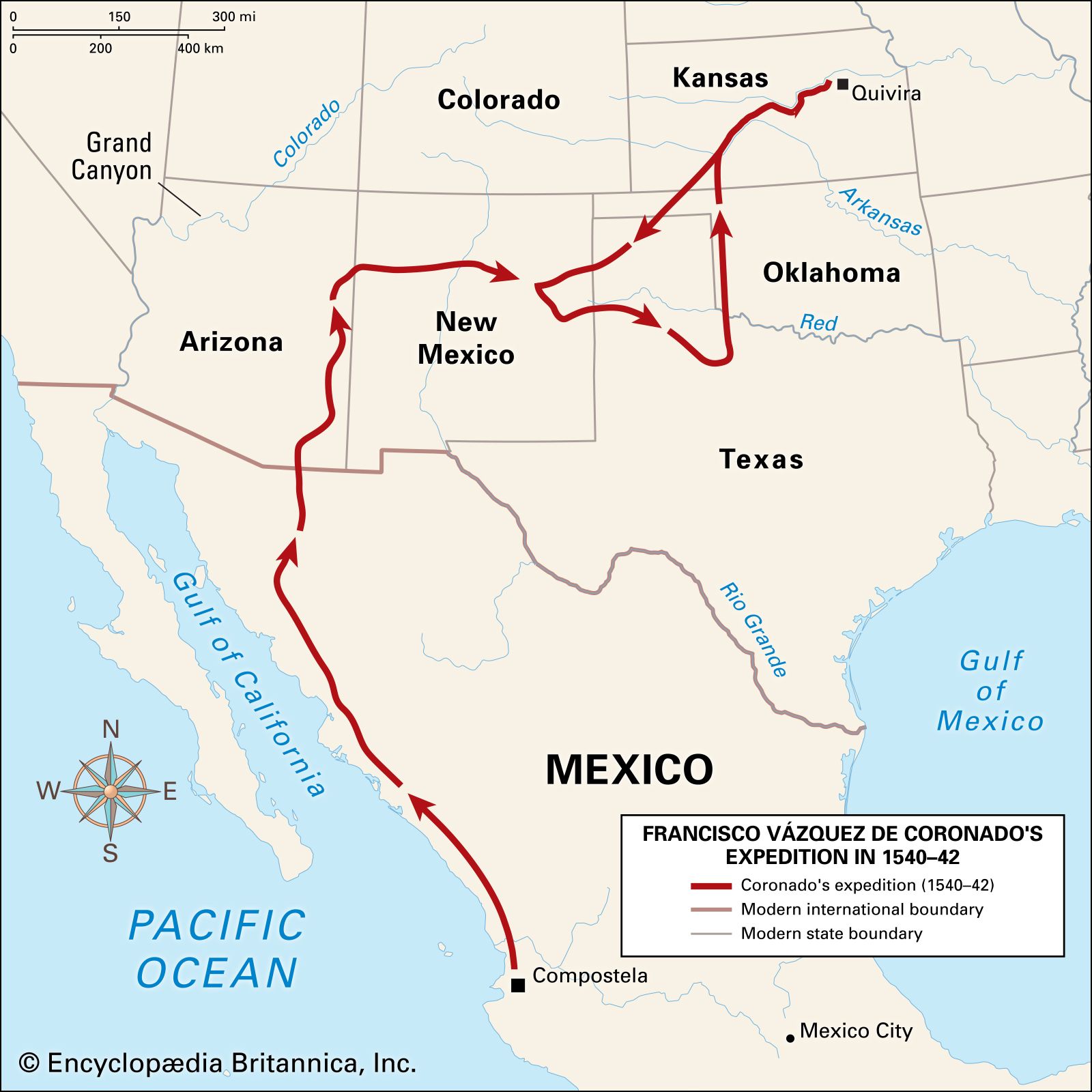
Long before Englishmen landed on the shores of Virginia and the rocks of Plymouth, Spanish explorers had already traversed the Atlantic coast from Labrador to the Strait of Magellan, and determined the extent of North America from Florida to California. Between 1539 and 1543, three Spanish expeditions explored the interior and western coast of the present United States. One expedition led by Hernando de Soto travelled from Florida to the Mississippi River and beyond. Francisco Vázquez de Coronado led an expedition from the west Mexican coast to central Kansas. The third expedition was led by Juan Rodriguez Cabrillo and explored the country from the west Mexican coast to possibly the Rogue River in Oregon. Collectively, these Spanish explorers determined the size of North America and assessed its abundant natural resources. Within this vast land lived many American Indian cultural groups, which the Spanish described in print for the first time within the Eurocentric context of the period. Francisco Vázquez de Coronado (1510–1554) was a Spanish conquistador and explorer who led a large expedition from what is now Mexico to present-day Kansas through what is now parts of the southwestern United States between 1540 and 1542. Vázquez de Coronado had hoped to reach the Cities of Cíbola, often referred to now as the mythical Seven Cities of Gold. His expedition marked the first European sightings of the Grand Canyon and the Colorado River, among other landmarks. Vázquez de Coronado was born into a noble family in Salamanca, Spain, in 1510 as the second son of Juan Vázquez de Coronado and Isabel de Luján. Juan Vázquez held various positions in the administration of the recently captured Emirate of Granada under Íñigo López de Mendoza, its first Christian governor. Francisco Vázquez de Coronado went to New Spain (present-day Mexico) in 1535 at about age 25, in the entourage of its first Viceroy, Antonio de Mendoza, the son of his father's patron and Vázquez de Coronado's personal friend. In New Spain, he married twelve-year-old Beatriz de Estrada, called "the Saint" (la Santa), sister of Leonor de Estrada, ancestor of the de Alvarado family and daughter of Treasurer and Governor Alonso de Estrada y Hidalgo, Lord of Picón, and his wife Marina Flores Gutiérrez de la Caballería, from a converso Jewish family. Vázquez de Coronado inherited a large portion of a Mexican encomendero estate through Beatriz and had eight children with her.
7
Week 7: Tuesday, November 17, 2026
Juan Rodríguez Cabrillo
Week 7
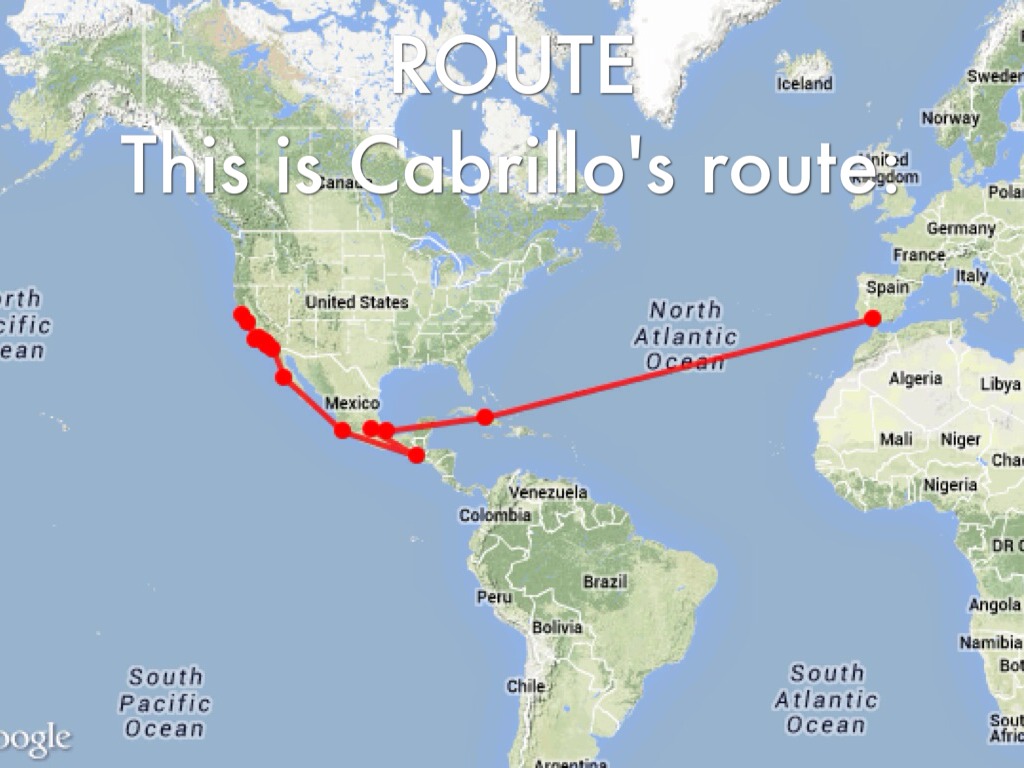
Juan Rodríguez Cabrillo (1497-1543) was a Portuguese maritime explorer best known for investigations of the west coast of North America, undertaken on behalf of the Spanish Empire. He was the first European to explore present-day Alta California, navigating along the coast of California in 1542–1543 on his voyage from New Spain (modern Mexico). Cabrillo's nationality – Spanish or Portuguese – has been debated more recently. He was described as Portuguese by Spanish chronicler Antonio de Herrera y Tordesillas; in his Historia General de los hechos de los Castellanos en las Islas y tierra firme del Mar Oceano, written 60 years after Cabrillo's death, Herrera referred to Cabrillo as Juan Rodriguez Cabrillo. Spain's Royal Chronicler, Antonio de Herrera y Tordesillas, wrote that Cabrilho was a Portuguese navigator, c. 1615. Of the few locations in Portugal who used to claim to be his birthplace, only Lapela de Cabril keeps having some legitimacy to do so. However, the source for Herrera's description is unknown. Certain historians, such as Edward Kritzler, claim that Cabrillo was possibly descended from Jewish conversos. Others point to the many flaws in Kritzler's work, including lack of evidence for such claims. Some historians have long believed that Cabrillo was from Spain, and a set of documents discovered in 2015 gave strength to that opinion. A witness from a 1532 lawsuit, named Juan Rodriguez Cabrillo, testified under oath that he was "natural" [sic] of Palma de Micergilio, which many misunderstood as if being born or native of now Palma del Río, a town in the province of Córdoba in Spain. As an example of the difference between being born/native and natural/naturalized F. Pizarro himself used to say he was "natural y nacido" (natural and born) in Trujillo, Spain. Other details of the witness's biography match known facts about the explorer.
8
Week 8: Tuesday, December 1, 2026
The Aztecs
Week 8
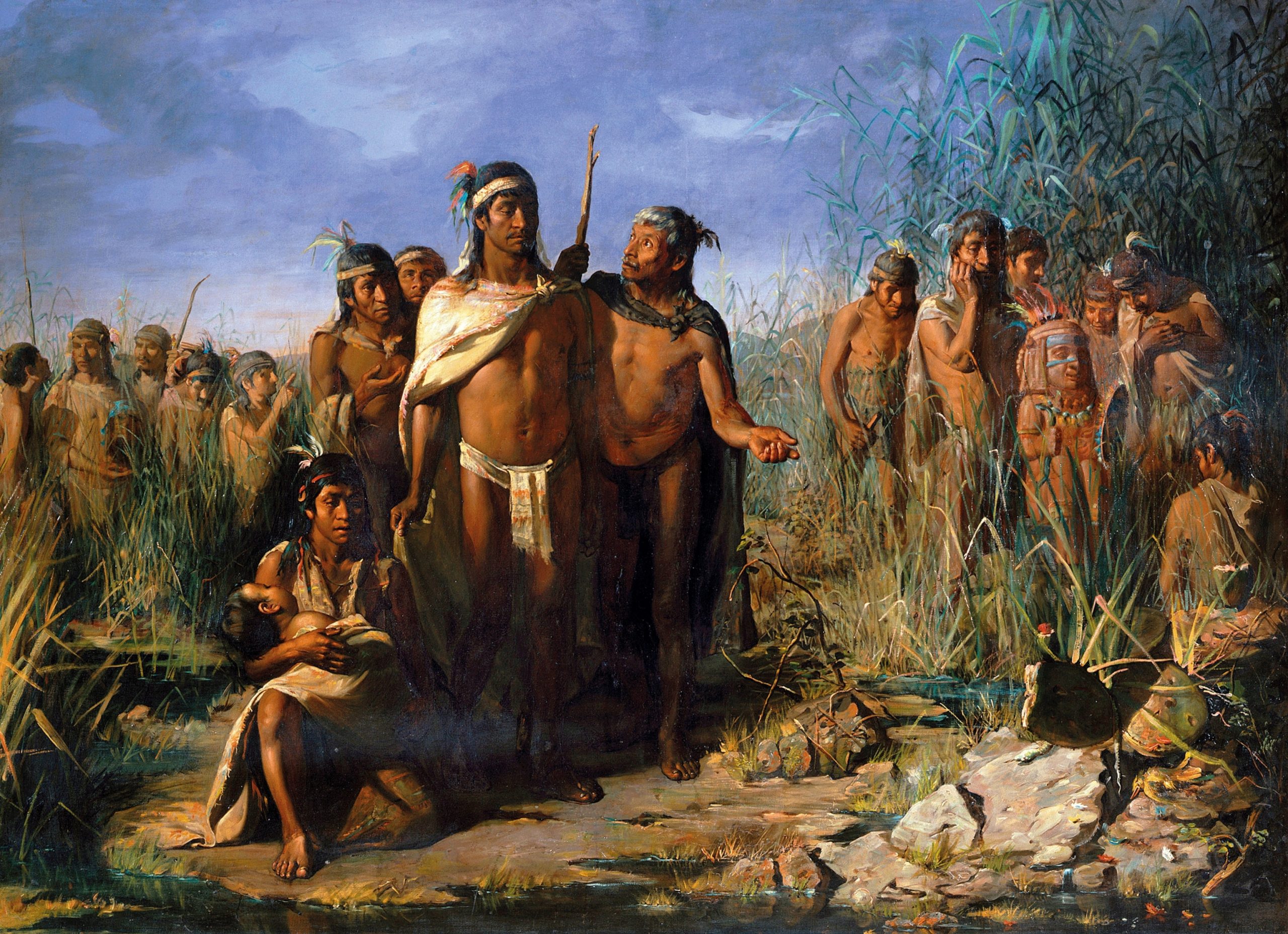
The Aztecs were a powerful Mesoamerican civilization that flourished in central Mexico from 1300 to 1521. They built a grand empire centered around their magnificent capital city, Tenochtitlan (now modern-day Mexico City), known for advanced engineering, a rich religious life involving ritual practices, and a dramatic collapse following the arrival of Spanish conquistadors. The people we call Aztecs referred to themselves as the Mexica or Tenochca. They spoke Nahuatl. The capital city of Tenochtitlan was founded in 1325 on a marshy island in Lake Texcoco. The city grew into an engineering marvel with artificial floating gardens (chinampas), canals, and massive pyramids. In 1428, Tenochtitlan joined with neighboring city-states Tetzcoco and Tlacopan to dominate the Valley of Mexico. The society was led by an emperor (Tlatoani), followed by a noble class, priests, warriors, merchants, commoners, and enslaved people. Schooling was strict and mandatory for children regardless of social class, with all boys receiving military training. Agriculture was the backbone of society, relying heavily on crops like corn (maize), beans, squash, tomatoes, and chili peppers. The Aztecs worshipped many gods, notably Huitzilopochtli (god of war and the sun) and Tlaloc (god of rain). Religious ceremonies included ritual human sacrifices, which they believed were necessary to nourish the sun and keep the universe functioning. Expansion relied on a fierce warrior tradition that demanded tribute and prisoners from the conquered regions.
9
Week 9: Tuesday, December 8, 2026
Hernán Cortés
Week 9
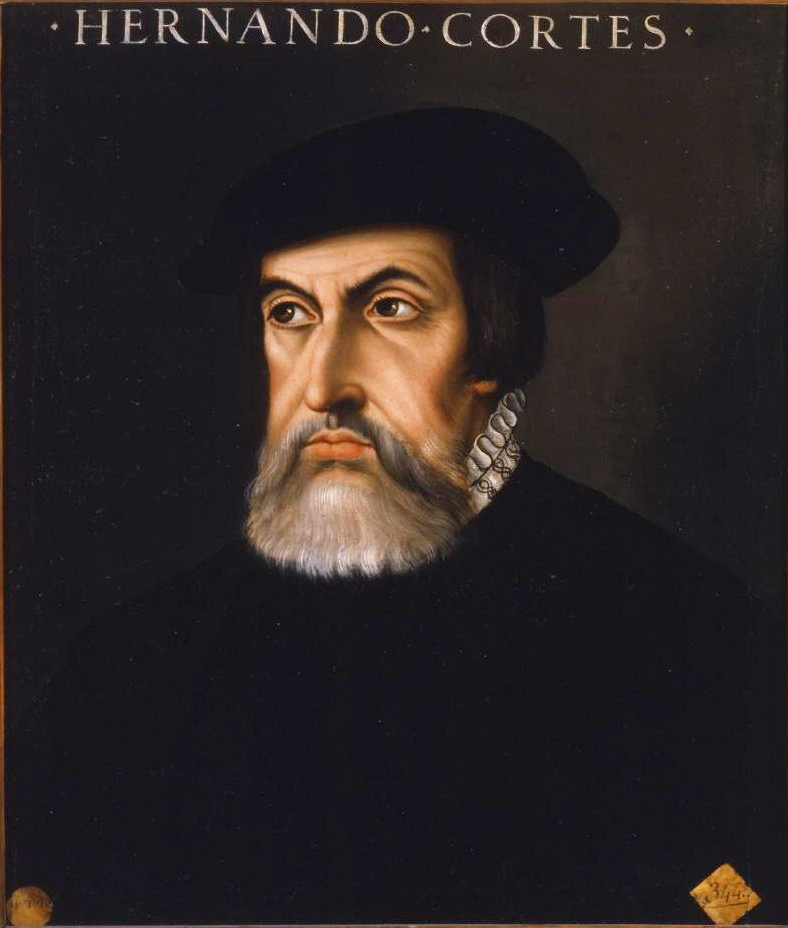
Hernán Cortés, 1st Marquis of the Valley of Oaxaca (1485 – 1547) was a Spanish conquistador, military commander, explorer, captain general, and writer who led an expedition that caused the fall of the Aztec Empire and brought large portions of what is now mainland Mexico under the rule of the King of Castile in the early 16th century. Cortés was part of the generation of Spanish explorers and conquistadors who began the first phase of the Spanish colonization of the Americas. Born in Medellín, Spain, to a family of lesser nobility, Cortés chose to pursue adventure and riches in the New World. He went to Hispaniola and later to Cuba, where he received an encomienda (the right to the labour of certain subjects). For a short time, he served as alcalde (magistrate) of the second Spanish town founded on the island. In 1519, he was elected captain of the third expedition to the mainland, which he partly funded. His enmity with the governor of Cuba, Diego Velázquez de Cuéllar, resulted in the recall of the expedition at the last moment, an order which Cortés ignored. Arriving on the continent, Cortés executed a successful strategy of allying with some indigenous people against others. He also used a native woman, Doña Marina, as an interpreter. She later gave birth to his first son. When the governor of Cuba sent emissaries to arrest Cortés, he fought them and won, using the extra troops as reinforcements. Cortés wrote letters directly to the king asking to be acknowledged for his successes instead of being punished for mutiny. After he overthrew the Aztec Empire, Cortés was awarded the title of marqués del Valle de Oaxaca, while the more prestigious title of viceroy was given to a high-ranking nobleman, Antonio de Mendoza. In 1541, Cortés returned to Spain, where he died six years later of natural causes.
10
All
Week 1: Tue., Oct. 6, 2026
Who Was Here
Week 1
Who was here in the Americas when the first European explorers arrived? Millions of people had lived on both North and South American continents when Columbus arrived in the Caribbean in October of 1492. The latest archaeological evidence just recently discovered in New Mexico suggests that there were human beings here as early as 18,000 BC. White Sands National Park in New Mexico sits within the Tularosa Basin, a closed desert basin with no natural drainage outlet, bounded by the San Andres Mountains to the west and the Sacramento Mountains to the east. The basin once held Paleolake Otero, a shallow lake that filled it during the last Ice Age; because the basin has no outlet, the lake's gypsum-rich sediments were never carried away. Within this gypsum sediment are the footprints: human tracks pressed into mud at the ancient lake's edge, then buried and preserved as the basin dried around them. These footprints are the oldest securely dated evidence of human presence in the Americas. Radiocarbon dating of layers bracketing the tracks places them at roughly ~23,000—21,000 years ago, roughly 2,000 years of repeated human activity when people repeatedly walked along the wet margins of ancient Lake Otero. Here below is a photo of the footprints of one of those first human beings in America.
...............
REQUIRED READING FOR THE WHOLE YEAR OF COMING TO AMERICA
From the Publisher:
"For too long we’ve lacked a compact, inexpensive, authoritative, and compulsively readable book that offers American readers a clear, informative, and inspiring narrative account of their country. Such a fresh retelling of the American story is especially needed today, to shape and deepen young Americans’ sense of the land they inhabit, help them to understand its roots and share in its memories, all the while equipping them for the privileges and responsibilities of citizenship in American society. The existing texts simply fail to tell that story with energy and conviction. Too often they reflect a fragmented outlook that fails to convey to American readers the grand trajectory of their own history. A great nation needs and deserves a great and coherent narrative, as an expression of its own self-understanding and its aspirations; and it needs to be able to convey that narrative effectively. Of course, it goes without saying that such a narrative cannot be a fairy tale of the past. It will not be convincing if it is not truthful. But as Land of Hope brilliantly shows, there is no contradiction between a truthful account of the American past and an inspiring one. Readers of Land of Hope will find both in its pages."
REVIEWS
“At a time of severe partisanship that has infected many accounts of our nation’s past, this brilliant new history, Land of Hope, written in lucid and often lyrical prose, is much needed. It is accurate, honest, and free of the unhistorical condescension so often paid to the people of America’s past. This generous but not uncritical story of our nation’s history ought to be read by every American. It explains and justifies the right kind of patriotism.”― Gordon S. Wood, author of Friends Divided: John Adams and Thomas Jefferson
“We’ve long needed a readable text that truly tells the American story, neither hiding the serious injustices in our history nor soft-pedaling our nation’s extraordinary achievements. Such a text cannot be a mere compilation of facts, and it certainly could not be written by someone lacking a deep understanding and appreciation of America’s constitutional ideals and institutions. Bringing his impressive skills as a political theorist, historian, and writer to bear, Wilfred McClay has supplied the need.”― Robert P. George, McCormick Professor of Jurisprudence, Princeton University
“No one has told the story of America with greater balance or better prose than Wilfred McClay. Land of Hope is a history book that you will not be able to put down. From the moment that ‘natives’ first crossed here over the Bering Strait, to the founding of America’s great experiment in republican government, to the horror and triumph of the Civil War...McClay’s account will capture your attention while offering an unforgettable education.”― James W. Ceaser, Professor of Politics, University of Virginia
Week 2: Tue., Oct. 13, 2026
First Explorers: Hudson, Cabot, Columbus
Week 2
Europeans remained unaware of the existence of the Americas as a whole, until 1492 when Christopher Columbus discovered the Americas and publicized his discovery to the rest of the world. On August 3, 1492, the Genoese navigator Christopher Columbus set sail under Spanish flag and with a Spanish crew from the Port of Palos de la Frontera in the Province of Huelva, from the newly los Reyes Católicos coordinated Kingdoms of Castile and Aragon, in present-day Spain, financed by Queen Isabella I of Castille. Columbus's Letter on the First Voyage of his discovery of the Bahamas, Cuba, and Hispaniola spread the news across Europe quickly. Columbus under the Spanish flag rediscovered and explored much of the Lesser Antilles in his second voyage then discovered both Trinidad and Tobago on his third voyage whilst skirting the northern South American coast. His fourth voyage was spent scanning the Central American coast. The Spanish voyages of Christopher Columbus opened the New World. Genoese navigator and explorer Giovanni Caboto (known in English as John Cabot) is credited with the discovery of continental North America on June 24, 1497, under the commission of Henry VII of England. Though the exact location of his discovery remains disputed, the Canadian and United Kingdom governments' official position is that he landed on the island of Newfoundland. The English presence through Giovanni Caboto was signaled in Juan de la Cosa's map of 1500. Nearly at the same time, between 1499 and 1502 the brothers Gaspar and Miguel Corte Real explored and named the coasts of Greenland, Labrador and also Newfoundland, naming "Terra Verde" the explored North American coasts. Universalis Cosmographia, the "Waldseemüller map" dated 1507, depicts the Americas, Africa, Europe, Asia, and the Pacific Ocean separating Asia from the Americas. It was soon understood that Columbus had not reached Asia, but rather found what was to Europeans a New World, which in 1507 was named "America", after Amerigo Vespucci, on the Waldseemüller map.
Week 3: Tue., Oct. 20, 2026
Amerigo Vespucci
Week 3
Amerigo Vespucci, (1454 – 22 February 1512) was an Italian explorer and navigator from the Republic of Florence after whom America is named. Vespucci participated in at least two voyages of the Age of Discovery between 1497 and 1504, first on behalf of Spain (1499–1500) and then for Portugal (1501–1502). In 1503 and 1505, two booklets were published under his name containing colourful descriptions of these explorations and other voyages. Both publications were extremely popular and widely read throughout much of Europe and they were instrumental in raising awareness of the discoveries and enhancing the reputation of Vespucci as an explorer and navigator. Vespucci claimed to have understood in 1501 that Brazil was part of a fourth continent unknown to Europeans, which he called the "New World" (Mundus Novus). The claim inspired cartographer Martin Waldseemüller to recognize Vespucci's accomplishments in 1507 by applying the Latinized form "America" to a map showing the New World. Other cartographers followed suit, securing the tradition of marking the name "America" on maps of the newly discovered continents. In 1505, he was made a subject of Castile by royal decree, and he was appointed to the position of piloto mayor (master navigator) for Spain's Casa de Contratación (House of Trade) in Seville in 1508, a post which he held until his death in 1512. Vespucci was born on 9 March 1454 in Florence, a wealthy Italian city-state and a center of Renaissance art and learning. Amerigo Vespucci was the third son of Nastagio Vespucci, a Florentine notary for the Money-Changers Guild, and Lisa di Giovanni Mini. The family resided in the District of Santa Lucia d'Ognissanti along with other families of the Vespucci clan. Among their neighbors were the Botticelli.
Week 4: Tue., Oct. 27, 2026
Cabeza de Vaca
Week 4
Álvar Núñez Cabeza de Vaca (1490 to after 19 May 1559) was a Spanish explorer of the New World, and one of four survivors of the 1527 Narváez expedition. During eight years of traveling across what is today the Southwestern United States, he became a trader, evangelist, and faith healer to various Native American tribes before reconnecting with Spanish civilization in Mexico in 1536. After returning to Spain in 1537, he wrote an account of his experiences, first published in 1542 as La relación y comentarios ("The Account and Commentaries"), and later retitled Naufragios y comentarios ("Shipwrecks and Commentaries"). Cabeza de Vaca is sometimes considered aa early anthropologist for his detailed accounts of the many tribes of Native Americans that he encountered. He has been portrayed as a unique explorer with a focus on expansion and faith conversion. In 1540, Cabeza de Vaca was appointed adelantado of what is now Paraguay, where he was governor and captain general of New Andalusia. He worked to build up the population of Buenos Aires but, he was charged with poor administration and arrested in 1544. He was subsequently transported to Spain for trial in 1545. Although his sentence was eventually commuted, he never returned to the Americas. His account of his journey within North America is an extraordinary story of the land and the people before the arrival of millions of Europeans.
RECOMMENDED READING
RECOMMENDED READING
The Narrative of Cabeza de Vaca,
Translated by Rolena Adorno and Patrick Charles Pautz,
University of Nebraska Press,
ISBN 978-0803264168
Week 5: Tue., Nov. 3, 2026
Hernando de Soto
Week 5
Hernando de Soto (1497 – 1542) was a Spanish explorer and conquistador, who was involved in expeditions in Nicaragua and the Yucatan Peninsula. He played an important role in Francisco Pizarro's conquest of the Inca Empire in Peru, but is best known for leading the first European expedition deep into the territory of the modern-day United States (through Florida, Georgia, Tennessee, Alabama, North Carolina, South Carolina, Mississippi, and most likely Arkansas). He is the first European documented as having crossed the Mississippi River. De Soto's North American expedition was a vast undertaking. It ranged throughout what is now the southeastern United States, searching both for gold, which had been reported by various Native American tribes and earlier coastal explorers, and for a passage to China or the Pacific coast. De Soto died in 1542 on the banks of the Mississippi River; sources disagree on the exact location, whether it was what is now Lake Village, Arkansas, or Ferriday, Louisiana. Although the scribe (Garcilaso) and the translator (Hakluyt) took different approaches regarding the presentation of de Soto's voyage, both intellectuals took unofficial accounts and instilled them with authority for the benefit of their respective empires. Their writings created overlapping yet distinct portrayals of de Soto's expedition, shaped by each author's cultural and political context.
RECOMMENDED READING
Knights of Spain, Warriors of the Sun: Hernando de Soto and the South's Ancient Chiefdoms,
Forward by Robbie Ethridge,
University of Georgia Press,
ISBN 978-0820351605
Week 6: Tue., Nov. 10, 2026
Francisco Vázquez de Coronado
Week 6
Long before Englishmen landed on the shores of Virginia and the rocks of Plymouth, Spanish explorers had already traversed the Atlantic coast from Labrador to the Strait of Magellan, and determined the extent of North America from Florida to California. Between 1539 and 1543, three Spanish expeditions explored the interior and western coast of the present United States. One expedition led by Hernando de Soto travelled from Florida to the Mississippi River and beyond. Francisco Vázquez de Coronado led an expedition from the west Mexican coast to central Kansas. The third expedition was led by Juan Rodriguez Cabrillo and explored the country from the west Mexican coast to possibly the Rogue River in Oregon. Collectively, these Spanish explorers determined the size of North America and assessed its abundant natural resources. Within this vast land lived many American Indian cultural groups, which the Spanish described in print for the first time within the Eurocentric context of the period. Francisco Vázquez de Coronado (1510–1554) was a Spanish conquistador and explorer who led a large expedition from what is now Mexico to present-day Kansas through what is now parts of the southwestern United States between 1540 and 1542. Vázquez de Coronado had hoped to reach the Cities of Cíbola, often referred to now as the mythical Seven Cities of Gold. His expedition marked the first European sightings of the Grand Canyon and the Colorado River, among other landmarks. Vázquez de Coronado was born into a noble family in Salamanca, Spain, in 1510 as the second son of Juan Vázquez de Coronado and Isabel de Luján. Juan Vázquez held various positions in the administration of the recently captured Emirate of Granada under Íñigo López de Mendoza, its first Christian governor. Francisco Vázquez de Coronado went to New Spain (present-day Mexico) in 1535 at about age 25, in the entourage of its first Viceroy, Antonio de Mendoza, the son of his father's patron and Vázquez de Coronado's personal friend. In New Spain, he married twelve-year-old Beatriz de Estrada, called "the Saint" (la Santa), sister of Leonor de Estrada, ancestor of the de Alvarado family and daughter of Treasurer and Governor Alonso de Estrada y Hidalgo, Lord of Picón, and his wife Marina Flores Gutiérrez de la Caballería, from a converso Jewish family. Vázquez de Coronado inherited a large portion of a Mexican encomendero estate through Beatriz and had eight children with her.
Week 7: Tue., Nov. 17, 2026
Juan Rodríguez Cabrillo
Week 7
Juan Rodríguez Cabrillo (1497-1543) was a Portuguese maritime explorer best known for investigations of the west coast of North America, undertaken on behalf of the Spanish Empire. He was the first European to explore present-day Alta California, navigating along the coast of California in 1542–1543 on his voyage from New Spain (modern Mexico). Cabrillo's nationality – Spanish or Portuguese – has been debated more recently. He was described as Portuguese by Spanish chronicler Antonio de Herrera y Tordesillas; in his Historia General de los hechos de los Castellanos en las Islas y tierra firme del Mar Oceano, written 60 years after Cabrillo's death, Herrera referred to Cabrillo as Juan Rodriguez Cabrillo. Spain's Royal Chronicler, Antonio de Herrera y Tordesillas, wrote that Cabrilho was a Portuguese navigator, c. 1615. Of the few locations in Portugal who used to claim to be his birthplace, only Lapela de Cabril keeps having some legitimacy to do so. However, the source for Herrera's description is unknown. Certain historians, such as Edward Kritzler, claim that Cabrillo was possibly descended from Jewish conversos. Others point to the many flaws in Kritzler's work, including lack of evidence for such claims. Some historians have long believed that Cabrillo was from Spain, and a set of documents discovered in 2015 gave strength to that opinion. A witness from a 1532 lawsuit, named Juan Rodriguez Cabrillo, testified under oath that he was "natural" [sic] of Palma de Micergilio, which many misunderstood as if being born or native of now Palma del Río, a town in the province of Córdoba in Spain. As an example of the difference between being born/native and natural/naturalized F. Pizarro himself used to say he was "natural y nacido" (natural and born) in Trujillo, Spain. Other details of the witness's biography match known facts about the explorer.
Week 8: Tue., Dec. 1, 2026
The Aztecs
Week 8
The Aztecs were a powerful Mesoamerican civilization that flourished in central Mexico from 1300 to 1521. They built a grand empire centered around their magnificent capital city, Tenochtitlan (now modern-day Mexico City), known for advanced engineering, a rich religious life involving ritual practices, and a dramatic collapse following the arrival of Spanish conquistadors. The people we call Aztecs referred to themselves as the Mexica or Tenochca. They spoke Nahuatl. The capital city of Tenochtitlan was founded in 1325 on a marshy island in Lake Texcoco. The city grew into an engineering marvel with artificial floating gardens (chinampas), canals, and massive pyramids. In 1428, Tenochtitlan joined with neighboring city-states Tetzcoco and Tlacopan to dominate the Valley of Mexico. The society was led by an emperor (Tlatoani), followed by a noble class, priests, warriors, merchants, commoners, and enslaved people. Schooling was strict and mandatory for children regardless of social class, with all boys receiving military training. Agriculture was the backbone of society, relying heavily on crops like corn (maize), beans, squash, tomatoes, and chili peppers. The Aztecs worshipped many gods, notably Huitzilopochtli (god of war and the sun) and Tlaloc (god of rain). Religious ceremonies included ritual human sacrifices, which they believed were necessary to nourish the sun and keep the universe functioning. Expansion relied on a fierce warrior tradition that demanded tribute and prisoners from the conquered regions.
Week 9: Tue., Dec. 8, 2026
Hernán Cortés
Week 9
Hernán Cortés, 1st Marquis of the Valley of Oaxaca (1485 – 1547) was a Spanish conquistador, military commander, explorer, captain general, and writer who led an expedition that caused the fall of the Aztec Empire and brought large portions of what is now mainland Mexico under the rule of the King of Castile in the early 16th century. Cortés was part of the generation of Spanish explorers and conquistadors who began the first phase of the Spanish colonization of the Americas. Born in Medellín, Spain, to a family of lesser nobility, Cortés chose to pursue adventure and riches in the New World. He went to Hispaniola and later to Cuba, where he received an encomienda (the right to the labour of certain subjects). For a short time, he served as alcalde (magistrate) of the second Spanish town founded on the island. In 1519, he was elected captain of the third expedition to the mainland, which he partly funded. His enmity with the governor of Cuba, Diego Velázquez de Cuéllar, resulted in the recall of the expedition at the last moment, an order which Cortés ignored. Arriving on the continent, Cortés executed a successful strategy of allying with some indigenous people against others. He also used a native woman, Doña Marina, as an interpreter. She later gave birth to his first son. When the governor of Cuba sent emissaries to arrest Cortés, he fought them and won, using the extra troops as reinforcements. Cortés wrote letters directly to the king asking to be acknowledged for his successes instead of being punished for mutiny. After he overthrew the Aztec Empire, Cortés was awarded the title of marqués del Valle de Oaxaca, while the more prestigious title of viceroy was given to a high-ranking nobleman, Antonio de Mendoza. In 1541, Cortés returned to Spain, where he died six years later of natural causes.