Week 3
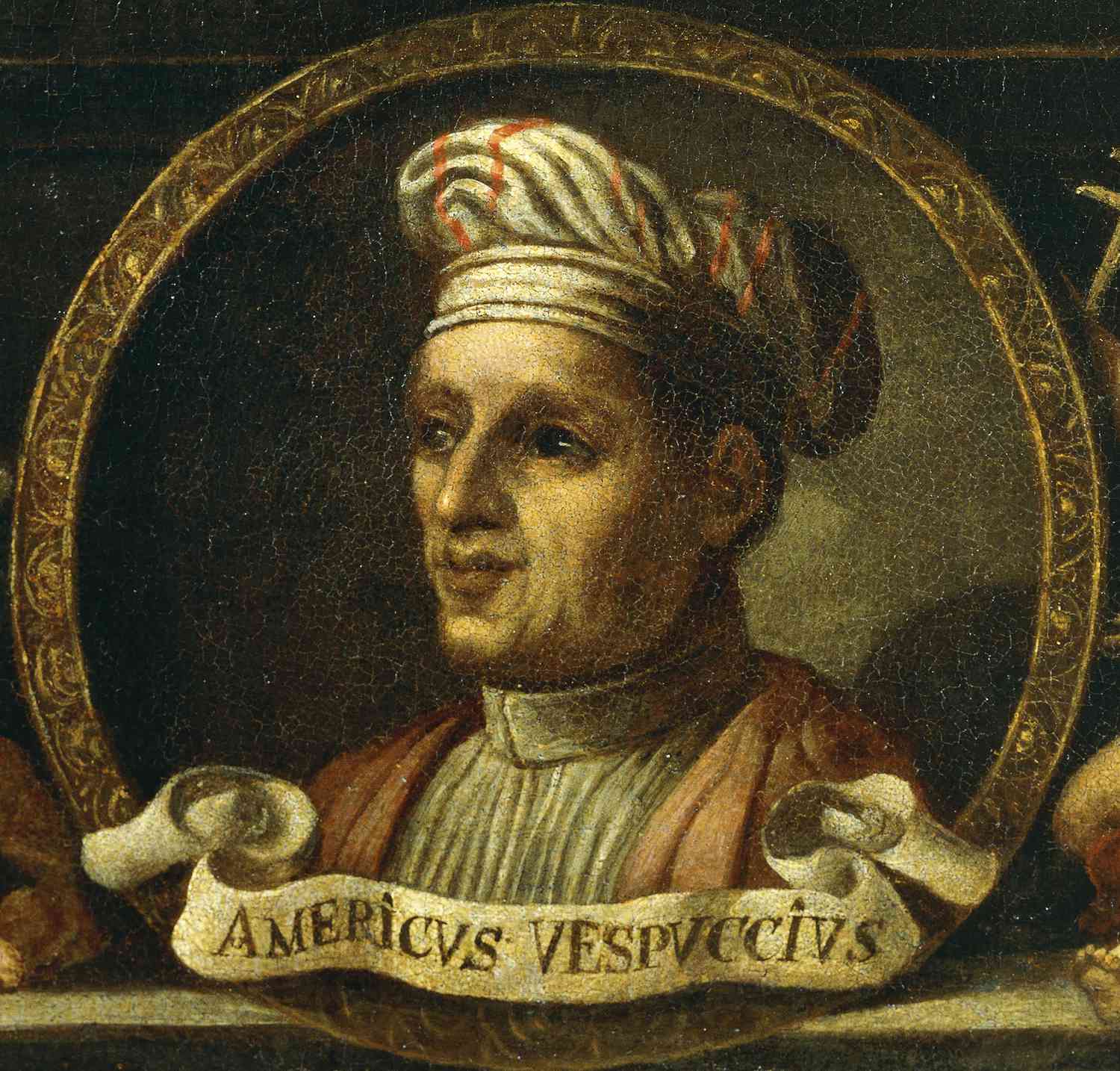
Amerigo Vespucci, (1454 – 22 February 1512) was an Italian explorer and navigator from the Republic of Florence after whom America is named. Vespucci participated in at least two voyages of the Age of Discovery between 1497 and 1504, first on behalf of Spain (1499–1500) and then for Portugal (1501–1502). In 1503 and 1505, two booklets were published under his name containing colourful descriptions of these explorations and other voyages. Both publications were extremely popular and widely read throughout much of Europe and they were instrumental in raising awareness of the discoveries and enhancing the reputation of Vespucci as an explorer and navigator. Vespucci claimed to have understood in 1501 that Brazil was part of a fourth continent unknown to Europeans, which he called the "New World" (Mundus Novus). The claim inspired cartographer Martin Waldseemüller to recognize Vespucci's accomplishments in 1507 by applying the Latinized form "America" to a map showing the New World. Other cartographers followed suit, securing the tradition of marking the name "America" on maps of the newly discovered continents. In 1505, he was made a subject of Castile by royal decree, and he was appointed to the position of piloto mayor (master navigator) for Spain's Casa de Contratación (House of Trade) in Seville in 1508, a post which he held until his death in 1512. Vespucci was born on 9 March 1454 in Florence, a wealthy Italian city-state and a center of Renaissance art and learning. Amerigo Vespucci was the third son of Nastagio Vespucci, a Florentine notary for the Money-Changers Guild, and Lisa di Giovanni Mini. The family resided in the District of Santa Lucia d'Ognissanti along with other families of the Vespucci clan. Among their neighbors were the Botticelli.