Week 7
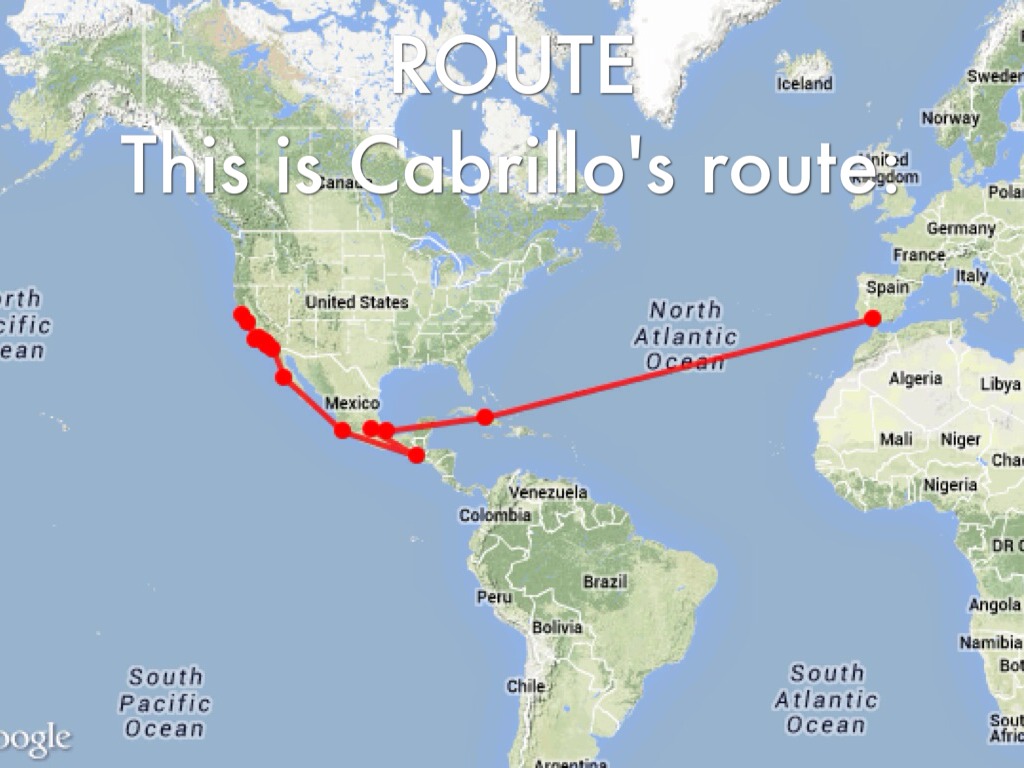
Juan Rodríguez Cabrillo (1497-1543) was a Portuguese maritime explorer best known for investigations of the west coast of North America, undertaken on behalf of the Spanish Empire. He was the first European to explore present-day Alta California, navigating along the coast of California in 1542–1543 on his voyage from New Spain (modern Mexico). Cabrillo's nationality – Spanish or Portuguese – has been debated more recently. He was described as Portuguese by Spanish chronicler Antonio de Herrera y Tordesillas; in his Historia General de los hechos de los Castellanos en las Islas y tierra firme del Mar Oceano, written 60 years after Cabrillo's death, Herrera referred to Cabrillo as Juan Rodriguez Cabrillo. Spain's Royal Chronicler, Antonio de Herrera y Tordesillas, wrote that Cabrilho was a Portuguese navigator, c. 1615. Of the few locations in Portugal who used to claim to be his birthplace, only Lapela de Cabril keeps having some legitimacy to do so. However, the source for Herrera's description is unknown. Certain historians, such as Edward Kritzler, claim that Cabrillo was possibly descended from Jewish conversos. Others point to the many flaws in Kritzler's work, including lack of evidence for such claims. Some historians have long believed that Cabrillo was from Spain, and a set of documents discovered in 2015 gave strength to that opinion. A witness from a 1532 lawsuit, named Juan Rodriguez Cabrillo, testified under oath that he was "natural" [sic] of Palma de Micergilio, which many misunderstood as if being born or native of now Palma del Río, a town in the province of Córdoba in Spain. As an example of the difference between being born/native and natural/naturalized F. Pizarro himself used to say he was "natural y nacido" (natural and born) in Trujillo, Spain. Other details of the witness's biography match known facts about the explorer.