Week 2
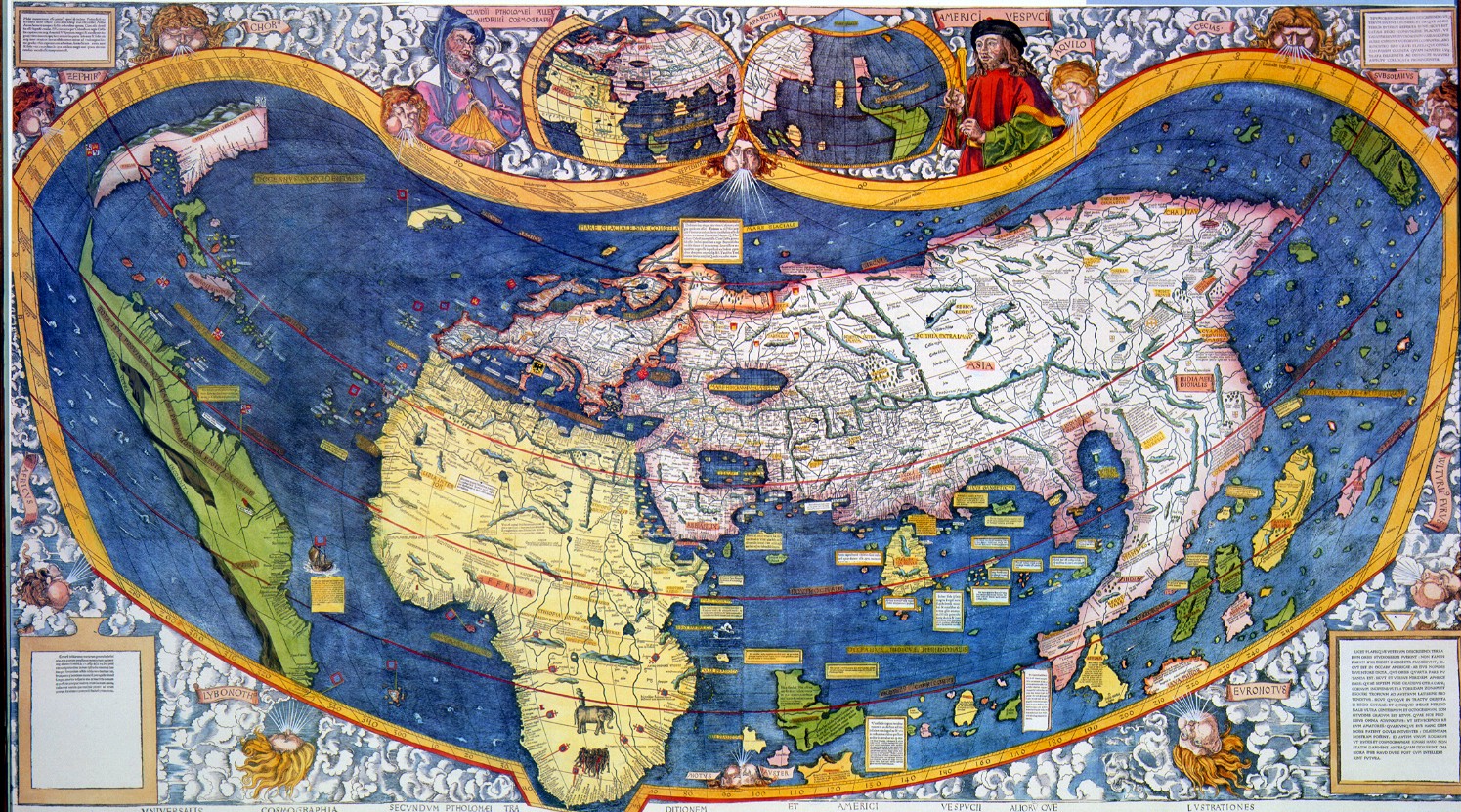
Europeans remained unaware of the existence of the Americas as a whole, until 1492 when Christopher Columbus discovered the Americas and publicized his discovery to the rest of the world. On August 3, 1492, the Genoese navigator Christopher Columbus set sail under Spanish flag and with a Spanish crew from the Port of Palos de la Frontera in the Province of Huelva, from the newly los Reyes Católicos coordinated Kingdoms of Castile and Aragon, in present-day Spain, financed by Queen Isabella I of Castille. Columbus's Letter on the First Voyage of his discovery of the Bahamas, Cuba, and Hispaniola spread the news across Europe quickly. Columbus under the Spanish flag rediscovered and explored much of the Lesser Antilles in his second voyage then discovered both Trinidad and Tobago on his third voyage whilst skirting the northern South American coast. His fourth voyage was spent scanning the Central American coast. The Spanish voyages of Christopher Columbus opened the New World. Genoese navigator and explorer Giovanni Caboto (known in English as John Cabot) is credited with the discovery of continental North America on June 24, 1497, under the commission of Henry VII of England. Though the exact location of his discovery remains disputed, the Canadian and United Kingdom governments' official position is that he landed on the island of Newfoundland. The English presence through Giovanni Caboto was signaled in Juan de la Cosa's map of 1500. Nearly at the same time, between 1499 and 1502 the brothers Gaspar and Miguel Corte Real explored and named the coasts of Greenland, Labrador and also Newfoundland, naming "Terra Verde" the explored North American coasts. Universalis Cosmographia, the "Waldseemüller map" dated 1507, depicts the Americas, Africa, Europe, Asia, and the Pacific Ocean separating Asia from the Americas. It was soon understood that Columbus had not reached Asia, but rather found what was to Europeans a New World, which in 1507 was named "America", after Amerigo Vespucci, on the Waldseemüller map.