Week 11
Week 11: Thursday, January 8, 2026
Quid Athenae Hierosolymis?
Week 11
From 100 to 1000 AD, "Quid Athenae Hierosolymis?"
What does Athens have to do with Jerusalem?
In other words, what do Plato and Aristotle have to do with Abraham and Jesus of Nazareth?
Athens, Rome, Jerusalem, and Saint Augustine
The generation of mid-century: Augustine, Ambrose, and Jerome
REQUIRED READING
RECOMMENDED READING
There is one classic biography of Augustine published almost forty years ago and still the best. And even better is a new edition published last year in which the author adds an epilogue in which he discusses recently discovered letters and sermons by Augustine (Yes! It sounds incredible doesn't it that we could still be finding works by Augustine, but that is the nature and excitement of scholarship.)
12
Week 12: Thursday, January 15, 2026
The Dark Ages: 500-1000
Week 12
The Roman Empire, the greatest European empire of all time, slowly collapsed during the fifth century. By the time Augustine died, he and others in his generation were aware that the vast international structure under which they had lived their lives was disintegrating. Roman legions withdrew from various provinces—Britain and Spain, for example; chaos and confusion grew in all the border regions; and the citizens in the capital became less and less committed to the Roman political responsibility.
In the outlying regions of what had been the Empire, new local arrangements to provide security and community sprang up. This process was different in every region. In what had been Gaul, a new Frankish state appeared. In Spain, a new Visigothic state arose. In northern Italy, a new Lombard state led by "The King of Italy" appeared. The most important aspect of this new situation was that no new empire replaced the old one.
In this new world there would be many competing states, and these would constitute the emerging Medieval Europe. This development was creative and positive; it meant new institutions, new languages, new styles of literature, and new religious structures. This reordering is our subject for week 12.
RECOMMENDED READING
This book by Henri Pirenne is one of the great interpretations of the Dark Ages. Pirenne was a Belgian Medievalist who was fascinated by the role of Islam in Medieval history.

13
Week 13: Thursday, January 22, 2026
Eleanor of Aquitaine
Week 13
The 12th century and Eleanor of Aquitaine
The world of feudalism, the Crusades, and Courtly Love
"In democracy your vote counts, in feudalism your Count votes."
RECOMMENDED READING
Eleanor of Aquitaine and the Four Kings,
Harvard University Press,
ISBN 0674242548
Amy Kelly, Eleanor of Aquitaine and the Four Kings, (originally published in 1957, still in print from Harvard University Press, ISBN: 0674242548.) & Alison Weir, Eleanor of Aquitaine (1999).
Amy Kelly wrote her great biography of Eleanor more than fifty years ago and I still think it is the best. It is one of the greatest biographies I know and I have read it many times. So if you want to start out with one book about Eleanor read Kelly first. You will enjoy every page. The new biography by Alison Weir is full of new material and a fine work of history and I have benefited from her updating of the Eleanor story. But it is not the sweeping saga that you find in Kelly and I doubt anyone will ever write a better biography of Eleanor.
ELEANOR AT THE MOVIES: If you want to enjoy the best motion picture version of Eleanor ever made, go find Lion in Winter with Katherine Hepburn at her Academy-Award-winning best, Peter O'Toole as Henry, Anthony Hopkins as Richard, and a young Timothy Dalton as King Philip of France. The cast is spectacular. Katharine and Peter maneuver and shout as Eleanor and Henry did in real life; it is all so good you can't believe it. When you watch it, remember that it deals with a moment in Eleanor's long life during which Henry has locked her up so that he won't have to share power with her. The movie portrays Eleanor as a woman without power, languishing in Henry's luxurious jail. But that situation was just one in her long life. After Henry dies in 1189, Eleanor is back in the driver's seat as her son Richard goes off to a Crusade and leaves England in her hands.
RECOMMENDED READING
This is the best general treatment of the Middle Ages (and there are 100s).
HIGHLY RECOMMENDED GENERAL BOOK ON MIDDLE AGES:
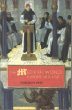
This week we begin studying the period that is known as the "Middle Ages" and I know many of you will want to have some general history of the Middle Ages to give you background beyond that which we have time to study in class. There is such a book and I am happy to tell you that it is available in a nice paperback edition. The chapters on Eleanor and Courtly Love are excellent.
Friedrich Heer, The Medieval World, first published in 1961 and still the best one-volume history of the Middle Ages that I know. Paperback - 384 pages (October 1998, ISBN: 1566491975, $18.95).
14
Week 14: Thursday, January 29, 2026
Love Hurts
Week 14
Courtly love, courtly love poetry, and the troubadours
The South: Bordeaux, Poitiers, Toulouse
Eleanor and the world of courtly love
Eleanor, Henry, and the Angevin empire
The Angevins and the Matter of Britain
Bernart de Ventadorn (fl 1150-1180)
REQUIRED READING
Items that will be available in class:
- Most famous poem of courtly love: Bernart de Ventador (email)
- Joyce Carol Oates, "Love in the Western World" (email)
- Mother Teresa (email)
This article by the great novelist Joyce Carol Oates is the best summary ever written of that unique phenomenon that we study this week: Western ideas of love.
RECOMMENDED READING
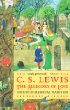
If you want to read more about Courtly Love there is no better place to begin than in C. S. Lewis's brilliant Allegory of Love especially the first chapter. Lewis and the whole circle of Medievalists of whom he was a part (Tolkien, Dorothy Sayers), blazed a trail of research in this field and we are still in their debt.
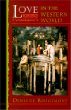
The one book that has had a greater influence on our ideas of love in the West than any other book is the brilliant Love in the Western Worldby Denis de Rougemont. De Rougemont (1906-1985) was one of the most influential European intellectuals of his generation. His book came out first in 1939 and then was revised several times with the 1972 edition being the definitive final edition. This book simply changed the way people thought about Western cultural history. It was of extraordinary importance and is still the beginning point for any study of the unique phenomenon of love in the Western world.
15
Week 15: Thursday, February 5, 2026
Abelard and Heloise
Week 15
Abelard and Heloise were famous for their 12th-century love affair, which became a tragic tale of forbidden love, intellectual passion, and a resulting scandal. Abelard, a brilliant philosopher and teacher, and Heloise, his equally brilliant and educated student, fell deeply in love, leading to a secret relationship and a child. This affair was discovered by Heloise's uncle, who retaliated by hiring a band of thugs to castrate Abelard. The scandal was one of the most famous incidents ever to happen in Medieval Paris. They then chose to go into religious orders: Abelard as a monk and Heloise as a nun, where they maintained a passionate correspondence through letters, al of which have survived.
REQUIRED READING
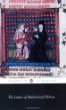
There are two very fine introductory essays at the beginning of this Penguin edition. The translator Betty Radice writes a useful introduction to the collection of letters, and M. T. Clanchy provides an interesting update on the fate of the letters in his "The Letters of Abelard and Heloise in Today's Scholarship."
"Historia Calamitatum" pp. 3–43
"Personal Letters" pp. 47–89
RECOMMENDED READING
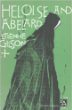
For those of you who get caught up in the drama of Abelard and Heloise and want to read more about their story there is one great classic study from one of the most important French Medieval historians of all time, Etienne Gilson. It is a small, rich book based on lectures Gilson delivered in Paris in 1936 and thanks to the University of Michigan Press it is still in print. Especially interesting is the detailed analysis Gilson provides for our proper understanding of the marriage and why it was a mistake for Abelard in relation to his career as a professor of theology.
16
Week 16: Thursday, February 12, 2026
Dante and Florence
Week 16
An introduction to Dante
- The 13th century: commerce, urbanization, growth, and success
- Italy in the 13th century: in the middle of the action
- Florence: great success in the period from 1250 to 1300; introduction of the florin
- Dante: 1265–1321
REQUIRED READING
Make sure you bring your copy of the Divine Comedy, Inferno, to class this week as we shall discuss passages and read them together. The Mandelbaum translation is the one we have chosen, and it is on the Required Reading page for this class. Its value is that it gives you an English and an Italian version on facing pages at a reasonable price.
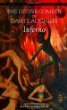
The Divine Comedy: Inferno,
translated by Allen Mandelbaum,
Bantam Classic,
ISBN 0553213393
Why choose this translation from among the 100's that exist? Read these comments:
Review "The English Dante of choice."--Hugh Kenner.
"Exactly what we have waited for these years, a Dante with clarity, eloquence, terror, and profoundly moving depths."--Robert Fagles, Princeton University
"Tough and supple, tender and violent . . . vigorous, vernacular . . . Mandelbaum's Dante will stand high among modern translations."--The Christian Science Monitor
"Lovers of the English language will be delighted by this eloquently accomplished enterprise." --Book Review Digest
From the Publisher: This splendid verse translation by Allen Mandelbaum provides an entirely fresh experience of Dante's great poem of penance and hope. As Dante ascends the Mount of Purgatory toward the Earthly Paradise and his beloved Beatrice, through "that second kingdom in which the human soul is cleansed of sin," all the passion and suffering, poetry and philosophy are rendered with the immediacy of a poet of our own age. With extensive notes and commentary prepared especially for this edition.
RECOMMENDED READING
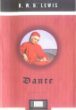
HIGHLY RECOMMENDED: There is a good biography of Dante written by the late R. W. B. Lewis, Dante (ISBN 0670899097) and it is excellent and exactly what many of you will want: a short (200 pages), well-written, inexpensive ($19.95) biography of Dante. It is perfect for our course and although I don't want to make it a required book, I am sure that anyone who buys it will be happy they did.
17
Week 17: Thursday, February 19, 2026
Petrarch
Week 17
Francesco Petrarca of Florence
Petrarch and the 14th century
REQUIRED READING:
See the materials on the sidebar, with chronologies and a Petrarch biography page that includes his poem "Solo e Pensoso," as well as other information.
Make sure you read Petrarch's "Letter to Posterity".
RECOMMENDED READING
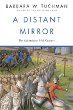
A Distant Mirror: The Calamitous 14th Century,
Random House Trade Paperbacks; Reissue edition (July 12, 1987),
ISBN 0345349571
This is the best book in English on the 14th Century and I can't imagine anyone will ever write a better one. Barbara Tuchman was a miracle in the history world. She had no special training; she was just a Manhattan housewife who loved history. One day she walked down Fifth Avenue to the New York Public Library. She began to read and soon began to write and was soon into a spectacular career as an international best-selling author. She wrote five of the best books ever written in the field. Her masterpiece is A Distant Mirror on the 14th Century. She takes one character, Enguerand de Coucy, a French noble whose life touched almost everyone important in the century, and then she takes us all through the stories of the incredible century. History has never been better. It is like a novel; only better. You can read it on paper, in Kindle, or on audible.
Amazon Comment:
In this sweeping historical narrative, Barbara Tuchman writes of the cataclysmic 14th century, when the energies of medieval Europe were devoted to fighting internecine wars and warding off the plague. Some medieval thinkers viewed these disasters as divine punishment for mortal wrongs; others, more practically, viewed them as opportunities to accumulate wealth and power. One of the latter, whose life informs much of Tuchman's book, was the French nobleman Enguerrand de Coucy, who enjoyed the opulence and elegance of the courtly tradition while ruthlessly exploiting the peasants under his thrall. Tuchman looks into such events as the Hundred Years War, the collapse of the medieval church, and the rise of various heresies, pogroms, and other events that caused medieval Europeans to wonder what they had done to deserve such horrors.
Reviews:
“Beautifully written, careful and thorough in its scholarship . . . What Ms. Tuchman does superbly is to tell how it was. . . . No one has ever done this better.”—The New York Review of Books
“A beautiful, extraordinary book . . . Tuchman at the top of her powers . . . She has done nothing finer.”—The Wall Street Journal
“Wise, witty, and wonderful . . . a great book, in a great historical tradition.”—Commentary
From the Publisher
Anyone who has read THE GUNS OF AUGUST or STILWELL AND THE AMERICAN EXPERIENCE IN CHINA, knows that Barbara Tuchman was one of the most gifted American writers of this century. Her subject was history, but her profiles of great men and great events are drawn with such power that reading Tuchman becomes a riveting experience. In A DISTANT MIRROR, Barbara Tuchman illuminates the Dark Ages. Her description of medieval daily life, the role of the church, the influence of the Great Plagues, and the social and political conventions that make this period of history so engrossing, are carefully woven into an integrated narrative that sweeps the reader along. I am a particular devotee of medieval and pre Renaissance music, so Barbara Tuchman's brilliant analysis of this period has special meaning for me - and I hope for many others. George Davidson, Director of Production, The Ballantine Publishing Group
About the Author
Barbara W. Tuchman (1912–1989) achieved prominence as a historian with The Zimmermann Telegram and international fame with The Guns of August—a huge bestseller and winner of the Pulitzer Prize. Her other works include Bible and Sword, The Proud Tower, Stilwell and the American Experience in China (for which Tuchman was awarded a second Pulitzer Prize), Notes from China, A Distant Mirror, Practicing History, The March of Folly, and The First Salute.
18
Week 18: Thursday, February 26, 2026
Boccaccio
Week 18
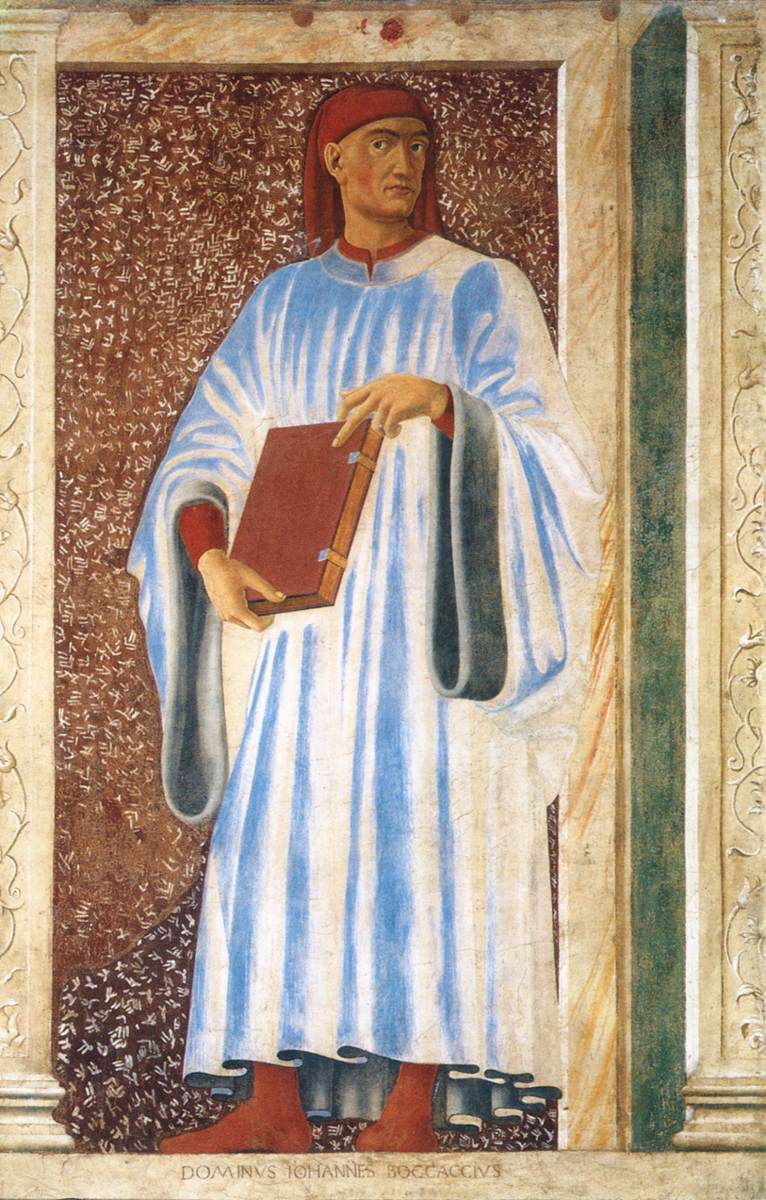
Giovanni Boccaccio was born in 1313, in the small town of Certaldo which is located just south of Florence in the Val d' Elsa. His father was a merchant-banker and in 1326 the family moved to Naples. In this huge bustling international city, young Giovanni went to work in his father's bank to learn about the world of business.
But he soon realized he cared nothing about business, so he convinced his father to allow him to enter the University of Naples in order to study Law. Giovanni cared only a little more about the Law than he did about banking, but he loved the university and used his six years there to acquire a brilliant education.
Naples was much more international than Florence, with ties to the Islamic world, across the sea, and to Egypt, to Greece, and the Byzantine empire. And so when Giovanni returned to Florence in 1341, he now possessed a sophisticated education that included knowledge of some Greek, and a knowledge of philosophy, law, and literature.
During the next six years, Boccaccio wrote a number of works and attempted to create a career in literature. A professional writer at that time relied on patrons. There was no copyright, no income from one's printed works. So the professional writer looked for financial support from various sponsors: political, religious, private.
Then the event that would change his life and his career hit all of Italy: the Black Death; the bubonic plague. Florence was hit as hard as any large city. And in months, the population of this city of 100,000 fell by half. Maybe more. Boccaccio saw it all up close, because his father was serving his beloved city as Minister of Supply, with all the responsibilities of trying to help the desperate population. His father died the next year worn out by his work for his city.
Boccaccio launched the book that would make him famous in 1349, as his family tried to recover from the Pest and from the death of the patriarch of the family. Boccaccio sat down in 1349 and began to write The Decameron. The success of the book was phenominal. It made its author famous overnight. It is still one of the most popular books ever written in Italian.
RECOMMENDED READING:
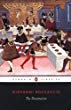
The best paperback edition of the complete work.
This is an excellent edition of selected stories from the Decameron as well as important critical articles from experts on Boccaccio and the most important early biography of him.
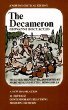
The Decameron (Selections),
translated by Peter Bondanella,
Norton Critical Edition,
ISBN 0393091325
AMAZON REVIEW:
'The Decameron' is a series of 100 stories, ten stories told each night by ten different people who had left the city for a country sojourn to escape a time of plague. Giovanni Boccaccio, an Italian author known as part of the founding trinity of Italian literature (the others are Dante and Petrarca), was born in 1313, and produced most of his literary works by his mid-30s. The ten characters in 'The Decameron' were all young people, much like Boccaccio, and the passions, interests and issues of his own age is illustrated among these folk -- Boccaccio's possibly-fictitious love, Fiammetta, is similarly one of the characters here. This edition by Norton does not include all 100 stories, but rather 21 selected stories, many of the more popular ones, selected by professors Mark Musa and Peter Bondanella (professors at my university when I was there 20 years ago), who are also known for their editing and translation of works by Dante and Machiavelli. There are selections from each 'day' (set of 10 stories), as well as a few of the extra texts, such as a prologue, introduction, and overall conclusion by Boccaccio. These are edited to fit together, as Boccaccio's tales often would wind from one story to the next, making a selection of disconnected stories difficult in transition without editing. There are also two different kinds of critical analytical materials included in this Norton Critical Edition. The first includes personal correspondence samples, particularly between Boccaccio and Petrarca; these date even after the writing of 'The Decameron', showing the interest and reactions. These materials include other contemporary and closely-following generations' reactions and influences from 'The Decameron'.
The Great Mortality: An Intimate History of the Black Death,
Harper Pennial paperback, 2005,
ISBN 0060006935
REVIEW:
Amazon.com Review. A book chronicling one of the worst human disasters in recorded history really has no business being entertaining. But John Kelly's The Great Mortality is a page-turner despite its grim subject matter and graphic detail. Credit Kelly's animated prose and uncanny ability to drop his reader smack in the middle of the 14th century, as a heretofore unknown menace stalks Eurasia from "from the China Sea to the sleepy fishing villages of coastal Portugal [producing] suffering and death on a scale that, even after two world wars and twenty-seven million AIDS deaths worldwide, remains astonishing." Take Kelly's vivid description of London in the fall of 1348: "A nighttime walk across Medieval London would probably take only twenty minutes or so, but traversing the daytime city was a different matter.... Imagine a shopping mall where everyone shouts, no one washes, front teeth are uncommon and the shopping music is provided by the slaughterhouse up the road." Yikes, and that's before just about everything with a pulse starts dying and piling up in the streets, reducing the population of Europe by anywhere from a third to 60 percent in a few short years. In addition to taking readers on a walking tour through plague-ravaged Europe, Kelly heaps on the ancillary information and every last bit of it is captivating. We get a thorough breakdown of the three types of plagues that prey on humans; a detailed account of how the plague traveled from nation to nation (initially by boat via flea-infested rats); how floods (and the appalling hygiene of medieval people) made Europe so susceptible to the disease; how the plague triggered a new social hierarchy favoring women and the proletariat but also sparked vicious anti-Semitism; and especially, how the plague forever changed the way people viewed the church. Engrossing, accessible, and brimming with first-hand accounts drawn from the Middle Ages, The Great Mortality illuminates and inspires. History just doesn't get better than that. --Kim Hughes
This two-volume history of Florence is the best detailed study of Florence ever written. Schevill wrote a masterpiece of well researched narrative history for Florence in 1936 and then it was republished in a Harper Torchbook paperback in 1961. The Harper Torchbook is still out there in used book stores so we have purchased five for our library. But there are still copies left if you want to own one. It is two volumes with the first volume devoted to our period of Medieval History and the second volume on Renaissance Florence. For the Lombards see Medieval Florence (Volume 1) Chapter Three, "Darkness Over Florence."

19
Week 19: Thursday, March 5, 2026
The Renaissance in Florence
Week 19
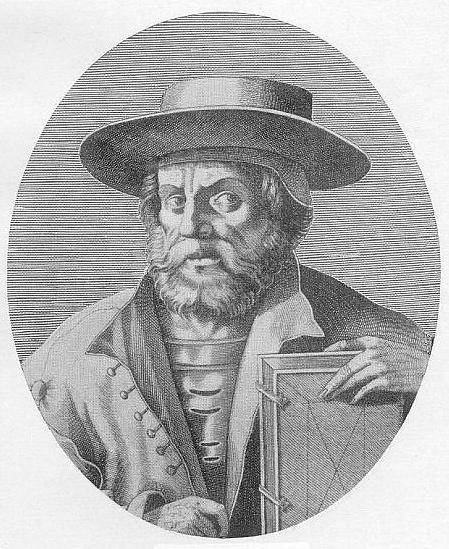
In 1390, Manuel Chrysoloras (1355-1415) came to Venice on a diplomatic errand as the representative of the Byzantine Emperor in Constantinople. While visiting Venice he met a number of Florentines and one, Giacomo da Scarperia, followed him home to Constantinople to study Greek. Other Florentines heard about Chrysoloras and therefore in 1396, the Florentine Chancellor Coluccio Salutati invited Chrysoloras to come to Florence as a professor of Greek. Chrysoloras would teach the ancient language to whomever might want to attend the classes. This event—a formal program of Europeans studying Greek—is as useful a mark for the beginning of the Renaissance as any. With the arrival of Chrysoloras in Florence, almost a thousand years of Western European ignorance of Greek came to an end. And with this new field of study came new books, new publications, new ideas. The study of Greek sparked new interest in mathematics, astronomy, geography, geometry, optics, and cartography. By the 1420’s Florence found itself the center of an international movement that would create modern Europe.
RECOMMENDED READING
The Italian Renaissance,
Mariner Books; Revised edition (June 19, 2001),
ISBN 0618127380
Amazon: Spanning an age that witnessed great achievements in the arts and sciences, this definitive overview of the Italian Renaissance will both captivate ordinary readers and challenge specialists. Dr. Plumb’s impressive and provocative narrative is accompanied by contributions from leading historians, including Morris Bishop, J. Bronowski, Maria Bellonci, and many more, who have further illuminated the lives of some of the era’s most unforgettable personalities, from Petrarch to Pope Pius II, Michelangelo to Isabella d'Este, Machiavelli to Leonardo. A highly readable and engaging volume, THE ITALIAN RENAISSANCE is a perfect introduction to the movement that shaped the Western world.
A useful book this week is the brilliant The Italian Renaissance by J. H. Plumb. This is a wonderful and succinct introduction to the Renaissance by one of our greatest historians, J. R. Plumb. Plumb was one of Britain's greatest historians. Professor Plumb died in 2001.
RECOMMENDED READING:
This two-volume history of Florence is the best detailed study of Florence ever written. Schevill wrote a masterpiece of well researched narrative history for Florence in 1936 and then it was republished in a Harper Torchbook paperback in 1961. The Harper Torchbook is still out there in used book stores so we have purchased five for our library. But there are still copies left if you want to own one. It is two volumes with the first volume devoted to our period of Medieval History and the second volume on Renaissance Florence. For the Lombards see Medieval Florence (Volume 1) Chapter Three, "Darkness Over Florence."
Ferdinand Schevill, Medieval and Renaissance Florence. The Schevill book that we used in on our class during "The History of Medieval Italy," is still useful for this class. But this year you would only want Volume 2 on Renaissance Florence. It is a very detailed historical record of events in Florence during the Fifteenth Century. If you want one book to give you the year by year events and explanations of basic political structures, this is the book you want to own. Copies of both volumes are in our Institute library and used copies can still be found on Amazon.
ABOUT THE AUTHOR:
Ferdinand Schevill (1868–1954) was an American historian. He graduated from Yale University in 1889 and finished his PhD at Freiburg in 1892. That same year he arrived at the University of Chicago, where he taught from 1892 to 1937. Schevill’s first book, a textbook on Western European history, was Political History of Europe from 1500 to the Present Day. It was revised and reissued many times. In 1922 he publishedThe History of the Balkan Peninsula: From the Earliest Times to the Present Day. Schevill retired in 1924. In 1930 he reentered the University in the Humanities General Course of general education. He retired five years later to finish The History of Florence(1936). Schevill continued to research, and in his eightieth year he went from the University of Chicago to lecture in Frankfurt. In this era, Schevill specialized in the historiographies of famous writers from the Renaissance.
- Siena: The History of a Medieval Commune (1909)
- Germany and the Peace of Europe (1914)
- The Rise and Progress of Democracy (1915)
- Karl Bitter: A Biography (1917)
- A History of Europe: From the Reformation to the Present Day (1925)
- The First Century of Italian Humanism (1928)
- The History of Florence (1936) — reprinted as Medieval and Renaissance Florence (1965)
- The Great Elector (1947)
- The Medici (1949)
20
Week 20: Thursday, March 12, 2026
Brunelleschi
Week 20
The Renaissance in Florence
Brunelleschi and 15th century Florence
Brunelleschi, Donatello, Masaccio, Ghiberti
Man at the center of the world
RECOMMENDED READING
This is a wonderful book that is perfect for us as we spend a week talking about Brunelleschi and Renaissance Florence. I highly recommend it to you all. And now it is available in paperback.
Spring Vacation
Two weeks off, the weeks of March 16 and March 23
First class of Spring Quarter is Thursday April 2. 2026.
All
Week 11: Thu., Jan. 8, 2026
Quid Athenae Hierosolymis?
Week 11
From 100 to 1000 AD, "Quid Athenae Hierosolymis?"
What does Athens have to do with Jerusalem?
In other words, what do Plato and Aristotle have to do with Abraham and Jesus of Nazareth?
Athens, Rome, Jerusalem, and Saint Augustine
The generation of mid-century: Augustine, Ambrose, and Jerome
REQUIRED READING
RECOMMENDED READING
There is one classic biography of Augustine published almost forty years ago and still the best. And even better is a new edition published last year in which the author adds an epilogue in which he discusses recently discovered letters and sermons by Augustine (Yes! It sounds incredible doesn't it that we could still be finding works by Augustine, but that is the nature and excitement of scholarship.)
Week 12: Thu., Jan. 15, 2026
The Dark Ages: 500-1000
Week 12
The Roman Empire, the greatest European empire of all time, slowly collapsed during the fifth century. By the time Augustine died, he and others in his generation were aware that the vast international structure under which they had lived their lives was disintegrating. Roman legions withdrew from various provinces—Britain and Spain, for example; chaos and confusion grew in all the border regions; and the citizens in the capital became less and less committed to the Roman political responsibility.
In the outlying regions of what had been the Empire, new local arrangements to provide security and community sprang up. This process was different in every region. In what had been Gaul, a new Frankish state appeared. In Spain, a new Visigothic state arose. In northern Italy, a new Lombard state led by "The King of Italy" appeared. The most important aspect of this new situation was that no new empire replaced the old one.
In this new world there would be many competing states, and these would constitute the emerging Medieval Europe. This development was creative and positive; it meant new institutions, new languages, new styles of literature, and new religious structures. This reordering is our subject for week 12.
RECOMMENDED READING
This book by Henri Pirenne is one of the great interpretations of the Dark Ages. Pirenne was a Belgian Medievalist who was fascinated by the role of Islam in Medieval history.
Week 13: Thu., Jan. 22, 2026
Eleanor of Aquitaine
Week 13
The 12th century and Eleanor of Aquitaine
The world of feudalism, the Crusades, and Courtly Love
"In democracy your vote counts, in feudalism your Count votes."
RECOMMENDED READING
Eleanor of Aquitaine and the Four Kings,
Harvard University Press,
ISBN 0674242548
Amy Kelly, Eleanor of Aquitaine and the Four Kings, (originally published in 1957, still in print from Harvard University Press, ISBN: 0674242548.) & Alison Weir, Eleanor of Aquitaine (1999).
Amy Kelly wrote her great biography of Eleanor more than fifty years ago and I still think it is the best. It is one of the greatest biographies I know and I have read it many times. So if you want to start out with one book about Eleanor read Kelly first. You will enjoy every page. The new biography by Alison Weir is full of new material and a fine work of history and I have benefited from her updating of the Eleanor story. But it is not the sweeping saga that you find in Kelly and I doubt anyone will ever write a better biography of Eleanor.
ELEANOR AT THE MOVIES: If you want to enjoy the best motion picture version of Eleanor ever made, go find Lion in Winter with Katherine Hepburn at her Academy-Award-winning best, Peter O'Toole as Henry, Anthony Hopkins as Richard, and a young Timothy Dalton as King Philip of France. The cast is spectacular. Katharine and Peter maneuver and shout as Eleanor and Henry did in real life; it is all so good you can't believe it. When you watch it, remember that it deals with a moment in Eleanor's long life during which Henry has locked her up so that he won't have to share power with her. The movie portrays Eleanor as a woman without power, languishing in Henry's luxurious jail. But that situation was just one in her long life. After Henry dies in 1189, Eleanor is back in the driver's seat as her son Richard goes off to a Crusade and leaves England in her hands.
RECOMMENDED READING
This is the best general treatment of the Middle Ages (and there are 100s).
HIGHLY RECOMMENDED GENERAL BOOK ON MIDDLE AGES:
This week we begin studying the period that is known as the "Middle Ages" and I know many of you will want to have some general history of the Middle Ages to give you background beyond that which we have time to study in class. There is such a book and I am happy to tell you that it is available in a nice paperback edition. The chapters on Eleanor and Courtly Love are excellent.
Friedrich Heer, The Medieval World, first published in 1961 and still the best one-volume history of the Middle Ages that I know. Paperback - 384 pages (October 1998, ISBN: 1566491975, $18.95).
Week 14: Thu., Jan. 29, 2026
Love Hurts
Week 14
Courtly love, courtly love poetry, and the troubadours
The South: Bordeaux, Poitiers, Toulouse
Eleanor and the world of courtly love
Eleanor, Henry, and the Angevin empire
The Angevins and the Matter of Britain
Bernart de Ventadorn (fl 1150-1180)
REQUIRED READING
Items that will be available in class:
- Most famous poem of courtly love: Bernart de Ventador (email)
- Joyce Carol Oates, "Love in the Western World" (email)
- Mother Teresa (email)
This article by the great novelist Joyce Carol Oates is the best summary ever written of that unique phenomenon that we study this week: Western ideas of love.
RECOMMENDED READING
If you want to read more about Courtly Love there is no better place to begin than in C. S. Lewis's brilliant Allegory of Love especially the first chapter. Lewis and the whole circle of Medievalists of whom he was a part (Tolkien, Dorothy Sayers), blazed a trail of research in this field and we are still in their debt.
The one book that has had a greater influence on our ideas of love in the West than any other book is the brilliant Love in the Western Worldby Denis de Rougemont. De Rougemont (1906-1985) was one of the most influential European intellectuals of his generation. His book came out first in 1939 and then was revised several times with the 1972 edition being the definitive final edition. This book simply changed the way people thought about Western cultural history. It was of extraordinary importance and is still the beginning point for any study of the unique phenomenon of love in the Western world.
Week 15: Thu., Feb. 5, 2026
Abelard and Heloise
Week 15
Abelard and Heloise were famous for their 12th-century love affair, which became a tragic tale of forbidden love, intellectual passion, and a resulting scandal. Abelard, a brilliant philosopher and teacher, and Heloise, his equally brilliant and educated student, fell deeply in love, leading to a secret relationship and a child. This affair was discovered by Heloise's uncle, who retaliated by hiring a band of thugs to castrate Abelard. The scandal was one of the most famous incidents ever to happen in Medieval Paris. They then chose to go into religious orders: Abelard as a monk and Heloise as a nun, where they maintained a passionate correspondence through letters, al of which have survived.
REQUIRED READING
There are two very fine introductory essays at the beginning of this Penguin edition. The translator Betty Radice writes a useful introduction to the collection of letters, and M. T. Clanchy provides an interesting update on the fate of the letters in his "The Letters of Abelard and Heloise in Today's Scholarship."
"Historia Calamitatum" pp. 3–43
"Personal Letters" pp. 47–89
RECOMMENDED READING
For those of you who get caught up in the drama of Abelard and Heloise and want to read more about their story there is one great classic study from one of the most important French Medieval historians of all time, Etienne Gilson. It is a small, rich book based on lectures Gilson delivered in Paris in 1936 and thanks to the University of Michigan Press it is still in print. Especially interesting is the detailed analysis Gilson provides for our proper understanding of the marriage and why it was a mistake for Abelard in relation to his career as a professor of theology.
Week 16: Thu., Feb. 12, 2026
Dante and Florence
Week 16
An introduction to Dante
- The 13th century: commerce, urbanization, growth, and success
- Italy in the 13th century: in the middle of the action
- Florence: great success in the period from 1250 to 1300; introduction of the florin
- Dante: 1265–1321
REQUIRED READING
Make sure you bring your copy of the Divine Comedy, Inferno, to class this week as we shall discuss passages and read them together. The Mandelbaum translation is the one we have chosen, and it is on the Required Reading page for this class. Its value is that it gives you an English and an Italian version on facing pages at a reasonable price.
The Divine Comedy: Inferno,
translated by Allen Mandelbaum,
Bantam Classic,
ISBN 0553213393
Why choose this translation from among the 100's that exist? Read these comments:
Review "The English Dante of choice."--Hugh Kenner.
"Exactly what we have waited for these years, a Dante with clarity, eloquence, terror, and profoundly moving depths."--Robert Fagles, Princeton University
"Tough and supple, tender and violent . . . vigorous, vernacular . . . Mandelbaum's Dante will stand high among modern translations."--The Christian Science Monitor
"Lovers of the English language will be delighted by this eloquently accomplished enterprise." --Book Review Digest
From the Publisher: This splendid verse translation by Allen Mandelbaum provides an entirely fresh experience of Dante's great poem of penance and hope. As Dante ascends the Mount of Purgatory toward the Earthly Paradise and his beloved Beatrice, through "that second kingdom in which the human soul is cleansed of sin," all the passion and suffering, poetry and philosophy are rendered with the immediacy of a poet of our own age. With extensive notes and commentary prepared especially for this edition.
RECOMMENDED READING
HIGHLY RECOMMENDED: There is a good biography of Dante written by the late R. W. B. Lewis, Dante (ISBN 0670899097) and it is excellent and exactly what many of you will want: a short (200 pages), well-written, inexpensive ($19.95) biography of Dante. It is perfect for our course and although I don't want to make it a required book, I am sure that anyone who buys it will be happy they did.
Week 17: Thu., Feb. 19, 2026
Petrarch
Week 17
Francesco Petrarca of Florence
Petrarch and the 14th century
REQUIRED READING:
See the materials on the sidebar, with chronologies and a Petrarch biography page that includes his poem "Solo e Pensoso," as well as other information.
Make sure you read Petrarch's "Letter to Posterity".
RECOMMENDED READING
A Distant Mirror: The Calamitous 14th Century,
Random House Trade Paperbacks; Reissue edition (July 12, 1987),
ISBN 0345349571
This is the best book in English on the 14th Century and I can't imagine anyone will ever write a better one. Barbara Tuchman was a miracle in the history world. She had no special training; she was just a Manhattan housewife who loved history. One day she walked down Fifth Avenue to the New York Public Library. She began to read and soon began to write and was soon into a spectacular career as an international best-selling author. She wrote five of the best books ever written in the field. Her masterpiece is A Distant Mirror on the 14th Century. She takes one character, Enguerand de Coucy, a French noble whose life touched almost everyone important in the century, and then she takes us all through the stories of the incredible century. History has never been better. It is like a novel; only better. You can read it on paper, in Kindle, or on audible.
Amazon Comment:
In this sweeping historical narrative, Barbara Tuchman writes of the cataclysmic 14th century, when the energies of medieval Europe were devoted to fighting internecine wars and warding off the plague. Some medieval thinkers viewed these disasters as divine punishment for mortal wrongs; others, more practically, viewed them as opportunities to accumulate wealth and power. One of the latter, whose life informs much of Tuchman's book, was the French nobleman Enguerrand de Coucy, who enjoyed the opulence and elegance of the courtly tradition while ruthlessly exploiting the peasants under his thrall. Tuchman looks into such events as the Hundred Years War, the collapse of the medieval church, and the rise of various heresies, pogroms, and other events that caused medieval Europeans to wonder what they had done to deserve such horrors.
Reviews:
“Beautifully written, careful and thorough in its scholarship . . . What Ms. Tuchman does superbly is to tell how it was. . . . No one has ever done this better.”—The New York Review of Books
“A beautiful, extraordinary book . . . Tuchman at the top of her powers . . . She has done nothing finer.”—The Wall Street Journal
“Wise, witty, and wonderful . . . a great book, in a great historical tradition.”—Commentary
From the Publisher
Anyone who has read THE GUNS OF AUGUST or STILWELL AND THE AMERICAN EXPERIENCE IN CHINA, knows that Barbara Tuchman was one of the most gifted American writers of this century. Her subject was history, but her profiles of great men and great events are drawn with such power that reading Tuchman becomes a riveting experience. In A DISTANT MIRROR, Barbara Tuchman illuminates the Dark Ages. Her description of medieval daily life, the role of the church, the influence of the Great Plagues, and the social and political conventions that make this period of history so engrossing, are carefully woven into an integrated narrative that sweeps the reader along. I am a particular devotee of medieval and pre Renaissance music, so Barbara Tuchman's brilliant analysis of this period has special meaning for me - and I hope for many others. George Davidson, Director of Production, The Ballantine Publishing Group
About the Author
Barbara W. Tuchman (1912–1989) achieved prominence as a historian with The Zimmermann Telegram and international fame with The Guns of August—a huge bestseller and winner of the Pulitzer Prize. Her other works include Bible and Sword, The Proud Tower, Stilwell and the American Experience in China (for which Tuchman was awarded a second Pulitzer Prize), Notes from China, A Distant Mirror, Practicing History, The March of Folly, and The First Salute.
Week 18: Thu., Feb. 26, 2026
Boccaccio
Week 18
Giovanni Boccaccio was born in 1313, in the small town of Certaldo which is located just south of Florence in the Val d' Elsa. His father was a merchant-banker and in 1326 the family moved to Naples. In this huge bustling international city, young Giovanni went to work in his father's bank to learn about the world of business.
But he soon realized he cared nothing about business, so he convinced his father to allow him to enter the University of Naples in order to study Law. Giovanni cared only a little more about the Law than he did about banking, but he loved the university and used his six years there to acquire a brilliant education.
Naples was much more international than Florence, with ties to the Islamic world, across the sea, and to Egypt, to Greece, and the Byzantine empire. And so when Giovanni returned to Florence in 1341, he now possessed a sophisticated education that included knowledge of some Greek, and a knowledge of philosophy, law, and literature.
During the next six years, Boccaccio wrote a number of works and attempted to create a career in literature. A professional writer at that time relied on patrons. There was no copyright, no income from one's printed works. So the professional writer looked for financial support from various sponsors: political, religious, private.
Then the event that would change his life and his career hit all of Italy: the Black Death; the bubonic plague. Florence was hit as hard as any large city. And in months, the population of this city of 100,000 fell by half. Maybe more. Boccaccio saw it all up close, because his father was serving his beloved city as Minister of Supply, with all the responsibilities of trying to help the desperate population. His father died the next year worn out by his work for his city.
Boccaccio launched the book that would make him famous in 1349, as his family tried to recover from the Pest and from the death of the patriarch of the family. Boccaccio sat down in 1349 and began to write The Decameron. The success of the book was phenominal. It made its author famous overnight. It is still one of the most popular books ever written in Italian.
RECOMMENDED READING:
The best paperback edition of the complete work.
This is an excellent edition of selected stories from the Decameron as well as important critical articles from experts on Boccaccio and the most important early biography of him.
The Decameron (Selections),
translated by Peter Bondanella,
Norton Critical Edition,
ISBN 0393091325
AMAZON REVIEW:
'The Decameron' is a series of 100 stories, ten stories told each night by ten different people who had left the city for a country sojourn to escape a time of plague. Giovanni Boccaccio, an Italian author known as part of the founding trinity of Italian literature (the others are Dante and Petrarca), was born in 1313, and produced most of his literary works by his mid-30s. The ten characters in 'The Decameron' were all young people, much like Boccaccio, and the passions, interests and issues of his own age is illustrated among these folk -- Boccaccio's possibly-fictitious love, Fiammetta, is similarly one of the characters here. This edition by Norton does not include all 100 stories, but rather 21 selected stories, many of the more popular ones, selected by professors Mark Musa and Peter Bondanella (professors at my university when I was there 20 years ago), who are also known for their editing and translation of works by Dante and Machiavelli. There are selections from each 'day' (set of 10 stories), as well as a few of the extra texts, such as a prologue, introduction, and overall conclusion by Boccaccio. These are edited to fit together, as Boccaccio's tales often would wind from one story to the next, making a selection of disconnected stories difficult in transition without editing. There are also two different kinds of critical analytical materials included in this Norton Critical Edition. The first includes personal correspondence samples, particularly between Boccaccio and Petrarca; these date even after the writing of 'The Decameron', showing the interest and reactions. These materials include other contemporary and closely-following generations' reactions and influences from 'The Decameron'.
The Great Mortality: An Intimate History of the Black Death,
Harper Pennial paperback, 2005,
ISBN 0060006935
REVIEW:
Amazon.com Review. A book chronicling one of the worst human disasters in recorded history really has no business being entertaining. But John Kelly's The Great Mortality is a page-turner despite its grim subject matter and graphic detail. Credit Kelly's animated prose and uncanny ability to drop his reader smack in the middle of the 14th century, as a heretofore unknown menace stalks Eurasia from "from the China Sea to the sleepy fishing villages of coastal Portugal [producing] suffering and death on a scale that, even after two world wars and twenty-seven million AIDS deaths worldwide, remains astonishing." Take Kelly's vivid description of London in the fall of 1348: "A nighttime walk across Medieval London would probably take only twenty minutes or so, but traversing the daytime city was a different matter.... Imagine a shopping mall where everyone shouts, no one washes, front teeth are uncommon and the shopping music is provided by the slaughterhouse up the road." Yikes, and that's before just about everything with a pulse starts dying and piling up in the streets, reducing the population of Europe by anywhere from a third to 60 percent in a few short years. In addition to taking readers on a walking tour through plague-ravaged Europe, Kelly heaps on the ancillary information and every last bit of it is captivating. We get a thorough breakdown of the three types of plagues that prey on humans; a detailed account of how the plague traveled from nation to nation (initially by boat via flea-infested rats); how floods (and the appalling hygiene of medieval people) made Europe so susceptible to the disease; how the plague triggered a new social hierarchy favoring women and the proletariat but also sparked vicious anti-Semitism; and especially, how the plague forever changed the way people viewed the church. Engrossing, accessible, and brimming with first-hand accounts drawn from the Middle Ages, The Great Mortality illuminates and inspires. History just doesn't get better than that. --Kim Hughes
This two-volume history of Florence is the best detailed study of Florence ever written. Schevill wrote a masterpiece of well researched narrative history for Florence in 1936 and then it was republished in a Harper Torchbook paperback in 1961. The Harper Torchbook is still out there in used book stores so we have purchased five for our library. But there are still copies left if you want to own one. It is two volumes with the first volume devoted to our period of Medieval History and the second volume on Renaissance Florence. For the Lombards see Medieval Florence (Volume 1) Chapter Three, "Darkness Over Florence."
Week 19: Thu., Mar. 5, 2026
The Renaissance in Florence
Week 19
In 1390, Manuel Chrysoloras (1355-1415) came to Venice on a diplomatic errand as the representative of the Byzantine Emperor in Constantinople. While visiting Venice he met a number of Florentines and one, Giacomo da Scarperia, followed him home to Constantinople to study Greek. Other Florentines heard about Chrysoloras and therefore in 1396, the Florentine Chancellor Coluccio Salutati invited Chrysoloras to come to Florence as a professor of Greek. Chrysoloras would teach the ancient language to whomever might want to attend the classes. This event—a formal program of Europeans studying Greek—is as useful a mark for the beginning of the Renaissance as any. With the arrival of Chrysoloras in Florence, almost a thousand years of Western European ignorance of Greek came to an end. And with this new field of study came new books, new publications, new ideas. The study of Greek sparked new interest in mathematics, astronomy, geography, geometry, optics, and cartography. By the 1420’s Florence found itself the center of an international movement that would create modern Europe.
RECOMMENDED READING
The Italian Renaissance,
Mariner Books; Revised edition (June 19, 2001),
ISBN 0618127380
Amazon: Spanning an age that witnessed great achievements in the arts and sciences, this definitive overview of the Italian Renaissance will both captivate ordinary readers and challenge specialists. Dr. Plumb’s impressive and provocative narrative is accompanied by contributions from leading historians, including Morris Bishop, J. Bronowski, Maria Bellonci, and many more, who have further illuminated the lives of some of the era’s most unforgettable personalities, from Petrarch to Pope Pius II, Michelangelo to Isabella d'Este, Machiavelli to Leonardo. A highly readable and engaging volume, THE ITALIAN RENAISSANCE is a perfect introduction to the movement that shaped the Western world.
A useful book this week is the brilliant The Italian Renaissance by J. H. Plumb. This is a wonderful and succinct introduction to the Renaissance by one of our greatest historians, J. R. Plumb. Plumb was one of Britain's greatest historians. Professor Plumb died in 2001.
RECOMMENDED READING:
This two-volume history of Florence is the best detailed study of Florence ever written. Schevill wrote a masterpiece of well researched narrative history for Florence in 1936 and then it was republished in a Harper Torchbook paperback in 1961. The Harper Torchbook is still out there in used book stores so we have purchased five for our library. But there are still copies left if you want to own one. It is two volumes with the first volume devoted to our period of Medieval History and the second volume on Renaissance Florence. For the Lombards see Medieval Florence (Volume 1) Chapter Three, "Darkness Over Florence."
Ferdinand Schevill, Medieval and Renaissance Florence. The Schevill book that we used in on our class during "The History of Medieval Italy," is still useful for this class. But this year you would only want Volume 2 on Renaissance Florence. It is a very detailed historical record of events in Florence during the Fifteenth Century. If you want one book to give you the year by year events and explanations of basic political structures, this is the book you want to own. Copies of both volumes are in our Institute library and used copies can still be found on Amazon.
ABOUT THE AUTHOR:
Ferdinand Schevill (1868–1954) was an American historian. He graduated from Yale University in 1889 and finished his PhD at Freiburg in 1892. That same year he arrived at the University of Chicago, where he taught from 1892 to 1937. Schevill’s first book, a textbook on Western European history, was Political History of Europe from 1500 to the Present Day. It was revised and reissued many times. In 1922 he publishedThe History of the Balkan Peninsula: From the Earliest Times to the Present Day. Schevill retired in 1924. In 1930 he reentered the University in the Humanities General Course of general education. He retired five years later to finish The History of Florence(1936). Schevill continued to research, and in his eightieth year he went from the University of Chicago to lecture in Frankfurt. In this era, Schevill specialized in the historiographies of famous writers from the Renaissance.
- Siena: The History of a Medieval Commune (1909)
- Germany and the Peace of Europe (1914)
- The Rise and Progress of Democracy (1915)
- Karl Bitter: A Biography (1917)
- A History of Europe: From the Reformation to the Present Day (1925)
- The First Century of Italian Humanism (1928)
- The History of Florence (1936) — reprinted as Medieval and Renaissance Florence (1965)
- The Great Elector (1947)
- The Medici (1949)
Week 20: Thu., Mar. 12, 2026
Brunelleschi
Week 20
The Renaissance in Florence
Brunelleschi and 15th century Florence
Brunelleschi, Donatello, Masaccio, Ghiberti
Man at the center of the world
RECOMMENDED READING
This is a wonderful book that is perfect for us as we spend a week talking about Brunelleschi and Renaissance Florence. I highly recommend it to you all. And now it is available in paperback.
Spring Vacation
Two weeks off, the weeks of March 16 and March 23
First class of Spring Quarter is Thursday April 2. 2026.