Week 17
Klaus Fuchs
In the 1950s USA, Klaus Fuchs was a pivotal figure in Cold War espionage, a German-born physicist who spied for the Soviet Union, passing critical atomic secrets from the Manhattan Project (where he worked in Los Alamos) to the Soviets, accelerating their nuclear program and ending America's monopoly. Arrested in the UK in 1950, his confession implicated the Rosenberg spy ring, leading to high-profile arrests and fueling the era's intense anti-Communist concerns (McCarthyism) as the U.S. grappled with Soviet nuclear capability. Fuchs was a theoretical physicist who contributed to the development of the atomic bomb in Los Alamos, New Mexico, from 1944 to 1946. He transmitted detailed information about the bomb's design and production to Soviet intelligence, motivated by his Communist beliefs and desire to counter fascism. U.S. and British intelligence uncovered his espionage through decrypted Soviet cables (Venona project), leading to his arrest in London in 1950. His espionage shattered the US-UK nuclear monopoly and significantly helped the Soviets develop their own atomic bomb, intensifying the Cold War arms race. The revelations about Fuchs, the Rosenbergs, and other atomic spies intensified American fears of Communist infiltration and subversion, contributing to the atmosphere of the McCarthy era. Fuchs's confession directly led to the arrests and convictions of Harry Gold, David Greenglass, and ultimately Julius and Ethel Rosenberg, some of his American contacts. Fuchs served nine years of a 14-year sentence in the UK, then moved to East Germany, where he continued his nuclear physics career until retirement, dying in 1988.
Alger Hiss.
In the 1950s, Alger Hiss, a former State Department official, and close advisor to President Roosevelt, became a symbol of communist infiltration in the U.S. after being accused by former Communist Whittaker Chambers of being a Soviet spy. Hiss was convicted of perjury in 1950 for lying about his involvement and served time in prison, a case that fueled Cold War fears, boosted House member Rep. Richard Nixon and remained controversial even with later evidence proving his guilt. (Soviet archives opened up during the 1990s produced proof that Alger Hiss was an active spy for the Soviet Union)
Key Details of the Case:
The Accusation (1948): Whittaker Chambers, a senior Time magazine editor and self-confessed former Soviet spy, testified before the House Un-American Activities Committee (HUAC), naming Hiss as a Communist and spy.
Hiss's Denial: Hiss, a respected figure involved with the New Deal and a close advisor to FDR and the UN, denied the charges vehemently, claiming he was framed by Chambers.
The Trials (1949-1950): After a hung jury in 1949, Hiss was convicted in a second trial in January 1950 for lying about his relationship with Chambers, as the espionage charge was past the statute of limitations.
Conviction & Imprisonment: He was sentenced to five years for perjury, serving over three years in prison, maintaining his innocence throughout.
Impact on the 1950s:
Rise of McCarthyism: The case lent credibility to claims of widespread Communist infiltration in the US government, fueling Senator Joseph McCarthy's anti-Communist crusade.
Political Significance: It boosted the careers of Richard Nixon (who was involved in the investigation of Hiss) and McCarthy, and marked a turning point in American anti-Communism.
Significance of the Hiss Case: Hiss's case became emblematic of the intense political tensions, public fear, and anti-Communist fervor (Red Scare) of the early Cold War era.
RECOMMENDED READING

Make sure you purchase the 2013 edition of Perjury. Paperback is fine.
RECOMMENDED READING
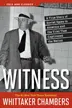
Make sure you purchase the 2014 edition of Witness. Paperback is fine.
RECOMMENDED READING
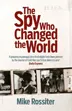
The Spy Who Changed the World: Klaus Fuchs, Physicist and Soviet Double Agent,
Headline,
ISBN 978-0755365661
RECOMMENDED READING

Used paperback copy is fine.