Week 17
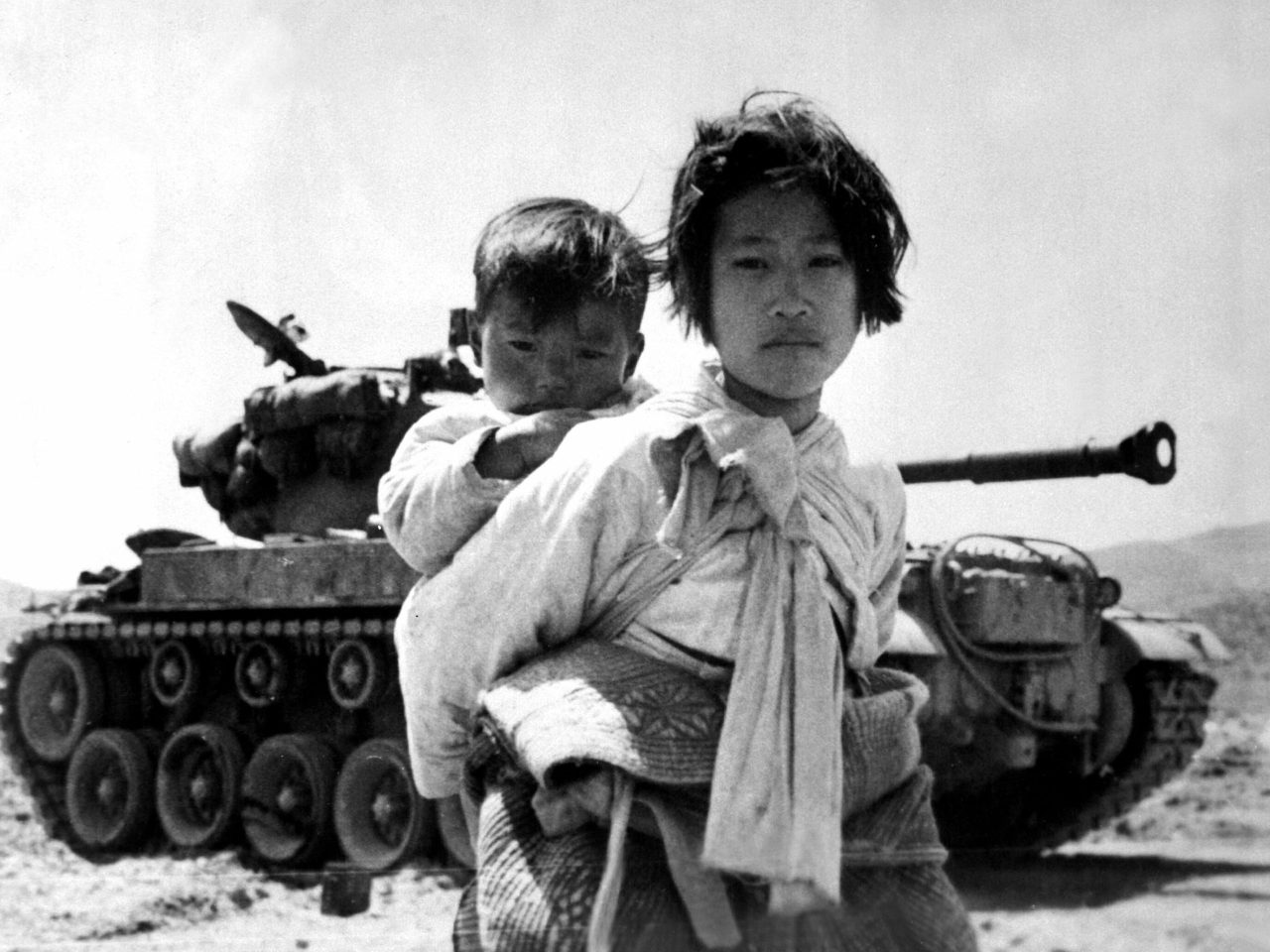
On 25 June 1950, the Korean People's Army (KPA), equipped and trained by the Soviets, launched an invasion of the south. In the absence of the Soviet Union's representative, the UN Security Council denounced the attack and recommended member states to repel the invasion. UN forces comprised 21 countries, with the United States providing around 90% of military personnel. Seoul was captured by the North Koreans on 28 June, and by early August, the Republic of Korea Army (ROKA) and its allies were nearly defeated, holding onto only the Pusan Perimeter in the peninsula's southeast. On 15 September, UN forces led by General MacArthur landed at Inchon near Seoul, cutting off North Korean troops and supply lines. UN forces broke out from the perimeter on 18 September, re-captured Seoul, and invaded North Korea in October, capturing Pyongyang and advancing towards the Yalu River—the border with China. On 19 October, the Chinese People's Volunteer Army (PVA) crossed the Yalu and entered the war on the side of the North. UN forces retreated from North Korea in December, following the PVA's first and second offensive. Communist forces captured Seoul again in January 1951 before losing it to a UN counter-offensive two months later. After an abortive Chinese spring offensive, UN forces retook territory roughly up to the 38th parallel. Armistice negotiations began in July 1951, but dragged on as the fighting became a war of attrition and the North suffered heavy damage from U.N. bombing.
RECOMMENDED READING
In Mortal Combat: Korea, 1950-1953,
William Morrow Paperbacks; reprint edition (June 29, 1993),
ISBN ASIN: B010EWSJEM