Week 21
Week 21: Tuesday, March 30, 2027
19th Century Immigration
Week 21
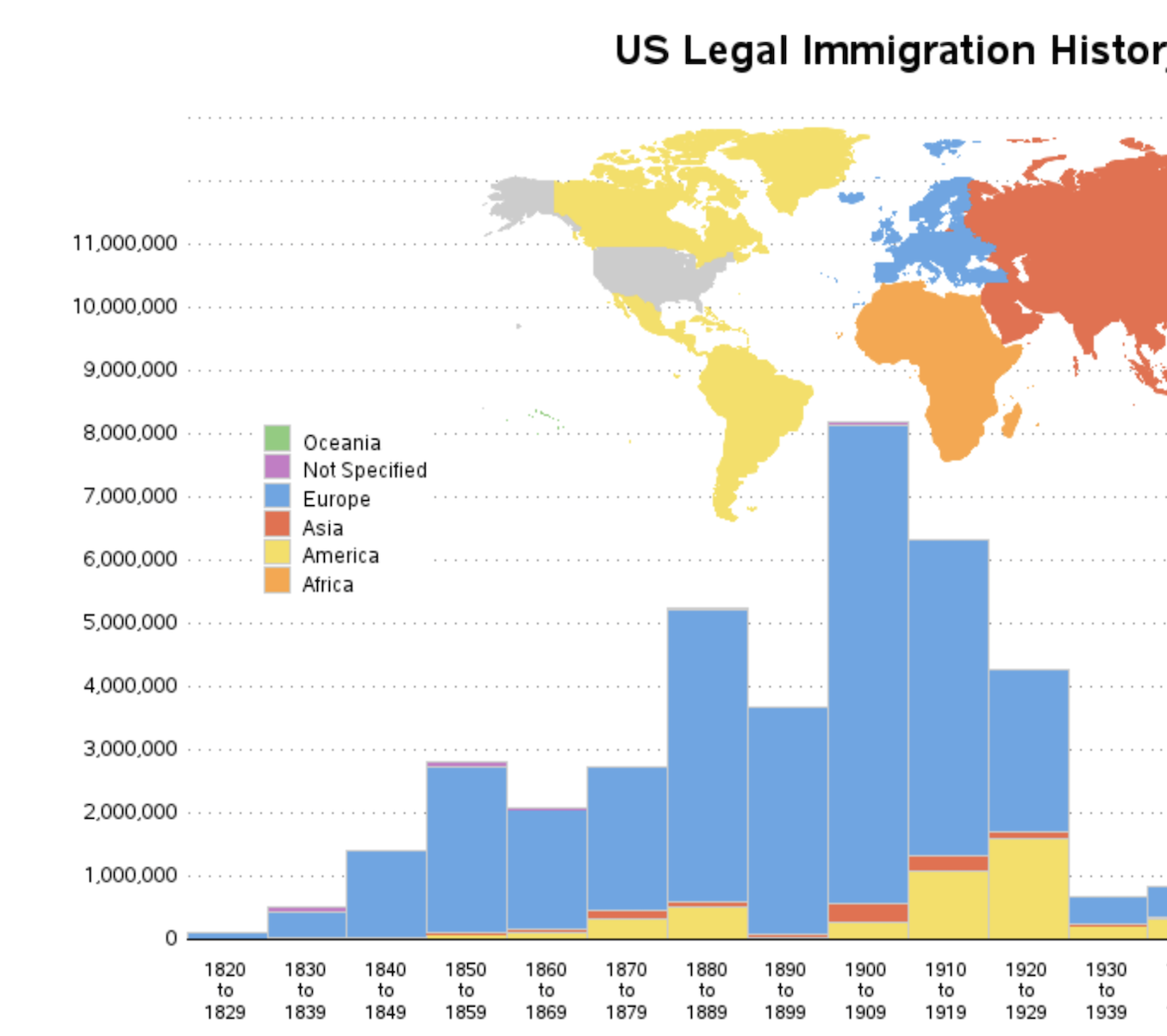
Immigration into the United States during the 19th Century came in two great waves. The first was set off by the conclusion to the Napoleonic Wars in 1815, and the unleashing of millions of men and families due to the redrawing of national boundaries. When Napoleon was finally defeated, millions of Europeans could freely decide where they wanted to live and where there wanted to stay. The end of war was paired with a large demographic explosion. "Between 1750 and 1900 Europe’s population rose faster than anywhere else in the world (except North America), from 150 million to over 400 million. This, in turn, produced a huge net outflow of immigration: to South America, Russia, Australasia, Canada, South Africa, and above all the United States. The rush to America began after the Battle of Waterloo in June 1815 and continued right through the autumn and winter, the immigrant ships braving gales and ice. It accelerated in 1816, which in Europe was ‘the year without a summer,’ with torrential rain and even sleet and snow continuing into July and August and wrecking harvests, sending poor and even starving people to the coast to huddle in the transports. Ezekiah Niles (1777–1839), who ran Niles’s Weekly Register from 1811 onwards, in many ways America’s best journal of record at the time, calculated that 50,000 immigrants reached America in the year, though this figure was later revised downwards. His more careful calculation for 1817, based on shipping lists (the federal government, though it took censuses, did not yet publish statistics), produced a figure of 30,000 up to the end of the main season in September. Of this half went to New York and Philadelphia, though some went straight over the Appalachians into the Ohio Valley.(Paul Johnson, A History of the American People (p. 284)" So the end of a world war paired with population explosion created the first great surge of immigration into the USA before the Civil War. The Civil War brought all this immigration to a stop. Young men did not want to immigrate into war service. Families wondered about the stability of the USA. And economic opportunities disappeared. From 1860 (or before) until the end of the war (1865) immigration slowed. The the war ended, the new Homestead Acts went into effect, the new open lands out west seemed to beckon all and so the second great surge began by 1870. This surge continued right up to World War I, then it slowed during the War and then it slowed some more during the Twenties when Congress acted to slow it down, and then came the Depression and World War II, when it slowed again and almost stopped. See the chart below.
22
Week 22: Tuesday, April 6, 2027
The Irish Come to America
Week 22
The Irish Potato Famine of 1845–1852 caused the first major mass migration from Ireland to the United States, driving over 1.5 million desperate people to cross the Atlantic to escape starvation. This massive migration was set off by the the potato blight. A destructive water mold destroyed Ireland's potato crops year after year. Potatoes cannot be stored year to year as can some other crops. And therefore any interruption in the annual supply meant mass starvation. Most poor Irish tenant farmers relied almost entirely on potatoes to survive and pay rent. The famine killed over one million people from hunger and disease. Inadequate poorly planned aid from the British government deepened anger and the desperate need to flee. The Journey to America: Roughly 1.5 to 2 million people left Ireland during the famine years, with the majority heading to the United States. Most of these migrants were healthy young men and their exodus left Ireland with an older declining population that would not be relieved for almost a century. Immigrants traveled on crowded, unsanitary ships known as "coffin ships" where disease spread fast. Most arrivals landed in port cities like New York, Boston, and Philadelphia. Many of the immigrants started out poor and worked as low-wage manual laborers building canals, laying railroads, or working in factories. Large Irish neighborhoods formed, turning cities like New York into vibrant centers of Irish-American life. While many faced early hardship and discrimination, recent historical records show that a large number eventually saved money, opened small businesses, or moved into skilled professions.
REQUIRED READING FOR THE WHOLE YEAR OF COMING TO AMERICA

RECOMMENDED READING

Emigrants and Exiles: Ireland and the Irish Exodus to North America,
Oxford University Press,
ISBN 978-0195035940
Note: This book appears to be out of print, but you can purchase a used hardcover of your choice for about $16.
23
Week 23: Tuesday, April 13, 2027
The Germans Come to America
Week 23
The second largest group of European immigrants who came to America in the 19th century were the Germans. Why did they come? First of all they came to the United States to escape economic hardship. Rapid population growth due to improved nutrition and improved medical care left many farmers with plots too small to feed their families. And crop failures made things worse. Then at mid-century that was revolutionary upheaval. The failure of the German Revolution of 1848 crushed hopes for democratic reform, prompting political refugees (known as "Forty-Eighters") to flee. And there was serious religious persecution. Germany was divided almost in half by northern Lutheran Protestantism and southern Roman Catholicism. Many Germans found themselves living in states that persecuted their Protestant or Catholic faith. And there was antisemitic violence. Outbursts against Jews caused many German Jews to flee to America. Then there were many attractions in America. In the great expansion to the US west nourished by the Homestead Acts, immigrants could easily qualify for s Homesteader's farm, an almost unbelievable gift for European Germans who had been living on other people's property their whole lives. Land developers advertised widely in European newspapers. The U.S. offered vast tracts of fertile land, made even more accessible by policies like the Homestead Act. And there was economic opportunity in the exploding American industrial growth. Growing American industries needed skilled tradespeople and laborers. Letters from earlier settlers describing success in America—often published in German newspapers—inspired friends and family to follow. And it was now easier to get to America than ever before. The new steamships were faster and cheaper than any transatlantic travel in the past.
REQUIRED READING FOR THE WHOLE YEAR OF COMING TO AMERICA
HIGHLY RECOMMENDED READING

Once We Were Strangers: A German Immigrant Family in the Nineteenth-Century Midwest,
University Press of Kansas,
ISBN 978-0700636280
24
Week 24: Tuesday, April 20, 2027
The Chinese Come to California
Week 24
Chinese immigration to California surged during the 1800s, driven by the Gold Rush and railroad construction, but met severe discrimination and legal exclusion. Following the 1848 gold discovery, thousands of immigrants left southeastern China to seek wealth in "Gold Mountain." Their migration was pushed forward by famine, economic turmoil, and political instability from the Opium Wars and Taiping Rebellion. Many arrivals settled in San Francisco's Chinatown to find community, mutual aid, and familiar goods. Labor and Railroads Mining Hardship: Chinese miners faced heavy taxes, violence, and forced removal from rich claims, often working abandoned sites.Beginning in 1865, thousands of Chinese laborers built the Central Pacific Railroad, praised for their work ethic despite harsh conditions. Immigrants also labored in agriculture, fishing, domestic service, and manufacturing. Discrimination and Exclusion legislation targeted the Chinese. California enacted discriminatory measures like the monthly Foreign Miners Tax starting in 1850. The 1854 state supreme court ruling People v. Hall barred Chinese people from testifying against white individuals in court. Economic depression in the 1870s stoked nativism, resulting in events like the 1871 Los Angeles Chinese massacre. Congress passed the Chinese Exclusion Act in 1882, banning Chinese laborers and halting new immigration. Of all the immigrants groups who came to the USA in the 19th century, the Chinese faced the most overt discrimination and legislation that singled them out. And still they came.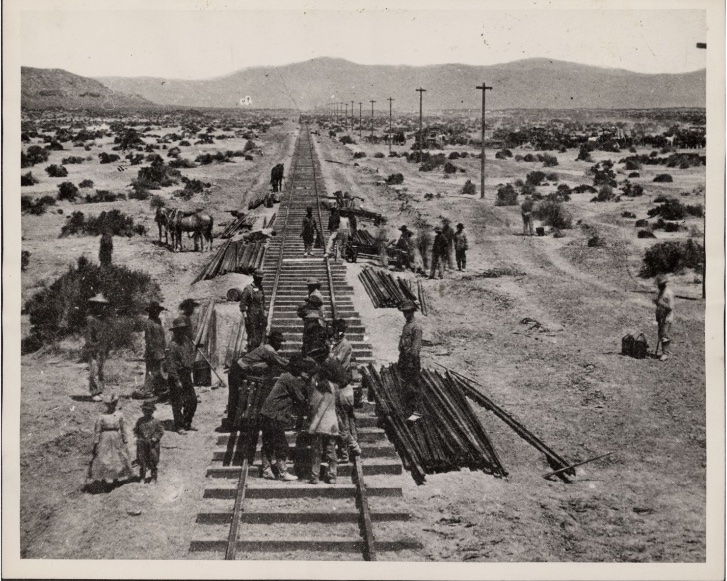
REQUIRED READING FOR THE WHOLE YEAR OF COMING TO AMERICA
RECOMMENDED READING
Strangers in the Land: Exclusion, Belonging, and the Epic Story of the Chinese in America,
Vintage,
ISBN 978-0593467725
25
Week 25: Tuesday, April 27, 2027
The Scandinavians Come to America
Week 25
Between 1820 and 1920, over 2.1 million Scandinavians immigrated to America. They were driven primarily by severe overpopulation, land shortages, and widespread rural poverty at home. They were pulled to the United States by the promise of cheap fertile land, industrial jobs, and glowing reports from family. Part of the problem was a Scandinavia population boom. This was similar to all European nations in the 19th century. There was a dramatic improvement of life expectancy due especially to new health protocols dealing with childbirth. More babies were surviving and more mothers were surviving what had been so dangerous just 25 years earlier. But these dramatic improvements in the lives of the Scandinavian citizens put a strain on their economic health. There was no new land for all these new citizens and therefore the pressure to emigrate grew stronger and stronger all during the century. Better health caused rapid population growth, straining small farming economies. Land was scarce. Strict inheritance laws meant only oldest sons inherited family farms, leaving younger children without land or prospects. And there were many crop failures which ruined subsistence farmers. While all these pressures were building at home, the outlook in the USA looked bring. The Homestead Acts of 1862 offered 160 acres free federal land in the American West and Midwest to anyone willing to farm it. The upper Midwest offered a cold climate, timber, and land resembling Scandinavia. Letters and prepaid travel tickets from earlier friends and relatives made moving easier.
REQUIRED READING FOR THE WHOLE YEAR OF COMING TO AMERICA
HIGHLY RECOMMENDED READING

26
Week 26: Tuesday, May 4, 2027
The Russians Come to America
Week 26
The first major wave of Russian immigration to America took place roughly between 1880 and 1915 (the late 19th and early 20th centuries) during 1870s and 1880 through the start of World War I. This week's lecture is called "The Russians Come to America," but in fact there were few Russians in this late-19th century wave of immigrants, because the Imperial government of Russia prohibited ethnic Russians from leaving the country. So this first great wave of immigrants from the larger Russian empire were Ukrainians, Belarussians, Lithuanians, and Poles all of whom arrived at Ellis Island by the hundreds of thousands. Russians, however, made the journey only a few at a time, and only by braving many hazards. Nearly 3 million people from the multi-ethnic Russian Empire entered the United States during this open-immigration era. The U.S. census of 1910 found only 65,000 Russians in the country. Why did they leave? The first major factor that drove these different groups out of the Russian imperial lands was religious persecution: A large portion of the migrants—nearly half—were Yiddish-speaking Jews fleeing violent anti-Jewish riots known as pogroms, state-sanctioned discrimination, and forced confinement to the Pale of Settlement. Other religious minorities, such as dissenting Christian groups like the Molokans and Old Believers, also fled religious pressure from the Orthodox state church. Also, there was terrible economic hardship. There were severe land shortages, with overpopulation in rural countrysides, widespread poverty, and famine which pushed many ethnic Russian peasants and working-class families to look for a better life abroad. Many were drawn by the prospect of industrial factory jobs in growing East Coast cities or free land in the American West through the Homestead Acts. In the 1880s, the Russian countryside was strained by severe land shortages. Facing poverty and starvation, farmers and peasants from across the Empire sought a brighter future overseas, and millions set sail for the United States. The Russians and others who did make the journey formed small communities and took work where they could find it. Some took advantage of the Homestead Act and headed west to found new family farms on the seemingly endless American plains. A number of pacifist sects, such as the Dukhobors and Molokans, settled in California and Oregon, where they maintained their traditional practices—and distinctive music—well into the 21st century. Many Russians went to work in the growing industries of the 19th century, toiling in the mines, mills, and sweatshops of the East Coast and Great Lakes.
REQUIRED READING FOR THE WHOLE YEAR OF COMING TO AMERICA
HIGHLY RECOMMENDED READING
World of Our Fathers: The Journey of the East European Jews to America and the Life They Found and Made,
NYU Press,
ISBN 978-0814736852
27
Week 27: Tuesday, May 11, 2027
The Italians Come to America
Week 27
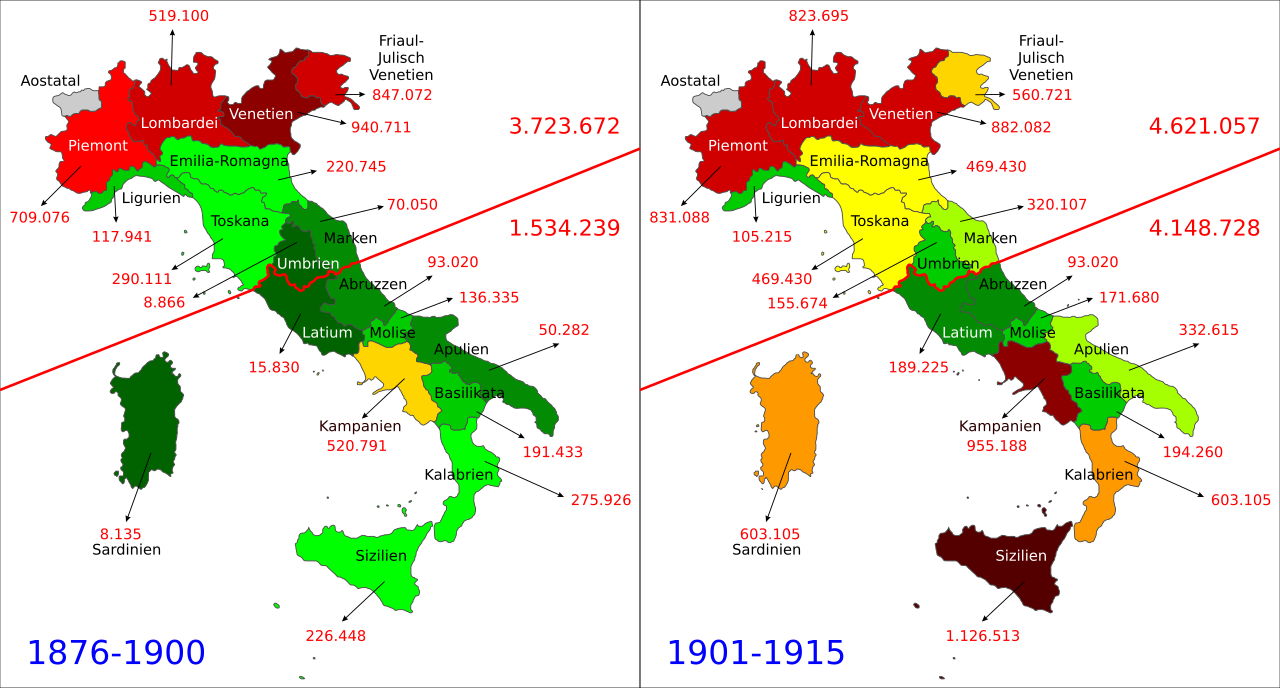
In 1870, prior to the large wave of Italian immigrants to the United States, there were fewer than 25,000 Italian immigrants in America, many of them Northern Italian refugees from the wars that accompanied the Risorgimento—the struggle for Italian reunification and independence from foreign rule which ended in 1870. Immigration began to increase during the 1870s, when more than twice as many Italians immigrated than during the five previous decades combined. From 1880 to 1914, 13 million Italians migrated out of Italy, making Italy the scene of one of the largest voluntary emigrations in recorded world history. During this period of mass migration, 4 million Italians arrived in the United States, 3 million of them between 1900 and 1914. They came for the most part from southern Italy: the provinces of Abruzzo, Campania, Apulia, Basilicata, and Calabria and from the island of Sicily. Most planned to stay a few years, then take their earnings and return home. According to historian Thomas J. Archdeacon, 46% of the Italians who entered the U.S. between 1899 and 1924 permanently returned home.
28
Week 28: Tuesday, May 18, 2027
The Jews Come to America
Week 28
The history of the Jews in the United States dates back to the 1600s and 1700s. Jewish communities have existed in the United States since colonial times, and Jewish individuals lived in various cities before the American Revolution. Early Jewish communities were primarily composed of Sephardi immigrants from Brazil, Amsterdam, or England, many of them fled from the Inquisition. Private and civically unrecognized local, regional, and sometimes international networks were noted in these groups in order to facilitate marriage and business ties. This small and private colonial community largely existed as a community of undeclared and non-practicing Jews, a large number of them decided to marry non-Jews. Later on, the much larger community of Ashkenazi Jews which would populate New York, New Jersey, and other regions of what would become the United States altered these demographic trends. Until the 1830s, the Jewish community of Charleston, South Carolina, was the largest in North America. In the late 1800s and the beginning of the 1900s, many Jewish immigrants arrived from Europe. For example, many German Jews arrived in the middle of the 19th century, established clothing stores in towns across the country, formed Reform synagogues, and were active in banking in New York. Immigration of Eastern Yiddish-speaking Ashkenazi Jews, in 1880–1914, brought a new wave of Jewish immigration to New York City, including many who became active in socialism and labor movements, as well as Orthodox and Conservative Jews. Refugees from diaspora communities in Europe settled in the United States both during and after the Holocaust and after 1970, Jews from the Soviet Union settled in the United States. Politically, American Jews have been especially active as part of the liberal New Deal coalition of the Democratic Party since the 1930s, but recently, a conservative Republican constituent has emerged within the Orthodox Jewish community. They have displayed high education levels and high rates of upward social mobility compared to several other ethnic and religious groups inside America. The Jewish communities in small towns have declined, with the population becoming increasingly concentrated in large metropolitan areas. Antisemitism in the U.S. has endured into the 21st century, although numerous cultural changes have taken place such as the election of many Jews into governmental positions at the local, state, and national levels. In the 1940s, Jews comprised 3.7% of the national population. As of 2019, at about 7.1 million, the population is 2% of the national total—and shrinking as a result of low birth rates and Jewish assimilation. The largest Jewish population centers are the metropolitan areas of New York (2.1 million), Los Angeles (617,000), Miami (527,750), Washington, D.C. (297,290), Chicago (294,280), and Philadelphia (292,450) (Wikipedia)
REQUIRED READING FOR THE WHOLE YEAR OF COMING TO AMERICA
HIGHLY RECOMMENDED READING
World of Our Fathers: The Journey of the East European Jews to America and the Life They Found and Made,
NYU Press,
ISBN 978-0814736852
29
Week 29: Tuesday, May 25, 2027
New York the Great Melting Pot
Week 29
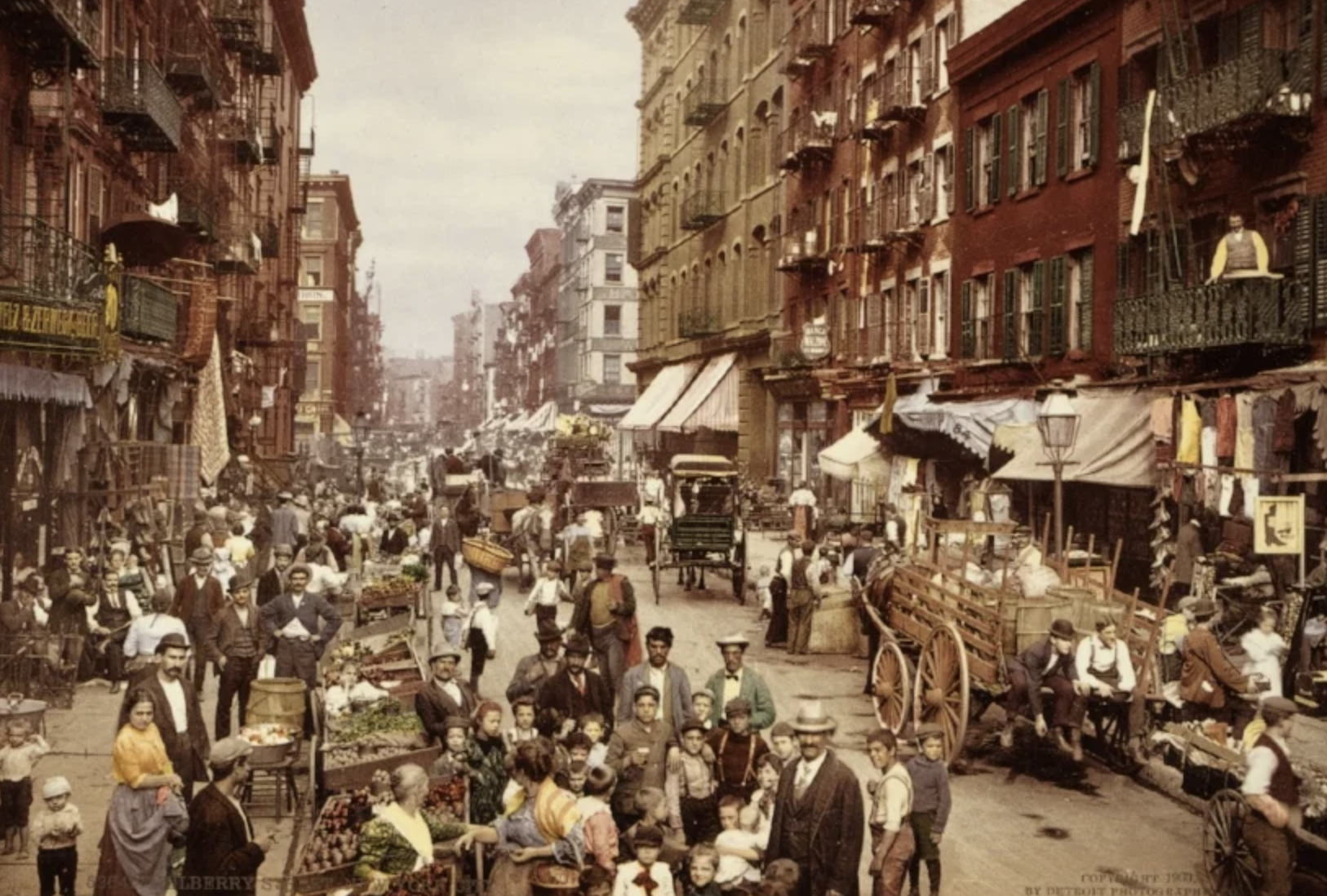
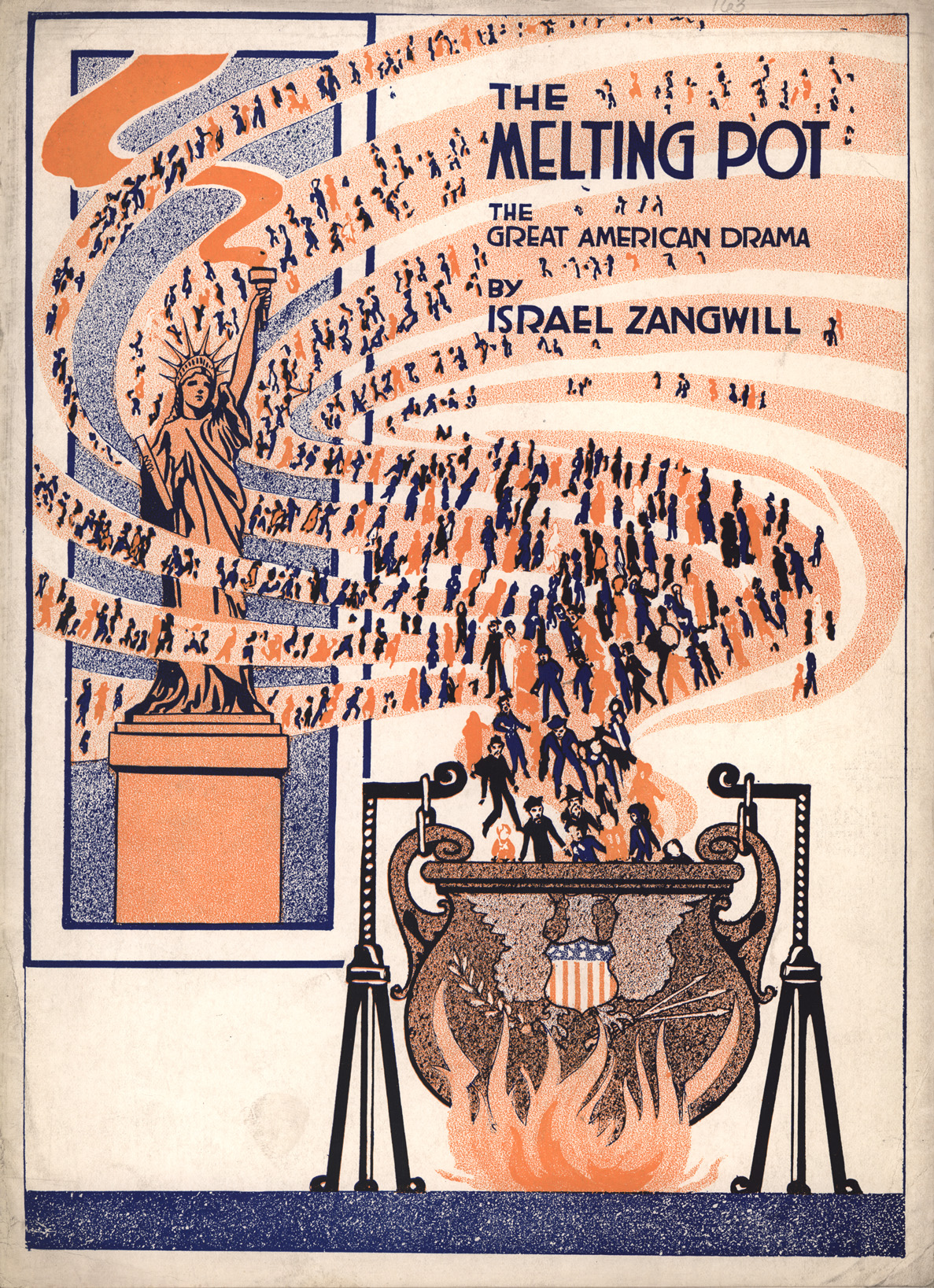
New York City remains the iconic symbol of American immigration, with foreign-born residents making up over 35% of its total population today. The history of the "Melting Pot" term was popularized by Israel Zangwill's 1908 play The Melting Pot, though the concept of New York as a diverse mixing ground dates back to Dutch colonial New Amsterdam in the 17th century. New York was the the gateway to America. Between 1892 and 1954, Ellis Island processed millions of arriving European immigrants thus establishing the city as the nation's primary portal.Waves of Irish, Italian, German, and Jewish immigrants in the 19th and early 20th centuries gave way to massive post-1965 inflows from the Caribbean, Latin America, Asia, and Africa. Over 800 languages are spoken in New York City, and more than half of all residents are either immigrants or the children of immigrants. Distinct New York neighborhoods preserve global cultures, from Chinatown and Flushing in Queens to neighborhoods across Brooklyn and the Bronx.
word
word
word
REQUIRED READING FOR THE WHOLE YEAR OF COMING TO AMERICA
HIGHLY RECOMMENDED READING
World of Our Fathers: The Journey of the East European Jews to America and the Life They Found and Made,
NYU Press,
ISBN 978-0814736852
30
Week 30: Tuesday, June 1, 2027
How Immigration Changed America
Week 30
David McCullough emphasized that America's greatest achievements and identity are deeply rooted in the vital work, genius, and courage of immigrants. McCullough frequently stated that "we're all here because we're the descendants of people who came to make a better future." He pointed to monumental feats like the Transcontinental Railroad (completed in 1869) and the construction of the Brooklyn Bridge as milestones that simply "only happened because of immigrants" who did the grueling physical labor. He highlighted immigrant masterminds such as John Roebling, who designed the Brooklyn Bridge, and Irving Berlin, who wrote "God Bless America," as examples of how immigrants fundamentally shaped American culture and capability.

REQUIRED READING FOR THE WHOLE YEAR OF COMING TO AMERICA
RECOMMENDED READING

The Pioneers: The Heroic Story of the Settlers Who Brought the American Ideal West,
Simon & Schuster,
ISBN 978-1501168703
All
Week 21: Tue., Mar. 30, 2027
19th Century Immigration
Week 21
Immigration into the United States during the 19th Century came in two great waves. The first was set off by the conclusion to the Napoleonic Wars in 1815, and the unleashing of millions of men and families due to the redrawing of national boundaries. When Napoleon was finally defeated, millions of Europeans could freely decide where they wanted to live and where there wanted to stay. The end of war was paired with a large demographic explosion. "Between 1750 and 1900 Europe’s population rose faster than anywhere else in the world (except North America), from 150 million to over 400 million. This, in turn, produced a huge net outflow of immigration: to South America, Russia, Australasia, Canada, South Africa, and above all the United States. The rush to America began after the Battle of Waterloo in June 1815 and continued right through the autumn and winter, the immigrant ships braving gales and ice. It accelerated in 1816, which in Europe was ‘the year without a summer,’ with torrential rain and even sleet and snow continuing into July and August and wrecking harvests, sending poor and even starving people to the coast to huddle in the transports. Ezekiah Niles (1777–1839), who ran Niles’s Weekly Register from 1811 onwards, in many ways America’s best journal of record at the time, calculated that 50,000 immigrants reached America in the year, though this figure was later revised downwards. His more careful calculation for 1817, based on shipping lists (the federal government, though it took censuses, did not yet publish statistics), produced a figure of 30,000 up to the end of the main season in September. Of this half went to New York and Philadelphia, though some went straight over the Appalachians into the Ohio Valley.(Paul Johnson, A History of the American People (p. 284)" So the end of a world war paired with population explosion created the first great surge of immigration into the USA before the Civil War. The Civil War brought all this immigration to a stop. Young men did not want to immigrate into war service. Families wondered about the stability of the USA. And economic opportunities disappeared. From 1860 (or before) until the end of the war (1865) immigration slowed. The the war ended, the new Homestead Acts went into effect, the new open lands out west seemed to beckon all and so the second great surge began by 1870. This surge continued right up to World War I, then it slowed during the War and then it slowed some more during the Twenties when Congress acted to slow it down, and then came the Depression and World War II, when it slowed again and almost stopped. See the chart below.
Week 22: Tue., Apr. 6, 2027
The Irish Come to America
Week 22
The Irish Potato Famine of 1845–1852 caused the first major mass migration from Ireland to the United States, driving over 1.5 million desperate people to cross the Atlantic to escape starvation. This massive migration was set off by the the potato blight. A destructive water mold destroyed Ireland's potato crops year after year. Potatoes cannot be stored year to year as can some other crops. And therefore any interruption in the annual supply meant mass starvation. Most poor Irish tenant farmers relied almost entirely on potatoes to survive and pay rent. The famine killed over one million people from hunger and disease. Inadequate poorly planned aid from the British government deepened anger and the desperate need to flee. The Journey to America: Roughly 1.5 to 2 million people left Ireland during the famine years, with the majority heading to the United States. Most of these migrants were healthy young men and their exodus left Ireland with an older declining population that would not be relieved for almost a century. Immigrants traveled on crowded, unsanitary ships known as "coffin ships" where disease spread fast. Most arrivals landed in port cities like New York, Boston, and Philadelphia. Many of the immigrants started out poor and worked as low-wage manual laborers building canals, laying railroads, or working in factories. Large Irish neighborhoods formed, turning cities like New York into vibrant centers of Irish-American life. While many faced early hardship and discrimination, recent historical records show that a large number eventually saved money, opened small businesses, or moved into skilled professions.
REQUIRED READING FOR THE WHOLE YEAR OF COMING TO AMERICA
RECOMMENDED READING
Emigrants and Exiles: Ireland and the Irish Exodus to North America,
Oxford University Press,
ISBN 978-0195035940
Note: This book appears to be out of print, but you can purchase a used hardcover of your choice for about $16.
Week 23: Tue., Apr. 13, 2027
The Germans Come to America
Week 23
The second largest group of European immigrants who came to America in the 19th century were the Germans. Why did they come? First of all they came to the United States to escape economic hardship. Rapid population growth due to improved nutrition and improved medical care left many farmers with plots too small to feed their families. And crop failures made things worse. Then at mid-century that was revolutionary upheaval. The failure of the German Revolution of 1848 crushed hopes for democratic reform, prompting political refugees (known as "Forty-Eighters") to flee. And there was serious religious persecution. Germany was divided almost in half by northern Lutheran Protestantism and southern Roman Catholicism. Many Germans found themselves living in states that persecuted their Protestant or Catholic faith. And there was antisemitic violence. Outbursts against Jews caused many German Jews to flee to America. Then there were many attractions in America. In the great expansion to the US west nourished by the Homestead Acts, immigrants could easily qualify for s Homesteader's farm, an almost unbelievable gift for European Germans who had been living on other people's property their whole lives. Land developers advertised widely in European newspapers. The U.S. offered vast tracts of fertile land, made even more accessible by policies like the Homestead Act. And there was economic opportunity in the exploding American industrial growth. Growing American industries needed skilled tradespeople and laborers. Letters from earlier settlers describing success in America—often published in German newspapers—inspired friends and family to follow. And it was now easier to get to America than ever before. The new steamships were faster and cheaper than any transatlantic travel in the past.
REQUIRED READING FOR THE WHOLE YEAR OF COMING TO AMERICA
HIGHLY RECOMMENDED READING
Once We Were Strangers: A German Immigrant Family in the Nineteenth-Century Midwest,
University Press of Kansas,
ISBN 978-0700636280
Week 24: Tue., Apr. 20, 2027
The Chinese Come to California
Week 24
Chinese immigration to California surged during the 1800s, driven by the Gold Rush and railroad construction, but met severe discrimination and legal exclusion. Following the 1848 gold discovery, thousands of immigrants left southeastern China to seek wealth in "Gold Mountain." Their migration was pushed forward by famine, economic turmoil, and political instability from the Opium Wars and Taiping Rebellion. Many arrivals settled in San Francisco's Chinatown to find community, mutual aid, and familiar goods. Labor and Railroads Mining Hardship: Chinese miners faced heavy taxes, violence, and forced removal from rich claims, often working abandoned sites.Beginning in 1865, thousands of Chinese laborers built the Central Pacific Railroad, praised for their work ethic despite harsh conditions. Immigrants also labored in agriculture, fishing, domestic service, and manufacturing. Discrimination and Exclusion legislation targeted the Chinese. California enacted discriminatory measures like the monthly Foreign Miners Tax starting in 1850. The 1854 state supreme court ruling People v. Hall barred Chinese people from testifying against white individuals in court. Economic depression in the 1870s stoked nativism, resulting in events like the 1871 Los Angeles Chinese massacre. Congress passed the Chinese Exclusion Act in 1882, banning Chinese laborers and halting new immigration. Of all the immigrants groups who came to the USA in the 19th century, the Chinese faced the most overt discrimination and legislation that singled them out. And still they came.
REQUIRED READING FOR THE WHOLE YEAR OF COMING TO AMERICA
RECOMMENDED READING
Strangers in the Land: Exclusion, Belonging, and the Epic Story of the Chinese in America,
Vintage,
ISBN 978-0593467725
Week 25: Tue., Apr. 27, 2027
The Scandinavians Come to America
Week 25
Between 1820 and 1920, over 2.1 million Scandinavians immigrated to America. They were driven primarily by severe overpopulation, land shortages, and widespread rural poverty at home. They were pulled to the United States by the promise of cheap fertile land, industrial jobs, and glowing reports from family. Part of the problem was a Scandinavia population boom. This was similar to all European nations in the 19th century. There was a dramatic improvement of life expectancy due especially to new health protocols dealing with childbirth. More babies were surviving and more mothers were surviving what had been so dangerous just 25 years earlier. But these dramatic improvements in the lives of the Scandinavian citizens put a strain on their economic health. There was no new land for all these new citizens and therefore the pressure to emigrate grew stronger and stronger all during the century. Better health caused rapid population growth, straining small farming economies. Land was scarce. Strict inheritance laws meant only oldest sons inherited family farms, leaving younger children without land or prospects. And there were many crop failures which ruined subsistence farmers. While all these pressures were building at home, the outlook in the USA looked bring. The Homestead Acts of 1862 offered 160 acres free federal land in the American West and Midwest to anyone willing to farm it. The upper Midwest offered a cold climate, timber, and land resembling Scandinavia. Letters and prepaid travel tickets from earlier friends and relatives made moving easier.
REQUIRED READING FOR THE WHOLE YEAR OF COMING TO AMERICA
HIGHLY RECOMMENDED READING
Week 26: Tue., May. 4, 2027
The Russians Come to America
Week 26
The first major wave of Russian immigration to America took place roughly between 1880 and 1915 (the late 19th and early 20th centuries) during 1870s and 1880 through the start of World War I. This week's lecture is called "The Russians Come to America," but in fact there were few Russians in this late-19th century wave of immigrants, because the Imperial government of Russia prohibited ethnic Russians from leaving the country. So this first great wave of immigrants from the larger Russian empire were Ukrainians, Belarussians, Lithuanians, and Poles all of whom arrived at Ellis Island by the hundreds of thousands. Russians, however, made the journey only a few at a time, and only by braving many hazards. Nearly 3 million people from the multi-ethnic Russian Empire entered the United States during this open-immigration era. The U.S. census of 1910 found only 65,000 Russians in the country. Why did they leave? The first major factor that drove these different groups out of the Russian imperial lands was religious persecution: A large portion of the migrants—nearly half—were Yiddish-speaking Jews fleeing violent anti-Jewish riots known as pogroms, state-sanctioned discrimination, and forced confinement to the Pale of Settlement. Other religious minorities, such as dissenting Christian groups like the Molokans and Old Believers, also fled religious pressure from the Orthodox state church. Also, there was terrible economic hardship. There were severe land shortages, with overpopulation in rural countrysides, widespread poverty, and famine which pushed many ethnic Russian peasants and working-class families to look for a better life abroad. Many were drawn by the prospect of industrial factory jobs in growing East Coast cities or free land in the American West through the Homestead Acts. In the 1880s, the Russian countryside was strained by severe land shortages. Facing poverty and starvation, farmers and peasants from across the Empire sought a brighter future overseas, and millions set sail for the United States. The Russians and others who did make the journey formed small communities and took work where they could find it. Some took advantage of the Homestead Act and headed west to found new family farms on the seemingly endless American plains. A number of pacifist sects, such as the Dukhobors and Molokans, settled in California and Oregon, where they maintained their traditional practices—and distinctive music—well into the 21st century. Many Russians went to work in the growing industries of the 19th century, toiling in the mines, mills, and sweatshops of the East Coast and Great Lakes.
REQUIRED READING FOR THE WHOLE YEAR OF COMING TO AMERICA
HIGHLY RECOMMENDED READING
World of Our Fathers: The Journey of the East European Jews to America and the Life They Found and Made,
NYU Press,
ISBN 978-0814736852
Week 27: Tue., May. 11, 2027
The Italians Come to America
Week 27
In 1870, prior to the large wave of Italian immigrants to the United States, there were fewer than 25,000 Italian immigrants in America, many of them Northern Italian refugees from the wars that accompanied the Risorgimento—the struggle for Italian reunification and independence from foreign rule which ended in 1870. Immigration began to increase during the 1870s, when more than twice as many Italians immigrated than during the five previous decades combined. From 1880 to 1914, 13 million Italians migrated out of Italy, making Italy the scene of one of the largest voluntary emigrations in recorded world history. During this period of mass migration, 4 million Italians arrived in the United States, 3 million of them between 1900 and 1914. They came for the most part from southern Italy: the provinces of Abruzzo, Campania, Apulia, Basilicata, and Calabria and from the island of Sicily. Most planned to stay a few years, then take their earnings and return home. According to historian Thomas J. Archdeacon, 46% of the Italians who entered the U.S. between 1899 and 1924 permanently returned home.
Week 28: Tue., May. 18, 2027
The Jews Come to America
Week 28
The history of the Jews in the United States dates back to the 1600s and 1700s. Jewish communities have existed in the United States since colonial times, and Jewish individuals lived in various cities before the American Revolution. Early Jewish communities were primarily composed of Sephardi immigrants from Brazil, Amsterdam, or England, many of them fled from the Inquisition. Private and civically unrecognized local, regional, and sometimes international networks were noted in these groups in order to facilitate marriage and business ties. This small and private colonial community largely existed as a community of undeclared and non-practicing Jews, a large number of them decided to marry non-Jews. Later on, the much larger community of Ashkenazi Jews which would populate New York, New Jersey, and other regions of what would become the United States altered these demographic trends. Until the 1830s, the Jewish community of Charleston, South Carolina, was the largest in North America. In the late 1800s and the beginning of the 1900s, many Jewish immigrants arrived from Europe. For example, many German Jews arrived in the middle of the 19th century, established clothing stores in towns across the country, formed Reform synagogues, and were active in banking in New York. Immigration of Eastern Yiddish-speaking Ashkenazi Jews, in 1880–1914, brought a new wave of Jewish immigration to New York City, including many who became active in socialism and labor movements, as well as Orthodox and Conservative Jews. Refugees from diaspora communities in Europe settled in the United States both during and after the Holocaust and after 1970, Jews from the Soviet Union settled in the United States. Politically, American Jews have been especially active as part of the liberal New Deal coalition of the Democratic Party since the 1930s, but recently, a conservative Republican constituent has emerged within the Orthodox Jewish community. They have displayed high education levels and high rates of upward social mobility compared to several other ethnic and religious groups inside America. The Jewish communities in small towns have declined, with the population becoming increasingly concentrated in large metropolitan areas. Antisemitism in the U.S. has endured into the 21st century, although numerous cultural changes have taken place such as the election of many Jews into governmental positions at the local, state, and national levels. In the 1940s, Jews comprised 3.7% of the national population. As of 2019, at about 7.1 million, the population is 2% of the national total—and shrinking as a result of low birth rates and Jewish assimilation. The largest Jewish population centers are the metropolitan areas of New York (2.1 million), Los Angeles (617,000), Miami (527,750), Washington, D.C. (297,290), Chicago (294,280), and Philadelphia (292,450) (Wikipedia)
REQUIRED READING FOR THE WHOLE YEAR OF COMING TO AMERICA
HIGHLY RECOMMENDED READING
World of Our Fathers: The Journey of the East European Jews to America and the Life They Found and Made,
NYU Press,
ISBN 978-0814736852
Week 29: Tue., May. 25, 2027
New York the Great Melting Pot
Week 29
New York City remains the iconic symbol of American immigration, with foreign-born residents making up over 35% of its total population today. The history of the "Melting Pot" term was popularized by Israel Zangwill's 1908 play The Melting Pot, though the concept of New York as a diverse mixing ground dates back to Dutch colonial New Amsterdam in the 17th century. New York was the the gateway to America. Between 1892 and 1954, Ellis Island processed millions of arriving European immigrants thus establishing the city as the nation's primary portal.Waves of Irish, Italian, German, and Jewish immigrants in the 19th and early 20th centuries gave way to massive post-1965 inflows from the Caribbean, Latin America, Asia, and Africa. Over 800 languages are spoken in New York City, and more than half of all residents are either immigrants or the children of immigrants. Distinct New York neighborhoods preserve global cultures, from Chinatown and Flushing in Queens to neighborhoods across Brooklyn and the Bronx.
word
word
word
REQUIRED READING FOR THE WHOLE YEAR OF COMING TO AMERICA
HIGHLY RECOMMENDED READING
World of Our Fathers: The Journey of the East European Jews to America and the Life They Found and Made,
NYU Press,
ISBN 978-0814736852
Week 30: Tue., Jun. 1, 2027
How Immigration Changed America
Week 30
David McCullough emphasized that America's greatest achievements and identity are deeply rooted in the vital work, genius, and courage of immigrants. McCullough frequently stated that "we're all here because we're the descendants of people who came to make a better future." He pointed to monumental feats like the Transcontinental Railroad (completed in 1869) and the construction of the Brooklyn Bridge as milestones that simply "only happened because of immigrants" who did the grueling physical labor. He highlighted immigrant masterminds such as John Roebling, who designed the Brooklyn Bridge, and Irving Berlin, who wrote "God Bless America," as examples of how immigrants fundamentally shaped American culture and capability.
REQUIRED READING FOR THE WHOLE YEAR OF COMING TO AMERICA
RECOMMENDED READING
The Pioneers: The Heroic Story of the Settlers Who Brought the American Ideal West,
Simon & Schuster,
ISBN 978-1501168703