Week 21
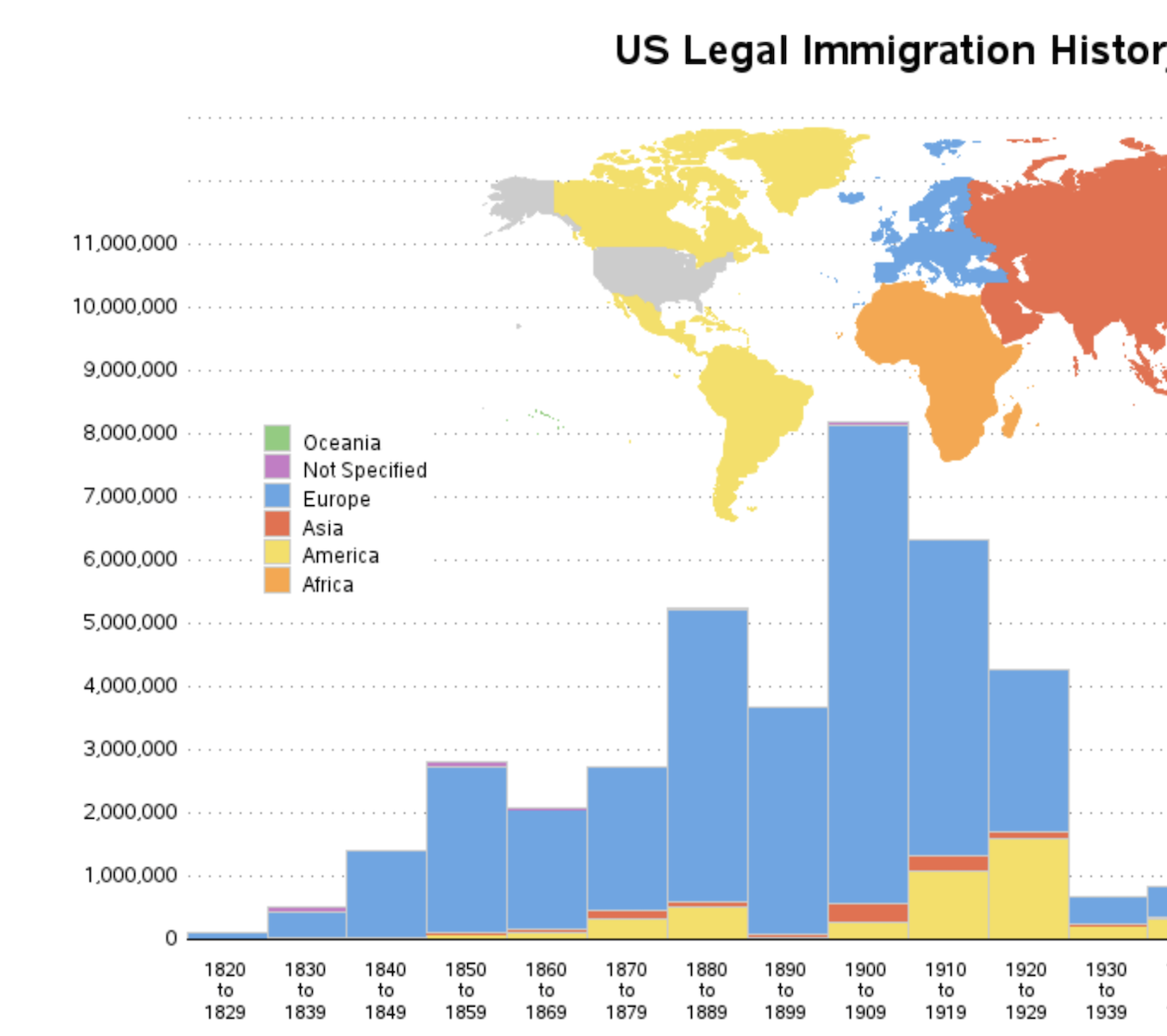
Immigration into the United States during the 19th Century came in two great waves. The first was set off by the conclusion to the Napoleonic Wars in 1815, and the unleashing of millions of men and families due to the redrawing of national boundaries. When Napoleon was finally defeated, millions of Europeans could freely decide where they wanted to live and where there wanted to stay. The end of war was paired with a large demographic explosion. "Between 1750 and 1900 Europe’s population rose faster than anywhere else in the world (except North America), from 150 million to over 400 million. This, in turn, produced a huge net outflow of immigration: to South America, Russia, Australasia, Canada, South Africa, and above all the United States. The rush to America began after the Battle of Waterloo in June 1815 and continued right through the autumn and winter, the immigrant ships braving gales and ice. It accelerated in 1816, which in Europe was ‘the year without a summer,’ with torrential rain and even sleet and snow continuing into July and August and wrecking harvests, sending poor and even starving people to the coast to huddle in the transports. Ezekiah Niles (1777–1839), who ran Niles’s Weekly Register from 1811 onwards, in many ways America’s best journal of record at the time, calculated that 50,000 immigrants reached America in the year, though this figure was later revised downwards. His more careful calculation for 1817, based on shipping lists (the federal government, though it took censuses, did not yet publish statistics), produced a figure of 30,000 up to the end of the main season in September. Of this half went to New York and Philadelphia, though some went straight over the Appalachians into the Ohio Valley.(Paul Johnson, A History of the American People (p. 284)" So the end of a world war paired with population explosion created the first great surge of immigration into the USA before the Civil War. The Civil War brought all this immigration to a stop. Young men did not want to immigrate into war service. Families wondered about the stability of the USA. And economic opportunities disappeared. From 1860 (or before) until the end of the war (1865) immigration slowed. The the war ended, the new Homestead Acts went into effect, the new open lands out west seemed to beckon all and so the second great surge began by 1870. This surge continued right up to World War I, then it slowed during the War and then it slowed some more during the Twenties when Congress acted to slow it down, and then came the Depression and World War II, when it slowed again and almost stopped. See the chart below.