Week 28
The history of the Jews in the United States dates back to the 1600s and 1700s. Jewish communities have existed in the United States since colonial times, and Jewish individuals lived in various cities before the American Revolution. Early Jewish communities were primarily composed of Sephardi immigrants from Brazil, Amsterdam, or England, many of them fled from the Inquisition. Private and civically unrecognized local, regional, and sometimes international networks were noted in these groups in order to facilitate marriage and business ties. This small and private colonial community largely existed as a community of undeclared and non-practicing Jews, a large number of them decided to marry non-Jews. Later on, the much larger community of Ashkenazi Jews which would populate New York, New Jersey, and other regions of what would become the United States altered these demographic trends. Until the 1830s, the Jewish community of Charleston, South Carolina, was the largest in North America. In the late 1800s and the beginning of the 1900s, many Jewish immigrants arrived from Europe. For example, many German Jews arrived in the middle of the 19th century, established clothing stores in towns across the country, formed Reform synagogues, and were active in banking in New York. Immigration of Eastern Yiddish-speaking Ashkenazi Jews, in 1880–1914, brought a new wave of Jewish immigration to New York City, including many who became active in socialism and labor movements, as well as Orthodox and Conservative Jews. Refugees from diaspora communities in Europe settled in the United States both during and after the Holocaust and after 1970, Jews from the Soviet Union settled in the United States. Politically, American Jews have been especially active as part of the liberal New Deal coalition of the Democratic Party since the 1930s, but recently, a conservative Republican constituent has emerged within the Orthodox Jewish community. They have displayed high education levels and high rates of upward social mobility compared to several other ethnic and religious groups inside America. The Jewish communities in small towns have declined, with the population becoming increasingly concentrated in large metropolitan areas. Antisemitism in the U.S. has endured into the 21st century, although numerous cultural changes have taken place such as the election of many Jews into governmental positions at the local, state, and national levels. In the 1940s, Jews comprised 3.7% of the national population. As of 2019, at about 7.1 million, the population is 2% of the national total—and shrinking as a result of low birth rates and Jewish assimilation. The largest Jewish population centers are the metropolitan areas of New York (2.1 million), Los Angeles (617,000), Miami (527,750), Washington, D.C. (297,290), Chicago (294,280), and Philadelphia (292,450) (Wikipedia)
REQUIRED READING FOR THE WHOLE YEAR OF COMING TO AMERICA

HIGHLY RECOMMENDED READING
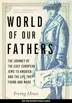
World of Our Fathers: The Journey of the East European Jews to America and the Life They Found and Made,
NYU Press,
ISBN 978-0814736852