Week 24
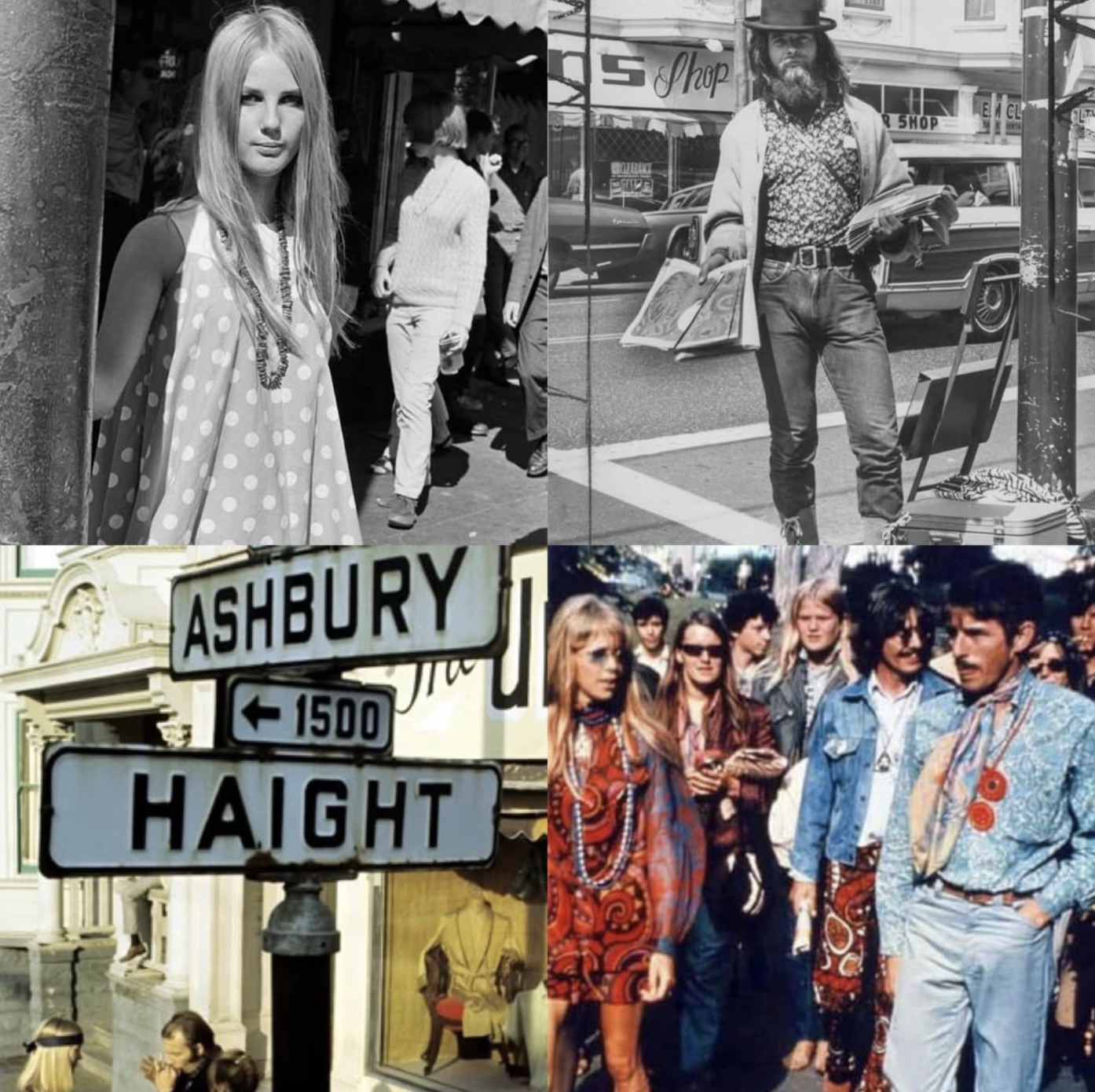
The 1967 Summer of Love in San Francisco was a peak counterculture phenomenon where approximately 100,000 young people converged on the Haight-Ashbury district. Seeking an alternative to mainstream American life, they embraced "free love," communal living, psychedelic drugs, and anti-Vietnam War sentiment, defining a major social shift. The Haight-Ashbury neighborhood was the epicenter, while Golden Gate Park acted as a central gathering spot for concerts and, according to Real San Francisco Tours and YouTube, happenings. The "Human Be-In" occurring in January 1967 at Golden Gate Park drew 30,000 people, launching the Summer of Love and blending politics with spirituality. Cultural Focus: Hippies rejected 1950s conformity and materialism, embracing communal lifestyles, "flower power," and psychedelic drug use (LSD, marijuana). The music was Psychedelic rock with San Francisco bands like the Grateful Dead and Jefferson Airplane emerging from the scene and playing at the "headquarters" of the movement: Bill Graham's Fillmore Auditorium. By October 1967, the scene's creators held a fake funeral, the "Death of the Hippie," to protest the commercialization and overcrowding of the Haight, reports History.com. This period is now widely recognized as a "social experiment" that fostered lasting changes in gender equality, social consciousness, and ecological awareness.
RECOMMENDED READING
The Haight: Revised and Expanded: Love, Rock, and Revolution (Legacy),
Insight Editions,
ISBN 978-1647220525