Week 25
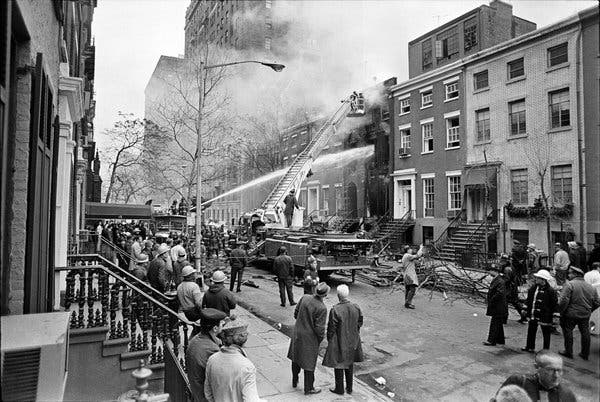
"In the 1970s, protest bombings in America were commonplace, especially in hard-hit cities like New York, Chicago and San Francisco. Nearly a dozen radical underground groups, dimly remembered outfits such as the Weather Underground, the New World Liberation Front and the Symbionese Liberation Army, set off hundreds of bombs during that tumultuous decade. The underground groups of the 1970s were a kind of grungy, bell-bottomed coda to the protests of the 1960s; their members were mostly onetime student leftists who refused to give up the utopian dreams of 1968. While little remembered today, there was a time during the early 1970s when the U.S. government—the Nixon Administration—considered these groups a genuine threat to national security. Alarmed by a series of Weatherman attacks, Nixon told J. Edgar Hoover during a June 1970 Oval Office meeting that “revolutionary terror” represented the single greatest threat to American society. Hoover promised to do what he could, which wasn’t much. As paranoid as Nixon could be, it was hard to argue with his line of thinking: Bombing attacks were growing by the day. They had begun as crude, simple things, mostly Molotov cocktails college radicals hurled toward ROTC buildings during the late 1960s. The first actual bombing campaign, the work of a group of New York City radicals led by a militant named Sam Melville, featured attacks on a dozen buildings around Manhattan between August and November 1969, when Melville and most of his pals were arrested. Weather’s attacks began three months later, and by 1971 protest bombings had spread across the country. In a single eighteen-month period during 1971 and 1972 the FBI counted an amazing 2,500 bombings on American soil, almost five a day. Because they were typically detonated late at night, few caused serious injury, leading to a kind of grudging public acceptance. The deadliest underground attack of the decade, in fact, killed all of four people, in the January 1975 bombing of a Wall Street restaurant. The epidemic of bombings eased as the decade wore on, though this wasn’t readily apparent in San Francisco, where explosions remained so prevalent that, after an especially nasty series of attacks in 1976, an FBI spokesman termed the city “the Belfast of North America.’” And the violence actually grew more deadly as the number of underground groups dwindled and grew more desperate; the deadliest year for underground violence was 1981, when eleven people were killed in bombings and bank robberies gone bad."
Brian Burrough, Days of Rage
HIGHLY RECOMMENDED READING
Days of Rage: America's Radical Underground, the FBI, and the Forgotten Age of Revolutionary Violence,
Penguin Books,
ISBN 978-0143107972