Week 23
It was under Kennedy and Johnson that the American tragedy in Vietnam really began to unfold. When Kennedy reached the White House, Vietnam was already one of America’s largest and costliest commitments anywhere in the world, and it is hard to understand why he made no attempt to get back to the Geneva accords and hold free elections, which by that stage Diem might have won. In Paris on May 31, 1961, General de Gaulle, who knew all about it, urged him to disengage: ‘I predict you will sink step by step into a bottomless military and political quagmire.’94 Kennedy had a hunch that Southeast Asia would prove a trap. The Bay of Pigs débâcle made him think twice about further involvement, especially in Laos, where the Communists were threatening. He told Sorenson in September 1962, ‘Thank God the Bay of Pigs happened when it did. Otherwise we’d be in Laos by now—and that would be a hundred times worse.’95 He also said to Arthur Schlesinger that he was worried about sending in troops to Vietnam. ‘The troops will march in; the bands will play; the crowds will cheer; and in four days everyone will have forgotten. Then we will be told to send in more troops. It’s like taking a drink. The effect wears off, and you have to take another.’
Nevertheless, in November 1961 Kennedy did send in the first 7,000 US troops to Vietnam, the critical step down the slippery incline into the swamp. That was the first really big US error. The second was to get rid of Diem. Diem was by far the ablest of the Vietnam leaders and had the additional merit of being a civilian. Lyndon Johnson, then Vice-President, described him with some exaggeration as ‘the Churchill of Southeast Asia,’ and told a journalist, ‘Shit, man, he’s the only boy we got out there.’97 But Kennedy, exasperated by his failure to pull a resounding success out of Vietnam, blamed the agent rather than the policy. In the autumn of 1963 he secretly authorized American support for an anti-Diem officers’ coup. It duly took place on November 1, Diem being murdered. The CIA provided $42,000 in bribes for the officers who set up a military junta. ‘The worst mistake we ever made’ was Lyndon Johnson’s later verdict.98 Three weeks later Kennedy was murdered himself, Johnson was president, and began to make mistakes on his own account. Warning signals ought to flash when leaders engage in historical analogies, especially emotive ones. LBJ compared the risk of Vietnam going Communist to the ‘loss’ of China in 1949: ‘I am not going to lose Vietnam,’ he declared. ‘I am not going to be the President who saw Southeast Asia go the way China went.’ He drew, for the members of the National Security Council, a still more dangerous parallel: ‘Vietnam is just like the Alamo.’99 And again, to the so-called ‘Tuesday Cabinet:’ ‘After the Alamo, no one thought Sam Houston would wind it up so quick.’100
Johnson, Paul. A History of the American People (pp. 879-880). (Harper Collins)
HIGHLY RECOMMENDED READING
RECOMMENDED READING
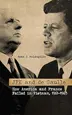
JFK and de Gaulle: How America and France Failed in Vietnam, 1961-1963 (Studies In Conflict Diplomacy Peace),
University Press of Kentucky,
ISBN 978-0813177748