Week 22
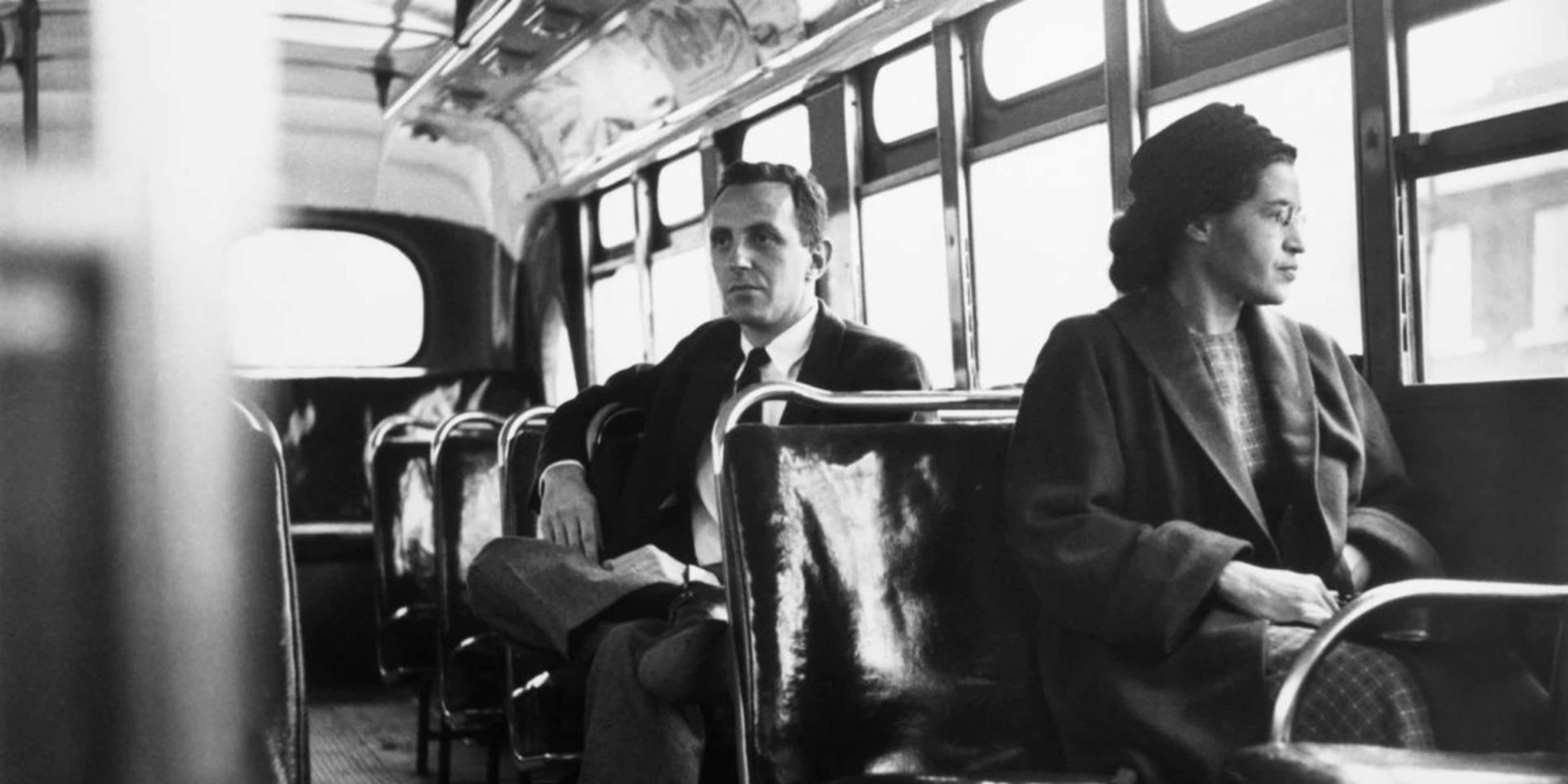
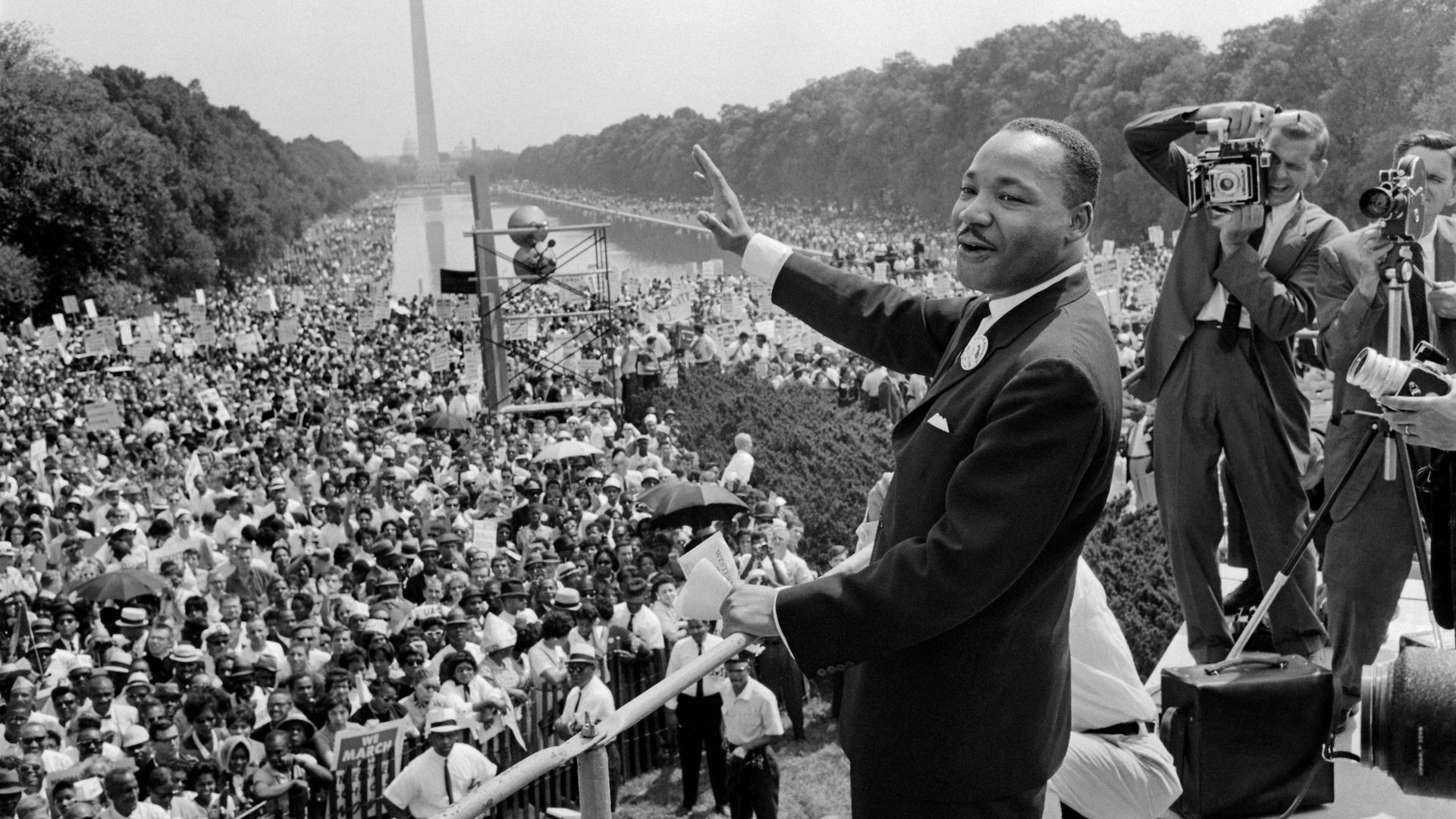
The civil rights movement started among blacks (and their white liberal allies), mainly in the South, and emerged from the frustration felt by many blacks at the slow pace of their acquisition of civil rights, especially educational and voting ones, through court process and legislative change. The first outbreak of physical activity began in Montgomery, Alabama on December 1, 1955. Rosa Parks, a black woman, refused to give up her bus seat to a white rider, thereby defying a Southern custom which required blacks to yield seats at the front to whites. When she was jailed, a black boycott of the company’s buses was begun, and lasted a year. ‘Freedom riders’ and sit-in movements followed in a number of Southern states. The boycott, which ended in a desegregation victory for blacks (December 1956) was led by Martin Luther King (1929–68), from Atlanta, Georgia, who was pastor of a black Baptist church in Montgomery. King was a non-violent militant of a new brand, who followed the example of Mahatma Gandhi in India in organizing demonstrations which used numbers and passive resistance rather than force and played the religious card for all it was worth. In 1957 he became the first president of a new umbrella group, the Southern Christian Leadership Conference. King’s house was bombed and he and some colleagues were convicted on various conspiracy charges, but King slowly emerged as a natural leader whom it was counterproductive for Southern sheriffs and courts to touch, and whose outstanding oratory was capable of enthusing enormous black crowds.136 The Montgomery boycott was followed by the first anti-segregation sit-in, February 1, 1960, when four black college students asked to be served at Woolworth’s whites-only lunch-counter in Greensboro, North Carolina, were turned down, and refused to leave. Sit-ins spread rapidly thereafter. On May 4, 1961 the tactic was reinforced when the first Freedom Riders, seven blacks and six whites, tested equal access to services at bus terminals from Washington DC to New Orleans. These tactics proved, on the whole, highly successful, with private companies usually ending segregation after initial resistance (and some white violence), and the courts ruling that discrimination was unlawful anyway. Such activities almost inevitably involved the use or threat of force, or provoked it, and, as the Sixties wore on, urban violence between blacks and whites grew, and King himself came under competitive threat from other black leaders, such as the black racist Malcolm X and the proponent of ‘black power,’ Stokely Carmichael. It was important for King to be seen to succeed in getting civil rights legislation through Congress. He backed the campaign of James Meredith (1961–2) to be enrolled at the whites-only University of Mississippi, and Meredith succeeded in getting himself admitted (and graduating). But his appearance on campus led to riots, September 30, 1962, in which two died, and Meredith himself was later shot and wounded on an anti-segregation ‘pilgrimage’ from Memphis to Jackson, Mississippi (June 6, 1966). In the spring of 1963 King’s organization embarked on a large-scale desegregation campaign in Birmingham, Alabama, which produced scenes of violence, widely shown on TV, and some memorable images of the local white police chief, Eugene ‘Bull’ Connor, directing his water cannon and police dogs at the black protesters. King was briefly jailed and later an attempt to bomb him led to the first substantial black mob riot of the campaign (May 11, 1963). Mass demonstration in black communities throughout the nation culminated on August 28, 1963 in a march of 250,000 protesters, led by King, to the steps of the Lincoln Memorial in Washington DC, where King delivered a memorable oration on the theme of ‘I have a dream that my four little children will one day live in a nation where they will be judged not by the color of their skin but by…their character.’137 This demonstration was part of the process which led to the passing of the Civil Rights Act (1964). The Act restored the federal government’s power to bar racial discrimination for the first time since the 19th century. Title 11 requires open access to gas stations, restaurants, lodging houses and all ‘public accommodations’ serving interstate commerce, and places of entertainment or exhibition. Title VI forbids discrimination in programs accepting federal funds. Title VII outlaws any employment discrimination and creates the Equal Employment Opportunity Commission.138 The Civil Rights Act gave the blacks much more than they had ever had before, but not everything, and the rise of the Black Panther party, with its strategy of ‘picking up the gun,’ inspired militancy in many inner cities and serious rioting.
RECOMMENDED READING
RECOMMENDED READING

Eyes on the Prize: America's Civil Rights Years 1954-1965,
Introduction by Julian Bond,
Penguin Books,
ISBN 978-0143124740
A three-volume series, RECOMMENDED READING
RECOMMENDED READING
Kennedy and King: The President, the Pastor, and the Battle over Civil Rights,
Grand Central Publishing,
ISBN 978-0316267397