Week 7
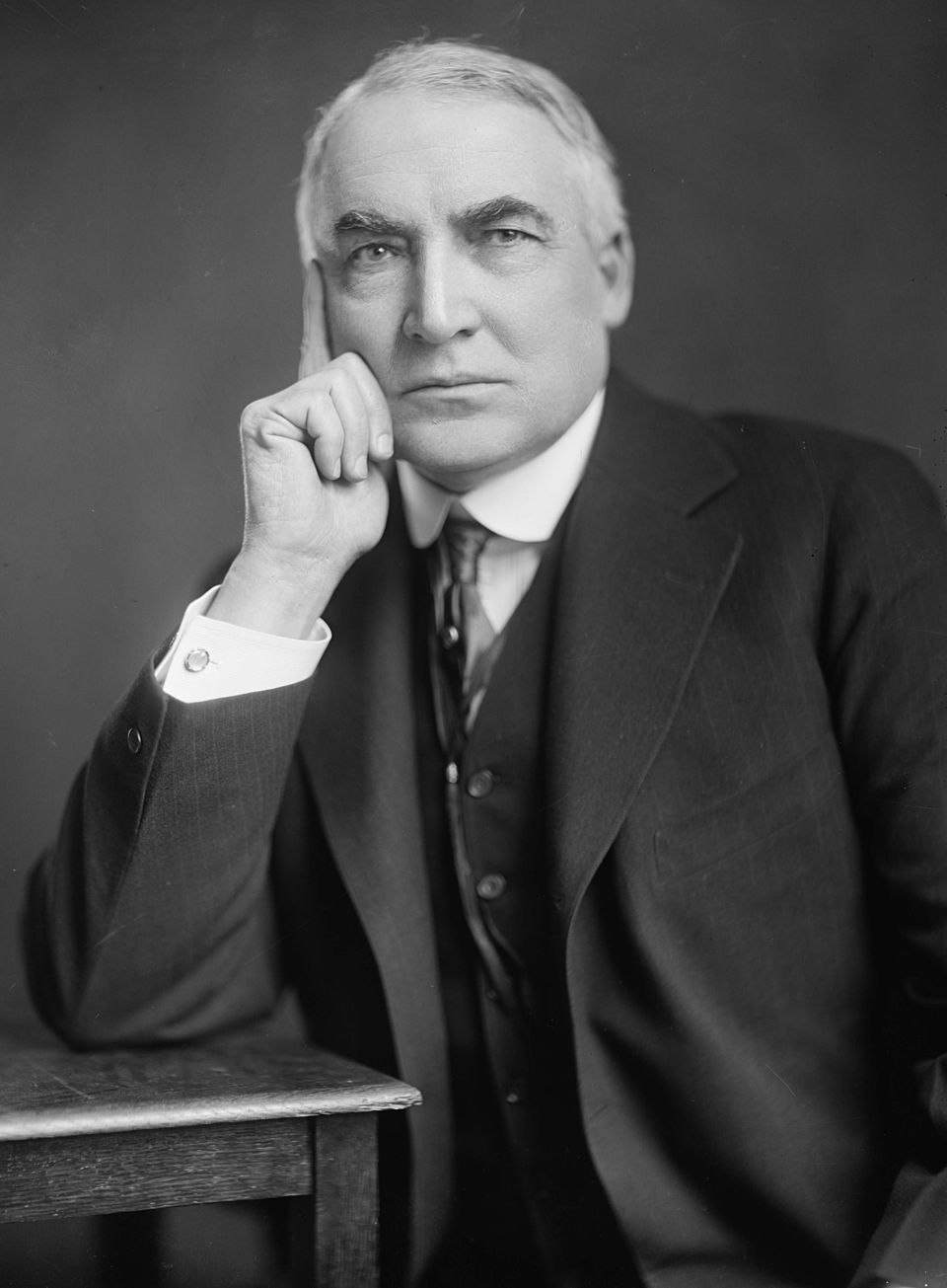
Warren G. Harding 1865-1923
Warren Gamaliel Harding was the 29th president of the United States, serving from 1921 until his death in 1923. A member of the Republican Party, he was one of the most popular sitting U.S. presidents while in office. After his death, a number of scandals were exposed, including Teapot Dome which damaged his reputation. Harding lived in rural Ohio all his life, except when political service took him elsewhere. As a young man, he bought The Marion Star and built it into a successful newspaper. Harding served in the Ohio State Senate from 1900 to 1904, and was lieutenant governor for two years. He was defeated for governor in 1910, but was elected to the United States Senate in 1914—the state's first direct election for that office. Harding ran for the Republican nomination for president in 1920, but was considered a long shot before the convention. When the leading candidates could not garner a majority, and the convention deadlocked, support for Harding increased, and he was nominated on the tenth ballot. He conducted a front porch campaign, remaining mostly in Marion and allowing people to come to him. He promised a return to normalcy of the pre–World War I period, and defeated Democratic nominee James M. Cox in a landslide to become the first sitting senator elected president.(Wikipedia)
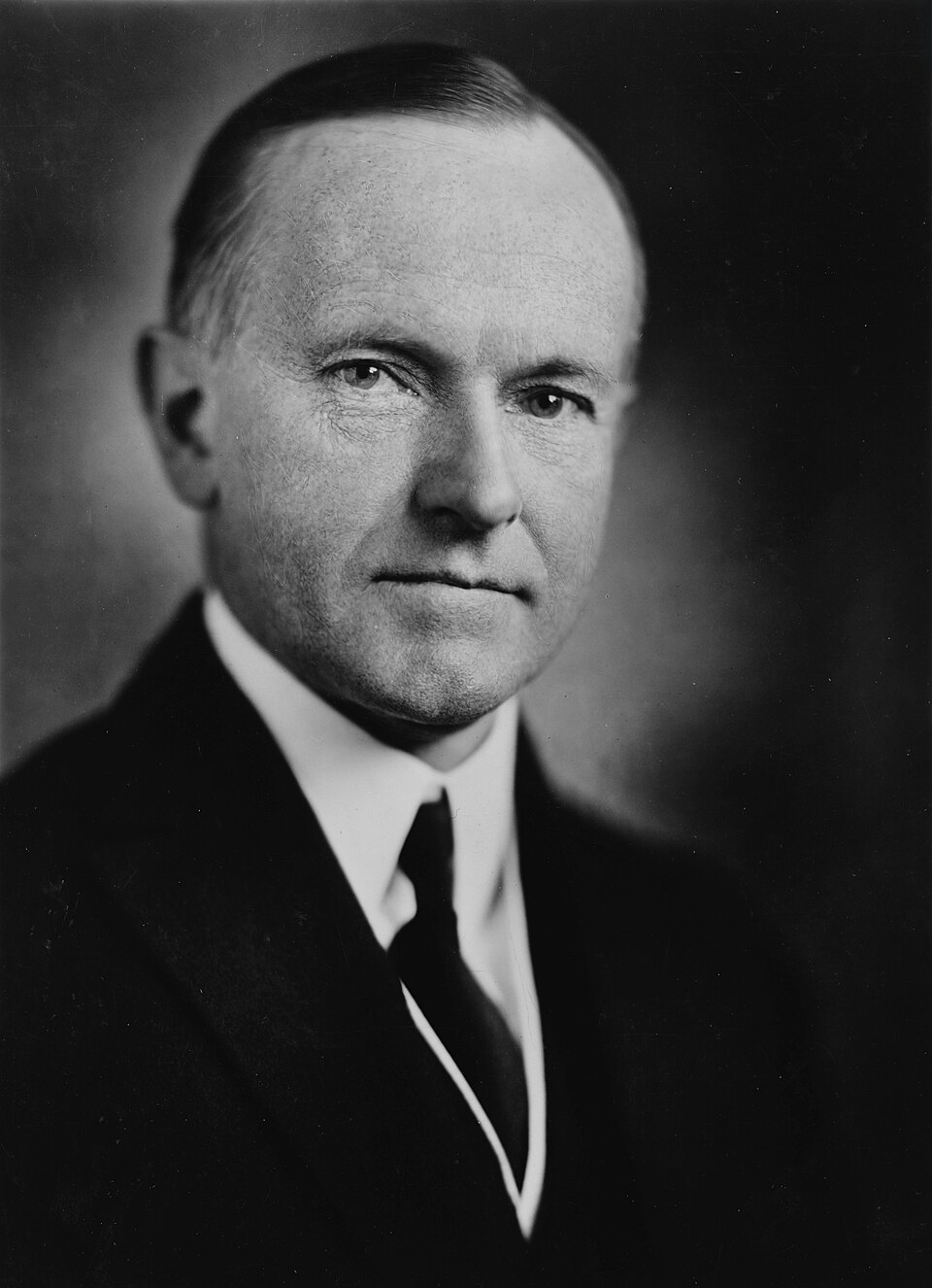
Calvin Coolidge 1872-1933
Calvin Coolidge was the 30th president of the United States, serving from 1923 to 1929. A Republican lawyer from Massachusetts, he previously served as the 29th vice president from 1921 to 1923 under President Warren G. Harding, and as the 48th governor of Massachusetts from 1919 to 1921. Coolidge gained a reputation as a small-government conservative with a taciturn personality and dry sense of humor that earned him the nickname "Silent Cal". Coolidge began his career as a member of the Massachusetts State House. He rose up the ranks of Massachusetts politics and was elected governor in 1918. As governor, Coolidge ran on the record of fiscal conservatism, strong support for women's suffrage, and vague opposition to Prohibition. His prompt and effective response to the Boston police strike of 1919 thrust him into the national spotlight as a man of decisive action. The following year, the Republican Party nominated Coolidge as the running mate to Senator Warren G. Harding in the 1920 presidential election, which they won in a landslide. Coolidge served as vice president until Harding's death in 1923, after which he assumed the presidency. During his presidency, Coolidge restored public confidence in the White House after the Harding administration's many scandals. He signed into law the Indian Citizenship Act of 1924, which granted U.S. citizenship to all Native Americans, and oversaw a period of rapid and expansive economic growth known as the "Roaring Twenties", leaving office with considerable popularity.(Wikipedia)
HIGHLY RECOMMENDED READING
Freedom from Fear: The American People in Depression and War, 1929-1945 (Oxford History of the United States),
Oxford University Press,
ISBN 978-0195144031
This is the most important book that we can recommend dealing with 1930 to 1945 in the USA. It is an acknowledged masterpiece as you will see in the reviews below. We can all be proud that this brilliant historian has had a home for all these years in our own Stanford University.
REVIEWS
"This is modern America's story--modern America's most thrilling, most irresistible, and most significant story--and in this massive volume, David M. Kennedy makes it his story in a way that no one has before. Freedom From Fear, the fourth installment of the new Oxford History of the United States to appear, is as much a triumph as its predecessors, providing every indication that the series, once completed, will stand as the most comprehensive and most compelling narrative history of the nation."--Boston Globe
"Rarely does a work of historical synthesis combine such trenchant analysis and elegant writing as does Kennedy's spectacular contribution to the Oxford History of the United States. Kennedy uses a wide canvas to depict all aspects of the American political, social and economic experience from 1929 to 1945. He also provides a stunningly original reinterpretation of the competing forces and interests that combined to shape the New Deal under FDR's direction. The book's final 400 pages admirably demonstrate exactly how the U.S. emerged victorious in WWII....Because of its scope, its insight and its purring narrative engine, Kennedy's book will stand for years to come as the definitive history of the most important decades of the American Century."--Publishers Weekly
"An engrossing narrative of a momentous time. The best one-volume account of the Roosevelt era currently available....Good old-fashioned history."--The New York Times Book Review
"An indispensable account of the two great formative events of 20th century American history--the Great Depression and the second World War."--The Economist
"Kennedy's book is the most illuminating, riveting, comprehensive, and graceful one-volume history of this nation's experiences during the Great Depression, New Deal, and WWII published to date....This is social, political, dipolmatic, and military history written magisterially with broad but nuanced strokes across a 16-year span that utterly transformed the lives of Americans and the world....Librarians should order this book for their libraries, faculty members should assign it, and everyone should read it."--CHOICE