Week 9
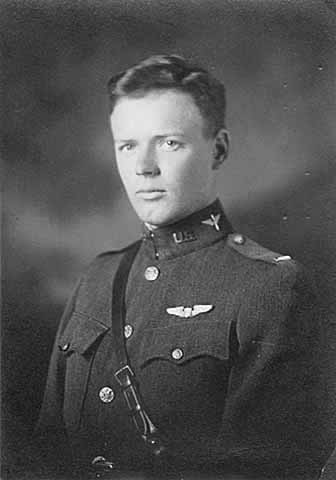
Who was the most famous American in the world during the Roaring Twenties? Not the presidents, Harding and Coolidge, who did not intend to emulate Wilson by solving Europe's, and the world's, problems. Not those two superstars in their respective fields, Albert Einstein and Charlie Chaplin—both world-famous, certainly, but neither had been born in America. Not even Babe Ruth, arguably the greatest baseball player of them all, who hit a record-setting 60 home runs that year. The most famous American, after his 1927 New York-to-Paris flight, was Charles Lindbergh, whose Spirit of St. Louis was the antidote not only to the Titanic, which had sunk on her maiden voyage fifteen years earlier, but also to the disillusionment that followed in the wake of the First World War and the failure of Woodrow Wilson to secure a durable peace settlement. In his classic book, Only Yesterday, Frederick Lewis Allen explains: "A disillusioned nation fed on cheap heroics and scandal and crime was revolting against the low estimate of human nature which it had allowed itself to entertain. For years the American people had been spiritually starved. They had seen their early ideals and illusions and hopes one by one worn away by the corrosive influence of events and ideas—by the disappointing aftermath of the war, by scientific doctrines and psychological theories which undermined their religion and ridiculed their sentimental notions, by the spectacle of graft in politics and crime on the city streets, and finally by their recent newspaper diet of smut and murder. Romance, chivalry, and self-dedication had been debunked; the heroes of history had been shown to have feet of clay, and the saints of history had been revealed as people with queer complexes. There was the god of business to worship—but a suspicion lingered that he was made of brass…. Something that people needed if they were to be at peace with themselves and with the world, was missing from their lives. And all at once Lindbergh provided it. Romance, chivalry, self-dedication—here they were, embodied in a modern Galahad for a generation which had foresworn Galahads. Lindbergh did not accept the moving-picture offers that came his way, he did not sell testimonials, did not boast, did not get himself involved in scandal, conducted himself with unerring taste—and was handsome and brave withal. The machinery of ballyhoo was ready and waiting to life him up where every eye could see him. Is it any wonder that the public's reception of him took on the aspects of a vast religious revival?"