Week 27
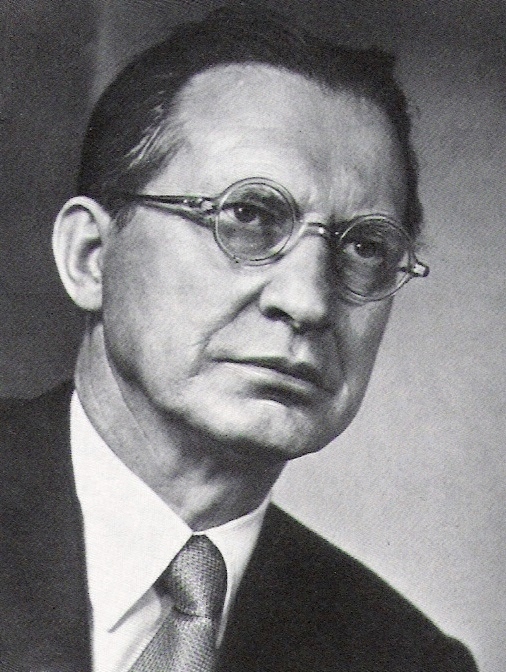 At the end of World War II, Italy was a devastated, divided nation undergoing a violent transition from Fascism to democracy. Following the 25 April 1945 liberation of the north, the country faced severe economic collapse, political restructuring, and the final abandonment of its monarchy. Mussolini was executed, Italy lost its African colonies and overseas territories, and it subsequently transitioned to a republic in 1946. Northern Italy was liberated on April 25, 1945, after a general insurrection by Italian partisans. The final German surrender in Italy took place on May 2, 1945, ending the long Italian campaign. The country was split between the Allied-controlled "Regno del Sud" and the German-occupied "Repubblica Sociale Italiana" (RSI) in the north until 1945. Benito Mussolini was captured and executed by partisans in April 1945. King Victor Emmanuel III abdicated in May 1946, and a month later, a referendum established a Republic. Italy suffered massive casualties in the war, including over 150,000 civilians and over 35,000 anti-Nazi partisans. The nation faced severe food shortages and industrial ruin. Italy lost all its African possessions, including Eritrea, Somalia, and Libya, and saw its military power restricted by the post-war peace treaty. Despite the devastation, Italy avoided widespread, long-term Allied occupation, unlike Germany and Japan, partly because it became an Allied co-belligerent after 1943. When hostilities ended, the leader who emerged from within the Italian democratic movement that had fought Mussolini all along was Alcide De Gasperi (pictured at left). In December 1945, he became prime minister for the first time, leading a coalition government that included both Italian Communist Party (PCI) and Italian Socialist Party (PSI), along with other minor parties like Italian Republican Party (PRI), Italian Liberal Party (PLI) and Action Party (PdA). Communist leader Palmiro Togliatti acted as deputy prime minister. He tried to soften the terms of the pending Allied peace treaty with Italy and secured financial and economic aid through the European Recovery Program (Marshall Plan) – which was opposed by the Communists. In June 1946, a constitutional referendum to decide whether Italy would remain a monarchy or become a republic resulted in 54% of the vote favouring a republic. De Gasperi served as provisional head of state from 12 June 1946 until the Constituent Assembly elected Liberal politician Enrico De Nicola provisional head of state on 28 June 1946. From 1945 to 1953, he was the prime minister of eight successive DC-led governments. His eight-year rule remains a landmark of political longevity for one leader in modern Italian politics. During his successive governments, Italy became a republic (1946), signed a peace treaty with the Allies (1947), joined NATO in 1949 and became an ally of the United States, which helped to revive the Italian economy through the Marshall PlanAs chief of the Italian delegation at the World War II peace conference in Paris, De Gasperi harshly criticized the sanctions imposed on Italy, but obtained concessions from the Allies that guaranteed Italian sovereignty. Under the Treaty of Peace with Italy, 1947, the eastern border area was lost to Yugoslavia and the free territory of Trieste was divided between the two states. De Gasperi had considerable support in the US, where he was considered able to oppose the rising tide of communism – in particular the PCI, which was the biggest communist party in a Western European democracy. In January 1947 he visited the US. The chief goals of the trip were to soften the terms of the pending peace treaty with Italy and to obtain immediate economic assistance. His ten-day tour, engineered by media mogul Henry Luce – the owner of Time magazine – and his wife, Clare Boothe Luce – the future ambassador to Rome – was viewed as a media "triumph", prompting positive comments by a wide section of the American press
RECOMMENDED READING
Mussolini's Italy: Life Under the Fascist Dictatorship, 1915-1945,
Penguin Press HC, The; 1st American Edition edition (February 2, 2006),
ISBN 1594200785