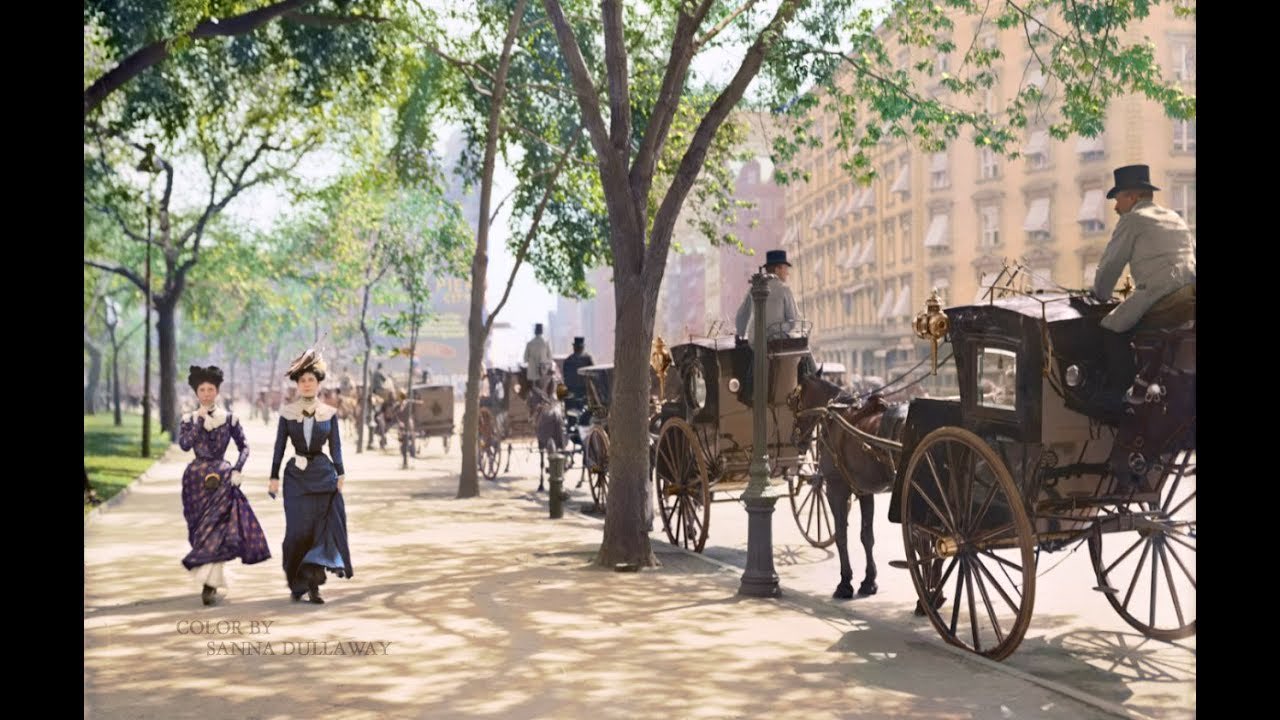
Week 30
"New York in those years—the last two decades of the nineteenth century, the first of the twentieth—conveyed to all visitors an extraordinary, almost electric sense of excitement: this was a city bursting with energy and power, with creativity and innovative capacity…. But it was more than this: this was also a city of brilliant engineers and of audacious entrepreneurs, who allied their talents to produce solutions to the city's own acute problems of growth. Contemporaries such as Lincoln Steffens were in no doubt that no other city had ever undergone such a startling transformation in so short a time as New York in the 1890s. It was the visual aspect, enshrined in the steel-framed skyscraper, that struck them most forcibly….
"Scale and concentration of geography together posed almost impossible organizational challenges, unprecedented in previous urban history: how to manage the world's largest port without danger of breakdown, how to operate the world's largest and densest concentration of workplaces located on an island, how to develop and operate transport systems that would bring workers in each morning and take them out again each night. These problems brought forth brilliant, inventive, highly complex solutions. Other skills were relevant; but above all, perhaps to a greater extent than any other city …, New York was an engineer's city: a city of skyscraper offices and hotels, bridges and tunnels, railroad stations and subway lines, port facilities and airports, parkways and expressways. All this began to emerge around 1880; the city reached its innovative apotheosis between 1880 and 1940."
—Peter Hall, Cities in Civilization